
Key Factors for Worm Gear Material Selection in Screw Jacks
2026-05-08 10:31:02
Click:
“
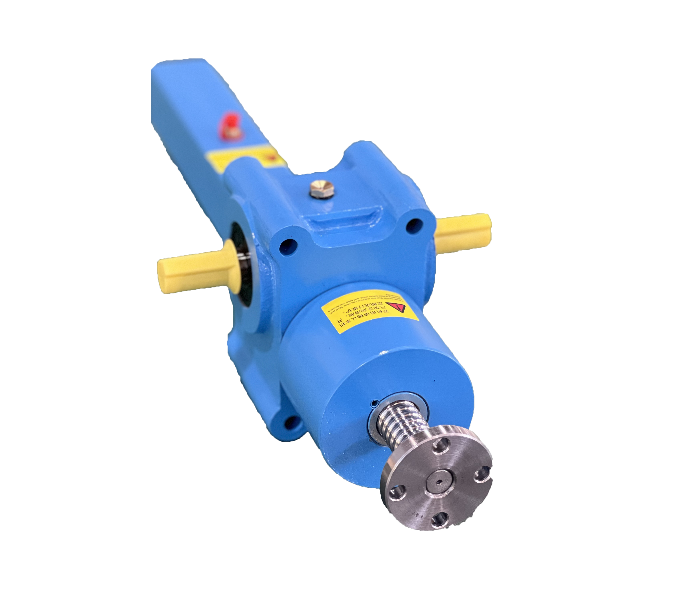
Screw jack systems, widely used in industrial machinery for precise lifting and positioning, rely on the efficient interaction between worm gears and worm shafts.
”
Screw jack systems, widely used in industrial machinery for precise lifting and positioning, rely on the efficient interaction between worm gears and worm shafts. The material selection for worm gears significantly impacts the system’s performance, durability, and cost-effectiveness. This article outlines the key factors to consider when choosing worm gear materials for screw jack applications.
1. Load Capacity and Operating Conditions
- High-Load Applications: In heavy-duty industries such as metallurgy, construction, or mining, worm gears must withstand substantial torque and shock loads. Materials like tin bronze (e.g., ZCuSn10Pb1) or aluminum bronze (e.g., ZQAl9-4) are preferred due to their high strength, excellent wear resistance, and ability to prevent seizure under extreme pressure.
- Light-Load Scenarios: For low-stress applications like small conveyors or manual adjustment mechanisms, cast iron or standard bronze may suffice, balancing cost and performance.
2. Speed and Friction Requirements
- High-Speed Operation: At elevated rotational speeds, friction generates heat, increasing the risk of wear and thermal deformation. Tin bronze, with its superior lubricity and heat dissipation properties, is ideal for high-speed screw jacks.
- Low-Speed Applications: In low-speed systems, friction is less critical, allowing the use of cost-effective materials like aluminum bronze or even treated steel, provided they meet load requirements.
3. Environmental Resistance
- Corrosive Environments: In chemical processing, marine, or food industries, corrosion resistance is paramount. Stainless steel (e.g., 304/316) or corrosion-resistant bronzes (e.g., nickel-aluminum bronze) prevent rust and chemical degradation, ensuring long-term reliability.
- High-Temperature Settings: For applications near furnaces or in hot climates, materials with high thermal stability, such as heat-resistant alloys or silicon bronze, are recommended to avoid softening or warping.
- Low-Temperature Conditions: In cold storage or arctic environments, materials must retain ductility to prevent brittleness. Austenitic stainless steel or specially treated bronzes are suitable choices.
4. Wear and Seizure Resistance
- Sliding Friction: Worm gears experience significant sliding contact with worm shafts, leading to wear. Tin bronze, with its embedded lead particles, forms a self-lubricating layer, reducing friction and seizure risk.
- Surface Treatments: For enhanced durability, materials like steel can undergo case hardening, nitriding, or chrome plating to improve surface hardness without compromising core toughness.
5. Manufacturing and Cost Considerations
- Machinability: Bronzes (e.g., tin or aluminum bronze) offer excellent castability and machinability, enabling precise gear tooth profiles. Stainless steel, while corrosion-resistant, requires specialized tooling and slower machining speeds, increasing costs.
- Material Cost: Tin bronze is expensive but provides superior performance in demanding applications. Aluminum bronze offers a cost-effective alternative with good wear resistance, while cast iron is the most economical for low-stress uses.
- Lifecycle Costs: While premium materials like stainless steel or tin bronze have higher upfront costs, their extended service life and reduced maintenance needs often justify the investment in critical applications.
6. Compatibility with Worm Shaft Material
- Material Pairing: The worm gear material must complement the worm shaft material to avoid excessive wear or galling. For example, a steel worm shaft paired with a bronze worm gear is a common combination, as bronze’s softer surface reduces friction and protects the shaft.
- Lubrication: Proper lubrication is essential to minimize friction between dissimilar materials. Synthetic lubricants or greases with anti-wear additives are often recommended.
Conclusion
Selecting the right worm gear material for a screw jack system requires a holistic evaluation of load, speed, environment, wear resistance, cost, and manufacturing feasibility. Tin bronze remains the gold standard for high-performance applications, while aluminum bronze and stainless steel offer viable alternatives in specific scenarios. By aligning material choices with operational demands, engineers can optimize screw jack performance, reliability, and total cost of ownership.
This structured approach ensures that worm gears deliver efficient, durable, and safe operation across diverse industrial applications.








Tel:+86-317-7369999
E-mail: demai@demai.org
Mobile:+86-18653450543 (Wechat)
Address:No. 6, Haihe Road, economic development zone, Wuqiao County, Cangzhou City, Hebei Province

点击右上角
分享给朋友吧
Copyright ©2023 All Rights Reserved Hebei Demai Transmission Machinery Co.,Ltd.
Copyright ©2025 All Rights Reserved Hebei Demai Transmission Machinery Co.,Ltd.
