
Overloading Screw Jacks: Risks and Damages
2026-05-04 09:28:57
Click:
“
Screw jacks are essential mechanical devices widely used in industrial automation, lifting systems, and precision positioning applications. However, overloading them beyond their rated capacity can lead to catastrophic failures
”
Screw jacks are essential mechanical devices widely used in industrial automation, lifting systems, and precision positioning applications. However, overloading them beyond their rated capacity can lead to catastrophic failures, safety hazards, and costly downtime. This article explores the potential problems caused by overloading a screw jack and provides preventive measures to ensure safe and reliable operation.
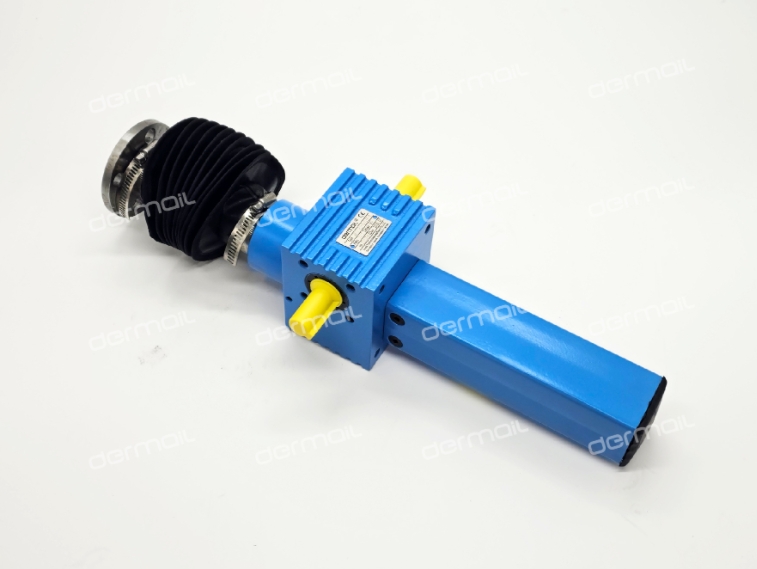
1. Structural Deformation and Permanent Damage
The screw and nut are the core components of a screw jack, responsible for converting rotational motion into linear displacement. When subjected to excessive loads:
- Screw Bending: The screw may bend or deform under high axial forces, causing misalignment and uneven wear.
- Nut Wear Acceleration: Overloading increases friction between the screw and nut, leading to rapid wear, pitting, or even cracking of the nut threads.
- Housing Distortion: The housing or casing may deform, compromising the structural integrity of the entire unit.
Example: In a heavy-duty lifting application, a screw jack rated for 5 tons was overloaded to 8 tons, resulting in a bent screw and a cracked nut within weeks.
2. Reduced Efficiency and Increased Power Consumption
Overloading forces the screw jack to operate under higher stress, leading to:
- Higher Friction Losses: Excessive loads increase friction between moving parts, reducing mechanical efficiency.
- Motor Overload: The driving motor must work harder, consuming more power and potentially triggering overcurrent protection or burnout.
- Heat Generation: Increased friction generates excess heat, which can degrade lubricants and accelerate component wear.
Example: A screw jack in a conveyor system overheated due to overload, causing the lubricant to break down and the motor to fail prematurely.
3. Loss of Precision and Positioning Errors
Screw jacks are often used in applications requiring high positional accuracy, such as CNC machinery or robotic arms. Overloading can:
- Introduce Backlash: Excessive loads can cause play between the screw and nut, leading to positioning inaccuracies.
- Thermal Expansion: Heat generated under overload may cause thermal expansion, further affecting precision.
- Vibration and Noise: Overloaded screw jacks may produce unusual vibrations or noise, indicating misalignment or mechanical stress.
Example: A screw jack in a 3D printer overheated and lost precision, resulting in misaligned layers and defective prints.
4. Safety Hazards and Risk of Catastrophic Failure
The most critical consequence of overloading is the risk of sudden failure, which can endanger personnel and equipment:
- Screw Breakage: Under extreme loads, the screw may fracture, causing the load to drop unexpectedly.
- Component Ejection: High stress can cause bolts, bearings, or other fasteners to fail, ejecting parts at high speed.
- Secondary Damage: A failed screw jack can damage surrounding machinery or structures, leading to costly repairs.
Example: In a construction site, an overloaded screw jack supporting a scaffolding system failed, causing the scaffolding to collapse and injuring workers.
5. Shortened Service Life and Increased Maintenance Costs
Overloading accelerates wear and tear, reducing the lifespan of the screw jack:
- Premature Component Failure: Bearings, seals, and gears may wear out faster, requiring frequent replacements.
- Lubrication Breakdown: Excessive heat and stress degrade lubricants, necessitating more frequent lubrication or complete re-lubrication.
- Unplanned Downtime: Frequent failures lead to production interruptions, increasing operational costs.
Example: A manufacturing plant that consistently overloaded its screw jacks faced a 50% increase in maintenance costs and a 30% reduction in equipment lifespan.
Preventive Measures to Avoid Overloading
To ensure safe and efficient operation of screw jacks:
- Select the Right Model: Choose a screw jack with a rated capacity exceeding the maximum expected load.
- Install Load Sensors: Use load cells or pressure gauges to monitor real-time load conditions.
- Implement Overload Protection: Install torque limiters or electronic overload protection systems.
- Regular Inspections: Conduct routine checks for wear, misalignment, or unusual noises.
- Follow Manufacturer Guidelines: Adhere to recommended maintenance schedules and operating conditions.
Conclusion
Overloading a screw jack can lead to structural damage, reduced efficiency, loss of precision, safety hazards, and increased maintenance costs. By understanding these risks and implementing preventive measures, operators can ensure the longevity and reliability of screw jacks in various industrial applications. Always prioritize safety and adhere to rated load limits to avoid costly failures and downtime.








Tel:+86-317-7369999
E-mail: demai@demai.org
Mobile:+86-18653450543 (Wechat)
Address:No. 6, Haihe Road, economic development zone, Wuqiao County, Cangzhou City, Hebei Province

点击右上角
分享给朋友吧
Copyright ©2023 All Rights Reserved Hebei Demai Transmission Machinery Co.,Ltd.
Copyright ©2025 All Rights Reserved Hebei Demai Transmission Machinery Co.,Ltd.
