
How to Ensure the Coaxiality between Gear box and Drive/Load Equipment
2026-05-03 15:25:22
Click:
“
In mechanical systems, ensuring the coaxiality between the steering gear and the drive/load equipment is of vital importance. Proper coaxiality guarantees smooth operation
”
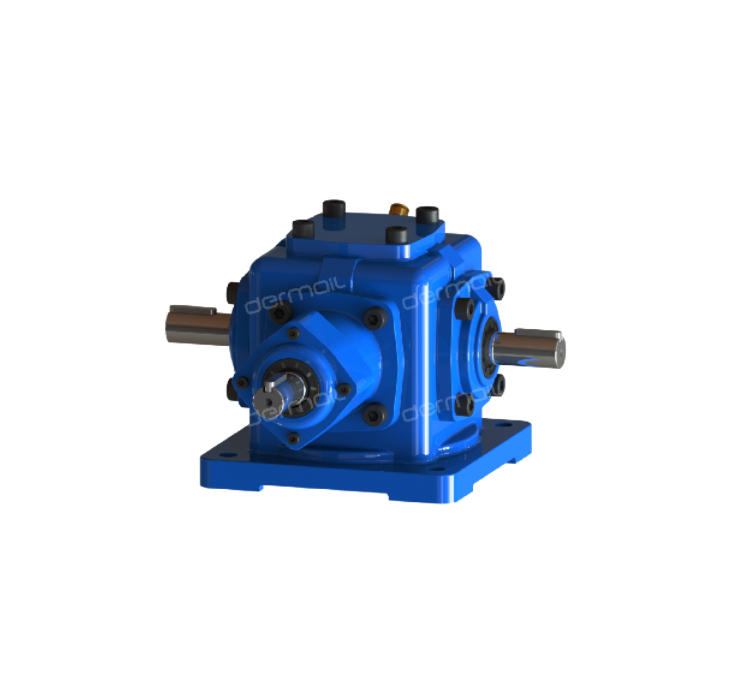
In mechanical systems, ensuring the coaxiality between the bevel Gear box and the drive/load equipment is of vital importance. Proper coaxiality guarantees smooth operation, reduces wear and tear, minimizes vibrations, and extends the service life of the entire system. Here are the detailed steps to achieve this goal.
Pre-installation Preparation
Before starting the installation process, thorough preparation is necessary. First, inspect the equipment and foundations. Make sure that the installation foundations of the bevel gear box, drive equipment (such as motors), and load equipment (like working machinery) are flat and sturdy, free from obvious deformations or defects. Use a level to check the levelness of the foundations. If the foundations are uneven, they need to be repaired or adjusted with shims.
Additionally, check the surface quality of the input and output shafts of each device. There should be no scratches, dumps or other defects, as these may affect the measurement and adjustment of coaxiality.
Cleanliness is also crucial. Thoroughly clean the connecting parts of the bevel gear box, drive equipment, and load equipment to remove oil stains, iron filings, dust, and other impurities. A clean installation surface ensures accurate installation and prevents impurities from causing inaccuracies during the installation process.
In-installation Adjustment
Preliminary Positioning
Position the bevel gear box, drive equipment, and load equipment roughly in accordance with the design requirements. Use temporary fixing devices (such as un-tightened bolts) to connect them together, so that the shafts of each device are approximately in a straight line.
Measuring Coaxiality
There are two common methods for measuring coaxiality: the dial indicator method and the laser alignment instrument method.
- Dial Indicator Method: Fix the dial indicator on one of the shafts (for example, the shaft of the drive equipment), and make the measuring head of the dial indicator contact the surface of the other shaft (the shaft of the steering gear). Then slowly rotate the measured shaft and observe the reading changes on the dial indicator. Adjust the position of the equipment based on the reading deviations. Generally, the reading deviation of the dial indicator should be controlled within an allowable range (usually around 0.05mm).
- Laser Alignment Instrument Method: This is a more accurate and efficient measurement method. Install the laser emitter and receiver on the two shafts respectively, and measure the coaxiality by checking the alignment of the laser beam. The laser alignment instrument can display the deviation values and directions in real time, facilitating quick adjustment of the equipment position with a measurement accuracy up to the micron level.
Adjusting Equipment Position
According to the measurement results, correct the coaxiality deviations by adjusting the shim thickness of the equipment, moving the equipment position, or using adjustable supports. During the adjustment process, make gradual fine-tuning and re-measure after each adjustment until the coaxiality meets the requirements.
Post-installation Inspection and Verification
Re-checking Coaxiality
After all equipment is installed and fixed, re-check the coaxiality between the bevel gear box and the drive/load equipment using a dial indicator or a laser alignment instrument again to ensure that the coaxiality has not changed during the installation process.
Commissioning and Monitoring
Start the drive equipment and let the system run at a low speed. Observe the operation of the equipment, checking for abnormal vibrations or noises. A vibration monitor can be used to measure the vibration values of the equipment. If the vibration values exceed the normal range, there may be a problem with the coaxiality, and a re-inspection and adjustment are required.
In conclusion, ensuring the coaxiality between the steering gear and the drive/load equipment requires installation personnel to possess certain professional skills and experience, and strictly follow installation specifications and operating procedures. Regular coaxiality checks during equipment operation are also essential measures to ensure the normal operation of the system.








Tel:+86-317-7369999
E-mail: demai@demai.org
Mobile:+86-18653450543 (Wechat)
Address:No. 6, Haihe Road, economic development zone, Wuqiao County, Cangzhou City, Hebei Province

点击右上角
分享给朋友吧
Copyright ©2023 All Rights Reserved Hebei Demai Transmission Machinery Co.,Ltd.
Copyright ©2025 All Rights Reserved Hebei Demai Transmission Machinery Co.,Ltd.
