
HD Series Bevel Gear Boxes: Types and Key Characteristics
2026-05-02 08:51:31
Click:
“
The HD series bevel gear boxes are advanced power transmission devices designed
”
The HD series bevel gear boxes are advanced power transmission devices designed to redirect rotational motion and adjust torque in industrial machinery. Featuring spiral bevel gears, these gearboxes are renowned for their precision, durability, and adaptability to complex mechanical systems. This article explores the primary types of HD series bevel gear boxes and their defining features.
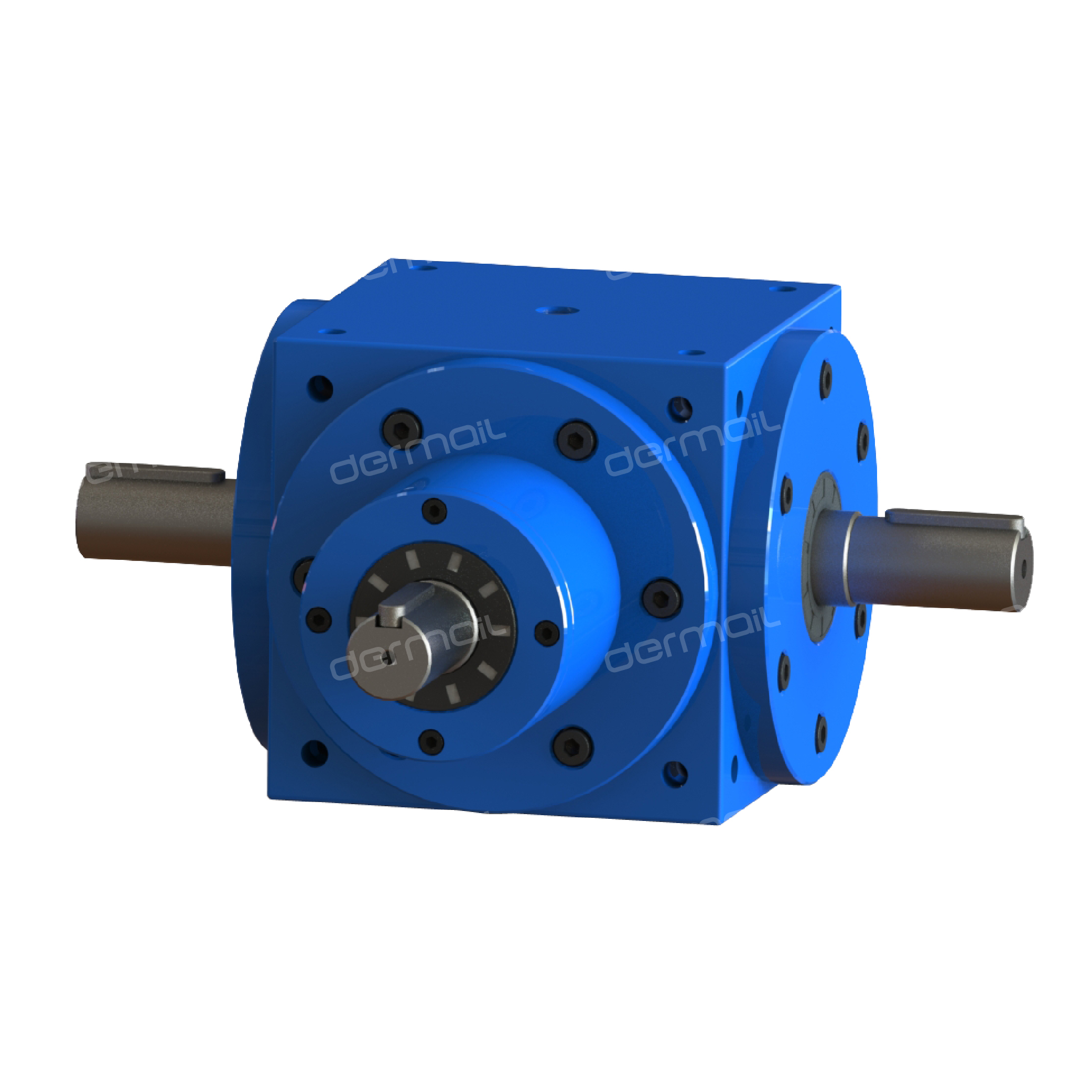
1. Types of HD Series Bevel Gear Boxes
The HD series offers multiple configurations to meet diverse installation and operational demands:
1.1 Standard HD Model
- Input/Output Configuration: Both input and output shafts are extended (shaft-mounted).
- Applications: Ideal for straightforward installations where direct shaft coupling is required, such as conveyor systems, material handling equipment, and general-purpose machinery.
1.2 HDA Model (Input Shaft-Extended, Output Flange-Mounted)
- Input/Output Configuration: Input shaft is extended; output shaft features a flange for secure mounting.
- Applications: Suited for applications requiring rigid output connections, such as robotic arms, packaging machines, and CNC equipment.
1.3 HDF Model (Input Flange-Mounted, Output Shaft-Extended)
- Input/Output Configuration: Input shaft has a flange; output shaft is extended.
- Applications: Common in scenarios where the input source (e.g., motor) is flange-mounted, such as printing presses, textile machinery, and food processing equipment.
1.4 HDAF Model (Input/Output Flange-Mounted)
- Input/Output Configuration: Both input and output shafts feature flanges for bolt-on mounting.
- Applications: Preferred for heavy-duty setups requiring maximum stability, such as mining equipment, construction machinery, and marine propulsion systems.
2. Key Characteristics of HD Series Bevel Gear Boxes
2.1 High Transmission Efficiency
- Efficiency Range: 94%–98%, minimizing power loss during operation.
- Smooth Operation: Spiral bevel gears with precision-ground teeth ensure low noise and vibration, even at high speeds (up to 40 m/s).
2.2 Robust Construction
- Material: Gears are made from high-strength alloy steel (e.g., 20CrMnTiH) and undergo carburizing, quenching, and grinding processes for superior hardness and wear resistance.
- Housing: Hexagonal design allows multi-directional mounting (six orientations), enhancing flexibility in system integration.
2.3 Versatile Output Options
- Shaft Configurations: Available with single or dual shafts (horizontal/vertical) to accommodate varied motion requirements.
- Modular Design: Supports customization for complex power distribution needs, such as multi-axis synchronization.
2.4 High Torque Capacity
- Torque Range: From 11.2 N·m (HD09) to 5,713 N·m (HD28), suitable for light-duty to heavy-duty applications.
- Power Rating: Handles power inputs from 0.014 kW to 335 kW, making it compatible with both small motors and large industrial engines.
2.5 Bidirectional Transmission
- Reversible Operation: Supports forward and reverse rotation without compromising performance.
- Speed Ratio Flexibility: Offers ratios from 1:1 to 5:1 (e.g., 1.5:1, 2:1, 3:1), enabling both speed reduction and torque amplification.
2.6 Low Maintenance Requirements
- Sealed Design: Protects internal components from dust and contaminants, extending service life.
- Lubrication: Pre-filled with high-quality synthetic oil for long-term operation without frequent oil changes.
3. Applications
HD series bevel gear boxes are widely used in industries requiring reliable motion control and power transmission, including:
- Industrial Automation: Robotics, CNC machines, and assembly lines.
- Material Handling: Conveyors, elevators, and cranes.
- Heavy Machinery: Mining equipment, construction vehicles, and marine drives.
- Specialized Systems: Food processing, textile machinery, and renewable energy systems (e.g., wind turbines).
Conclusion
The HD series bevel gear boxes combine precision engineering with modular design, offering a versatile solution for directional power transmission. Their high efficiency, durability, and adaptability make them indispensable in modern industrial applications, where reliability and performance are critical. By selecting the appropriate model (HD, HDA, HDF, or HDAF), engineers can optimize mechanical systems for specific operational requirements while minimizing maintenance costs.








Tel:+86-317-7369999
E-mail: demai@demai.org
Mobile:+86-18653450543 (Wechat)
Address:No. 6, Haihe Road, economic development zone, Wuqiao County, Cangzhou City, Hebei Province

点击右上角
分享给朋友吧
Copyright ©2023 All Rights Reserved Hebei Demai Transmission Machinery Co.,Ltd.
Copyright ©2025 All Rights Reserved Hebei Demai Transmission Machinery Co.,Ltd.
