
Which Motors Can Be Paired with Ball Screw Jacks?
2026-03-30 13:20:48
Click:
“
Their high efficiency, accuracy, and durability make them ideal for applications requiring controlled lifting, lowering, or positioning. To optimize performance, selecting the right motor type is crucial.
”
Ball screw jacks are precision linear motion devices widely used in industrial automation, robotics, and material handling systems. Their high efficiency, accuracy, and durability make them ideal for applications requiring controlled lifting, lowering, or positioning. To optimize performance, selecting the right motor type is crucial. This article explores common motor options compatible with ball screw jacks and their respective advantages.
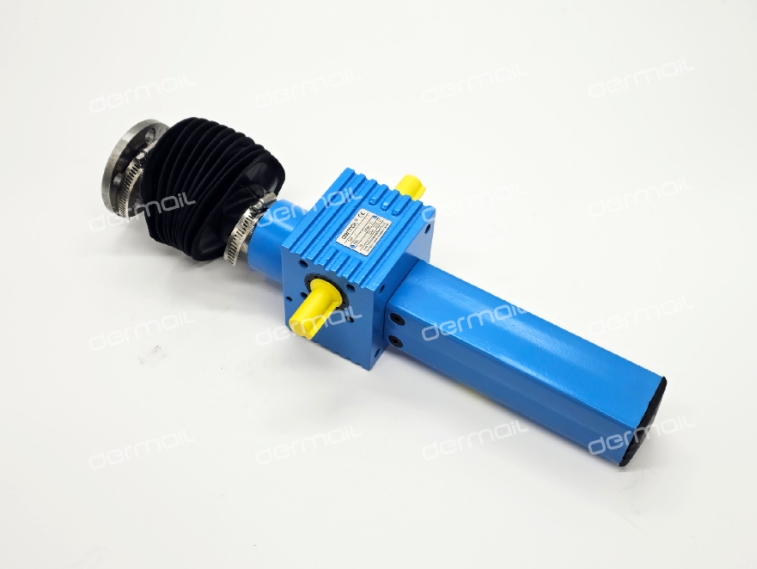
1. Servo Motors (Top Recommendation)
Key Features:
- High Precision: Equipped with encoders, servo motors enable closed-loop control, achieving positional accuracy within ±0.01 mm and repeatability of ±0.005 mm.
- Dynamic Response: With rapid acceleration (up to 300% of rated torque) and deceleration, they suit frequent start-stop cycles, such as in automated assembly lines.
- Speed Control: Support adjustable speeds (0–3,000 RPM) and smooth motion profiles, critical for applications like CNC machining or semiconductor equipment.
- Energy Efficiency: High transmission efficiency (90–95%) reduces power consumption compared to traditional systems.
Applications:
- Robotic arms
- Precision machining centers
- 3C product assembly lines
- Medical imaging equipment (e.g., CT scanners)
2. Stepper Motors (Cost-Effective Alternative)
Key Features:
- Open-Loop Control: Simpler than servo systems, stepper motors operate without encoders, relying on pulsed signals for positioning.
- Medium Precision: Offer accuracy of ±0.05 mm, suitable for less demanding tasks like packaging or conveyor systems.
- Low-Speed Torque: Maintain high torque at low speeds (e.g., 100–500 RPM), ideal for applications requiring steady force without high velocity.
- Budget-Friendly: Lower initial cost than servo motors, making them popular in small-scale automation.
Applications:
- 3D printers
- Laboratory automation
- Textile machinery
- Small-scale lifting platforms
3. Variable Frequency Drive (VFD) Motors (For High-Load, Continuous Duty)
Key Features:
- Constant Torque: VFD-controlled AC induction motors deliver stable torque across a wide speed range, suitable for heavy-duty lifting (e.g., loads >5 tons).
- Durability: Robust design withstands harsh environments (dust, moisture) and extended operation hours.
- Cost Efficiency: Lower per-unit power cost than servo motors for continuous-duty applications.
Applications:
- Warehouse stacking cranes
- Construction hoists
- Large-scale stage lifts
- Mining equipment
4. Brushless DC (BLDC) Motors (Compact & Efficient)
Key Features:
- High Efficiency: Up to 90% efficiency reduces heat generation and energy waste.
- Compact Size: Lightweight and space-saving, ideal for portable or confined-space applications.
- Low Maintenance: No brushes to replace, extending service life.
Applications:
- Aerial work platforms
- Drones or UAVs
- Portable medical devices
- Automated guided vehicles (AGVs)
5. Gear Motors (Simplified Integration)
Key Features:
- Built-In Gear Reducer: Combines motor and gearbox in one unit, simplifying installation and reducing footprint.
- Torque Multiplication: Suitable for low-speed, high-torque requirements (e.g., rotating large platforms).
- Cost-Effective: Lower price than standalone motors + gearboxes for basic applications.
Applications:
- Rotary tables
- Small conveyor systems
- Display stands
- Home automation (e.g., smart windows)
Selection Criteria
- Load & Speed Requirements:
- Heavy loads (>5 tons) → VFD motors or high-power servos.
- High-speed positioning (≥1 m/s) → Servo or BLDC motors.
- Precision Demands:
- Sub-micron accuracy → Servo motors.
- Medium precision (±0.1 mm) → Stepper or gear motors.
- Environmental Factors:
- Dusty/humid conditions → IP65-rated motors with corrosion-resistant coatings.
- Explosive atmospheres → ATEX-certified motors.
- Budget Constraints:
- High-volume production → Stepper or gear motors.
- Premium performance → Servo systems.
Conclusion
Ball screw jacks offer versatility by pairing with various motors to meet diverse industrial needs. Servo motors excel in precision and dynamics, while stepper, VFD, BLDC, and gear motors provide cost-effective or specialized solutions. By aligning motor selection with application requirements—such as load capacity, speed, accuracy, and environment—engineers can optimize system performance, reliability, and ROI.
For mission-critical applications, consulting with a ball screw jack manufacturer or motion control expert is advisable to ensure compatibility and long-term success.








Tel:+86-317-7369999
E-mail: demai@demai.org
Mobile:+86-18653450543 (Wechat)
Address:No. 6, Haihe Road, economic development zone, Wuqiao County, Cangzhou City, Hebei Province

点击右上角
分享给朋友吧
Copyright ©2023 All Rights Reserved Hebei Demai Transmission Machinery Co.,Ltd.
Copyright ©2025 All Rights Reserved Hebei Demai Transmission Machinery Co.,Ltd.
