
Screw Jack Nut Motion Forms and Their Suitable Working Conditions
2026-03-21 15:29:47
Click:
“
Screw jack are widely used in industrial automation, lifting systems, and precision positioning applications due to their stable load-bearing capacity and precise motion control.
”
Screw jack are widely used in industrial automation, lifting systems, and precision positioning applications due to their stable load-bearing capacity and precise motion control. The motion form of the nut in a screw jack directly determines its performance under different working conditions. This article explores the main types of Screw Jack nut motion forms and their corresponding suitable applications.
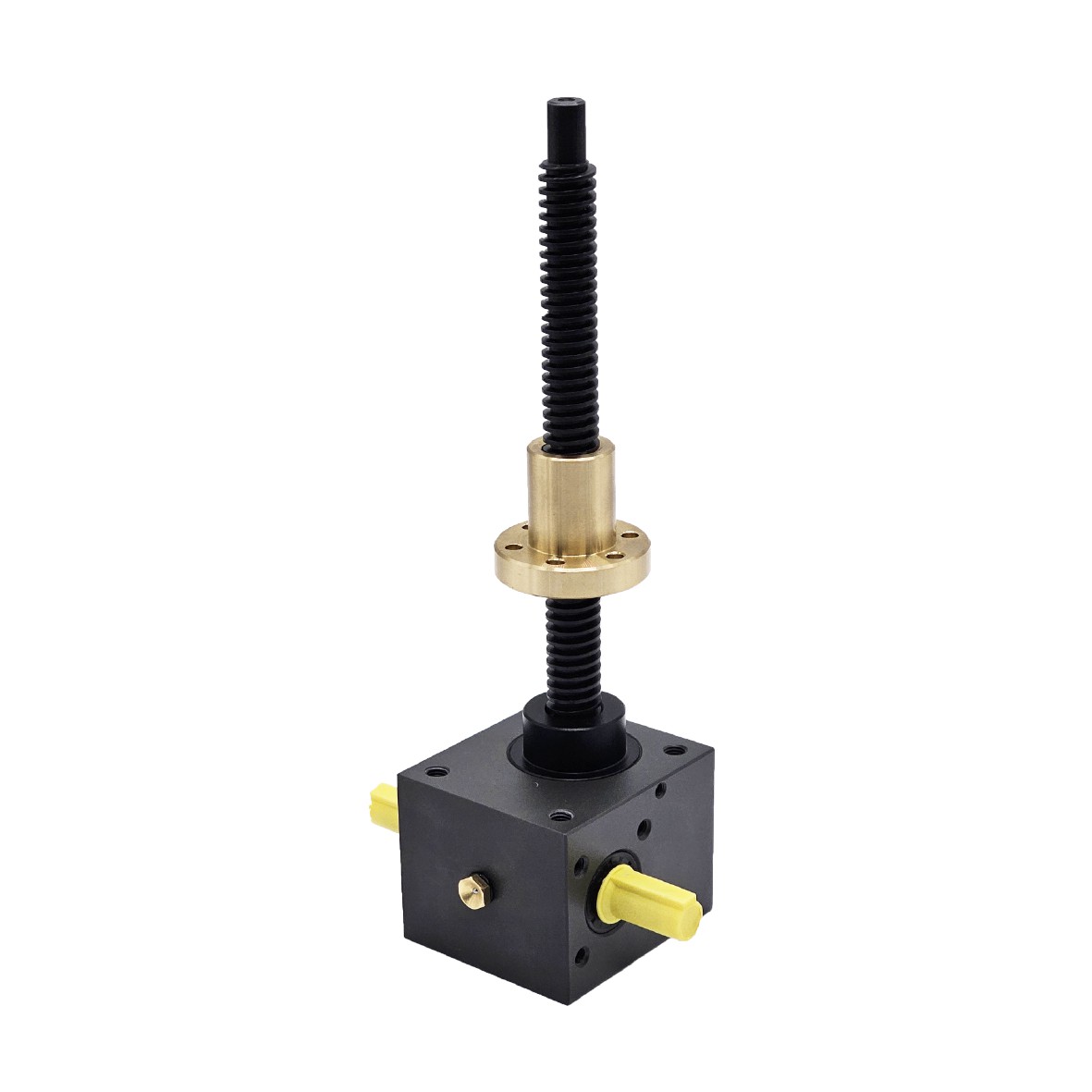
1. Translating Nut (Linear Motion)
In this configuration, the nut moves linearly along the dermail transmission screw rod while the screw rotates. The nut itself does not rotate, ensuring pure linear displacement.
Suitable Working Conditions:
- Precision Positioning Systems:
Used in CNC machines, robotic arms, and 3D printers where precise linear motion is required without rotational deviation. - Heavy-Duty Lifting Applications:
Ideal for lifting platforms, stage equipment, and solar panel tracking systems where stable vertical movement is critical. - High-Load Industrial Automation:
Suitable for conveyor systems, material handling equipment, and assembly lines requiring controlled linear motion under heavy loads. - Low-Speed, High-Torque Scenarios:
Effective in applications where slow but powerful linear displacement is needed, such as in press machines and injection molding equipment.
Advantages:
- Simple structure, easy to control.
- High load-bearing capacity with minimal backlash.
- Suitable for vertical or horizontal installations.
2. Rotating Nut (Rotary Motion)
Here, the screw remains stationary while the nut rotates, converting rotational motion into mechanical output (e.g., driving a gear or pulley).
Suitable Working Conditions:
- Rotary Drive Systems:
Used in conveyor belt drives, winding machines, and packaging equipment where rotational motion is required to power other components. - High-Speed Applications:
Suitable for applications requiring rapid rotation, such as in textile machinery and centrifuges. - Compact Space Designs:
When a rotating output is needed in a limited space, this configuration avoids the need for additional gearboxes. - Low-Load, High-RPM Scenarios:
Effective in applications like fan drives and small pumps where high rotational speed is prioritized over load capacity.
Advantages:
- Eliminates the need for a separate motor for rotation.
- Compact design saves space.
- Suitable for applications requiring continuous rotation.
3. Combined Motion (Linear + Rotary)
Some advanced screw jacks allow both linear and rotational motion of the nut simultaneously, enabling complex motion profiles.
Suitable Working Conditions:
- Multi-Axis Robotic Systems:
Used in robotic grippers, pick-and-place machines, and medical devices requiring simultaneous linear and rotational movement. - Specialized Machining Equipment:
Suitable for lathes, milling machines, and grinding tools where combined motion improves processing efficiency. - Automated Guided Vehicles (AGVs):
Enables precise steering and lifting in AGVs used in warehouses and logistics. - Aerospace and Defense Applications:
Used in satellite deployment mechanisms and missile guidance systems where multi-directional motion is critical.
Advantages:
- High flexibility in motion control.
- Reduces the need for multiple actuators.
- Enhances system efficiency in complex tasks.
Conclusion
The choice of nut motion form in a screw jack depends on the specific requirements of the application:
- Translating nut: Best for heavy-duty, precision linear lifting.
- Rotating nut: Ideal for high-speed rotary drives.
- Combined motion: Suitable for advanced multi-axis automation.
By selecting the appropriate nut motion form, engineers can optimize performance, efficiency, and reliability in various industrial scenarios.








Tel:+86-317-7369999
E-mail: demai@demai.org
Mobile:+86-18653450543 (Wechat)
Address:No. 6, Haihe Road, economic development zone, Wuqiao County, Cangzhou City, Hebei Province

点击右上角
分享给朋友吧
Copyright ©2023 All Rights Reserved Hebei Demai Transmission Machinery Co.,Ltd.
Copyright ©2025 All Rights Reserved Hebei Demai Transmission Machinery Co.,Ltd.
