
Principle and Applications of Bevel Gear Boxes
2026-01-22 09:18:18
Click:
“
Bevel gear boxes are critical mechanical components designed to transmit rotational motion and torque between intersecting shafts, typically at a 90-degree angle.
”
1. Introduction
Bevel gear boxes are critical mechanical components designed to transmit rotational motion and torque between intersecting shafts, typically at a 90-degree angle. By utilizing conical-shaped gears with teeth cut along their surfaces, these devices enable efficient power transfer while altering the direction of motion. Their compact design, durability, and ability to handle high loads make them indispensable in industrial machinery, automotive systems, and robotics.
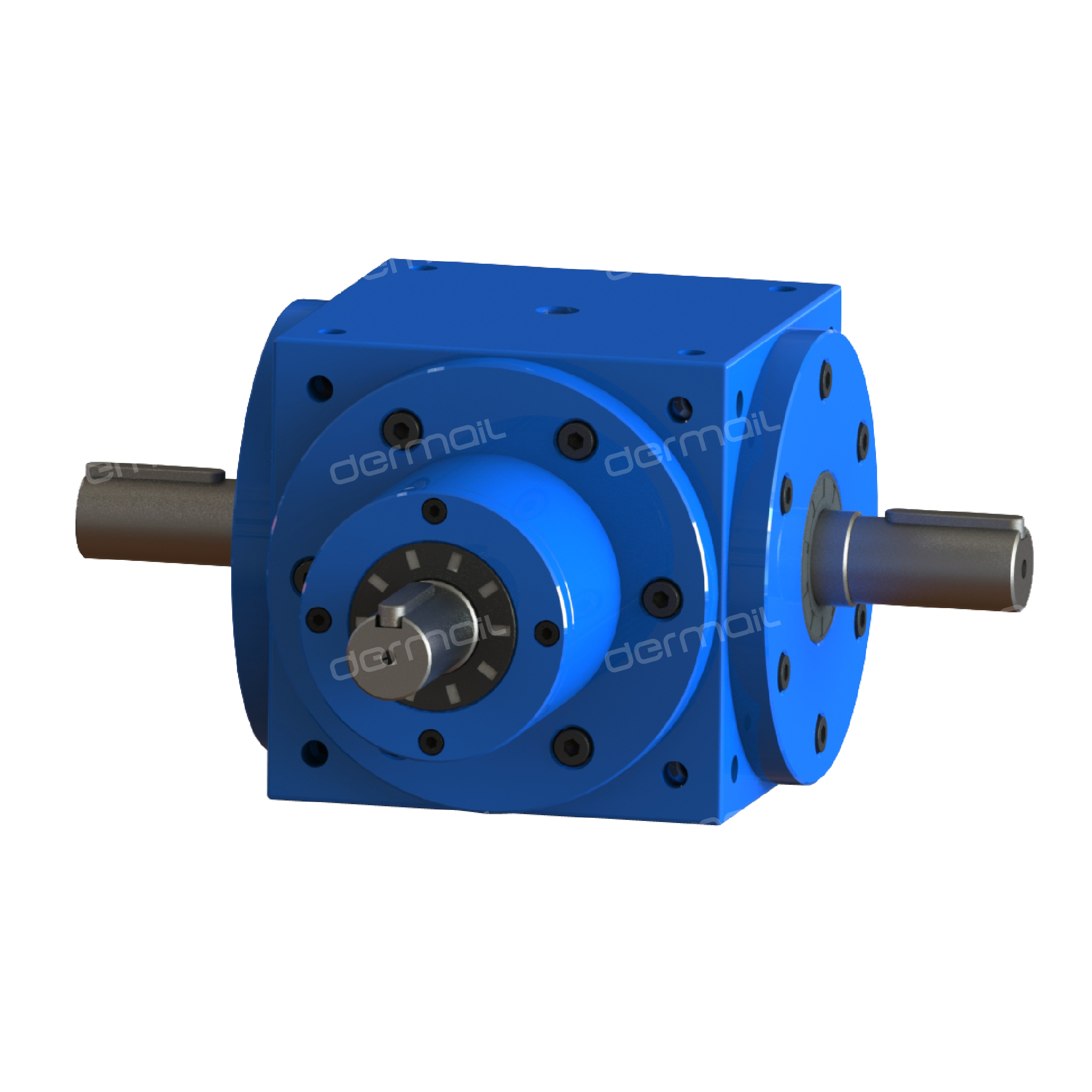
2. Structural Composition and Working Principle
A bevel gear steering box consists of two primary components:
- Input Shaft and Pinion Gear: The input shaft connects to the power source (e.g., motor) and drives a smaller bevel gear called the pinion.
- Output Shaft and Crown Gear: The output shaft, perpendicular to the input, holds a larger bevel gear (the crown gear). The pinion meshes with the crown gear, transmitting motion at a right angle.
Key Mechanisms:
- Tooth Engagement: The teeth of the pinion and crown gears are cut at precise angles to ensure smooth meshing, minimizing friction and wear.
- Load Distribution: The conical shape distributes forces evenly across the gear teeth, enabling high torque transmission without deformation.
- Speed Ratio Adjustment: By varying the number of teeth on the pinion and crown gears, the steering box can achieve different speed ratios (e.g., reduction or overdrive).
3. Core Advantages
- Compact Design: Enables directional changes in tight spaces, ideal for applications with spatial constraints.
- High Efficiency: Typically achieves 95–98% power transmission efficiency due to precise tooth engagement.
- Durable Construction: Made from materials like alloy steel or stainless steel, they resist wear, corrosion, and high temperatures.
- Versatile Speed Ratios: Customizable gear ratios allow adaptation to diverse operational requirements.
- Low Noise Operation: Optimized tooth profiles reduce vibration and noise, suitable for noise-sensitive environments.
4. Key Applications
4.1 Automotive Industry
- Differential Systems: Bevel gear steering boxes are central to automotive differentials, distributing torque between wheels while allowing differential rotation during turns.
- Steering Mechanisms: Used in rack-and-pinion steering systems to convert rotational motion into linear movement for steering control.
4.2 Industrial Machinery
- Conveyor Systems: Redirect the motion of conveyor belts at right angles, optimizing material handling workflows.
- Packaging Equipment: Enable precise rotation of packaging components (e.g., bottle caps, labels) during assembly.
- Metal Processing: Drive rotating tables in lathes, milling machines, and grinding equipment for accurate machining.
4.3 Aerospace and Defense
- Actuation Systems: Control the movement of flight control surfaces (e.g., ailerons, rudders) in aircraft.
- Weapon Systems: Facilitate the elevation and azimuth adjustment of turrets in military vehicles.
4.4 Robotics and Automation
- Robotic Arms: Transmit motion between joints, enabling multi-axis movement with high precision.
- CNC Machines: Drive rotary tables and tool changers, ensuring synchronized operation in automated manufacturing.
4.5 Marine Applications
- Propulsion Systems: Redirect thrust in outboard motors and ship steering mechanisms.
- Winches and Cranes: Provide reliable power transmission for lifting and anchoring operations.
5. Conclusion
Bevel gear steering boxes are indispensable for applications requiring directional changes, high torque, and compact design. Their robust construction, efficiency, and adaptability make them suitable for industries ranging from automotive and aerospace to robotics and marine engineering. As technology advances, innovations in materials (e.g., carbon fiber composites) and manufacturing (e.g., 3D-printed gears) will further enhance their performance, solidifying their role in modern mechanical systems.
By understanding their principles and applications, engineers can leverage dermail bevel gear steering boxes to optimize machinery design, improve operational efficiency, and meet the demands of evolving industrial challenges.








Tel:+86-317-7369999
E-mail: demai@demai.org
Mobile:+86-18653450543 (Wechat)
Address:No. 6, Haihe Road, economic development zone, Wuqiao County, Cangzhou City, Hebei Province

点击右上角
分享给朋友吧
Copyright ©2023 All Rights Reserved Hebei Demai Transmission Machinery Co.,Ltd.
Copyright ©2025 All Rights Reserved Hebei Demai Transmission Machinery Co.,Ltd.
