
Why Screw Jacks Are the Preferred Choice for Paper Machinery
2026-01-21 16:41:36
Click:
“
In the paper manufacturing industry, the lifting mechanism is a vital component that directly impacts production efficiency, product quality, and operational safety.
”
In the paper manufacturing industry, the lifting mechanism is a vital component that directly impacts production efficiency, product quality, and operational safety. Among various lifting solutions, screw jacks have emerged as the preferred choice for numerous applications in paper machinery. This article delves into the key reasons behind this preference, highlighting the unique advantages that screw jacks offer in this specific industrial context.
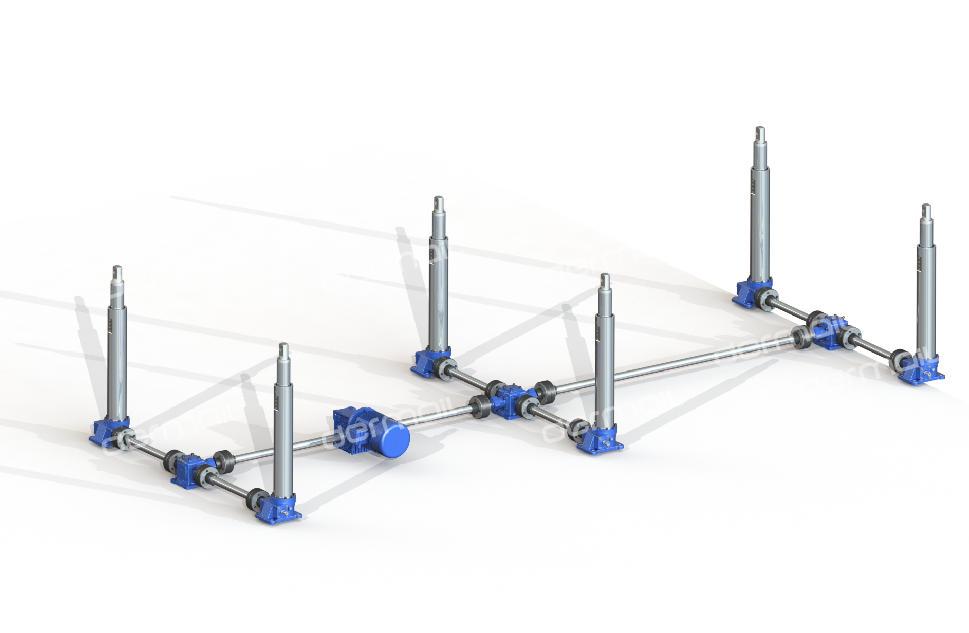
1. Precise Control for High-Quality Production
One of the most significant advantages of dermail transmission screw jacks in paper machinery is their ability to provide precise control over lifting operations. The helical screw mechanism converts rotational motion into linear motion with exceptional accuracy, enabling micro-level adjustments in height or position. This level of precision is crucial in paper manufacturing for several reasons:
- Paper Alignment: During the production process, maintaining perfect alignment of paper sheets or rolls is essential to prevent wrinkles, creases, or uneven edges. Screw jacks allow for fine-tuning of the lifting height, ensuring consistent paper positioning throughout the production line.
- Tension Control: In processes like winding and unwinding paper rolls, precise control over the lifting speed and position is necessary to maintain optimal tension. Screw jacks enable smooth, controlled movements that help prevent paper breakage or deformation due to excessive tension.
- Quality Inspection: When inspecting paper products for defects or quality issues, accurate positioning of the inspection equipment or the paper itself is vital. Screw jacks provide the stability and precision required for detailed visual or instrumental inspections.
2. Stable and Reliable Operation
Paper manufacturing environments often involve heavy loads, continuous operation, and varying environmental conditions. Screw jacks are well-suited to withstand these challenges due to their inherent stability and reliability:
- Self-Locking Mechanism: Many screw jack designs incorporate a self-locking feature, which means that the load remains securely in position even when the power is turned off. This is particularly important in paper machinery, where unexpected movement of heavy paper rolls or equipment could cause safety hazards or production disruptions.
- Low Vibration and Noise: The screw-and-nut mechanism of screw jacks generates minimal vibration and noise during operation. This is beneficial in paper mills, where excessive vibration can affect the quality of delicate paper products and create a noisy working environment for operators.
- Durability: Screw jacks are typically constructed from high-strength materials such as alloy steel, which can withstand the heavy loads and repetitive stress encountered in paper manufacturing. Their robust design ensures long service life with minimal maintenance requirements.
3. Versatility and Adaptability
Paper machinery comes in a wide variety of configurations and sizes, each with its own unique lifting requirements. Screw jacks offer a high degree of versatility and adaptability to meet these diverse needs:
- Customizable Specifications: Screw jacks can be customized in terms of load capacity, lifting speed, stroke length, and mounting options to suit specific paper machinery applications. This flexibility allows manufacturers to select the most appropriate screw jack model for their particular requirements.
- Multiple Drive Options: Screw jacks can be powered by various drive sources, including electric motors, hydraulic systems, or manual operation. This versatility enables integration with different types of paper machinery and control systems, whether automated or manual.
- Space-Saving Design: The compact and modular design of screw jacks makes them ideal for installations where space is limited. They can be easily mounted in tight spaces within paper machinery, without compromising on performance or functionality.
4. Safety and Compliance
Safety is a top priority in the paper manufacturing industry, and screw jacks contribute to a safe working environment in several ways:
- Overload Protection: Many screw jack models are equipped with overload protection mechanisms, such as shear pins or torque limiters, which prevent damage to the jack and surrounding equipment in case of excessive loads.
- Emergency Stop Functionality: Screw jacks can be integrated with emergency stop systems to quickly halt lifting operations in the event of an emergency or safety hazard.
- Compliance with Standards: Reputable screw jack manufacturers design their products to comply with relevant industry standards and safety regulations, ensuring that paper machinery operators can have confidence in the reliability and safety of the lifting mechanism.
5. Cost-Effectiveness
In addition to their technical advantages, screw jacks also offer cost-effectiveness over the long term:
- Low Maintenance Costs: Due to their simple and robust design, screw jacks require minimal maintenance compared to other lifting mechanisms. This reduces downtime and maintenance expenses, contributing to overall cost savings.
- Long Service Life: The durability of screw jacks means that they can operate for extended periods without the need for frequent replacement, further reducing lifecycle costs.
- Energy Efficiency: Screw jacks are generally more energy-efficient than some alternative lifting solutions, especially when equipped with high-efficiency electric motors. This can lead to lower energy consumption and reduced operating costs for paper manufacturers.
Conclusion
In conclusion, screw jacks have become the preferred choice for lifting mechanisms in paper machinery due to their precise control, stable operation, versatility, safety features, and cost-effectiveness. Whether used for paper roll handling, equipment positioning, or quality inspection, screw jacks provide a reliable and efficient solution that meets the demanding requirements of the paper manufacturing industry. As paper technology continues to evolve, screw jacks are likely to remain an essential component in ensuring smooth, safe, and high-quality paper production processes.








Tel:+86-317-7369999
E-mail: demai@demai.org
Mobile:+86-18653450543 (Wechat)
Address:No. 6, Haihe Road, economic development zone, Wuqiao County, Cangzhou City, Hebei Province

点击右上角
分享给朋友吧
Copyright ©2023 All Rights Reserved Hebei Demai Transmission Machinery Co.,Ltd.
Copyright ©2025 All Rights Reserved Hebei Demai Transmission Machinery Co.,Ltd.
