
Installation and Operation Requirements for Screw Jacks in Deep Fryers
2026-01-23 10:17:12
Click:
“
Screw jacks are critical components in deep fryer systems, enabling precise vert
”
Screw jacks are critical components in deep fryer systems, enabling precise vertical movement of cooking baskets, racks, or other equipment. To ensure safe, efficient, and long-lasting operation, strict adherence to installation and operation guidelines is essential. This article outlines five core requirements: installation verticality and stability, environmental adaptability, load management, safety protection, and lubrication maintenance.
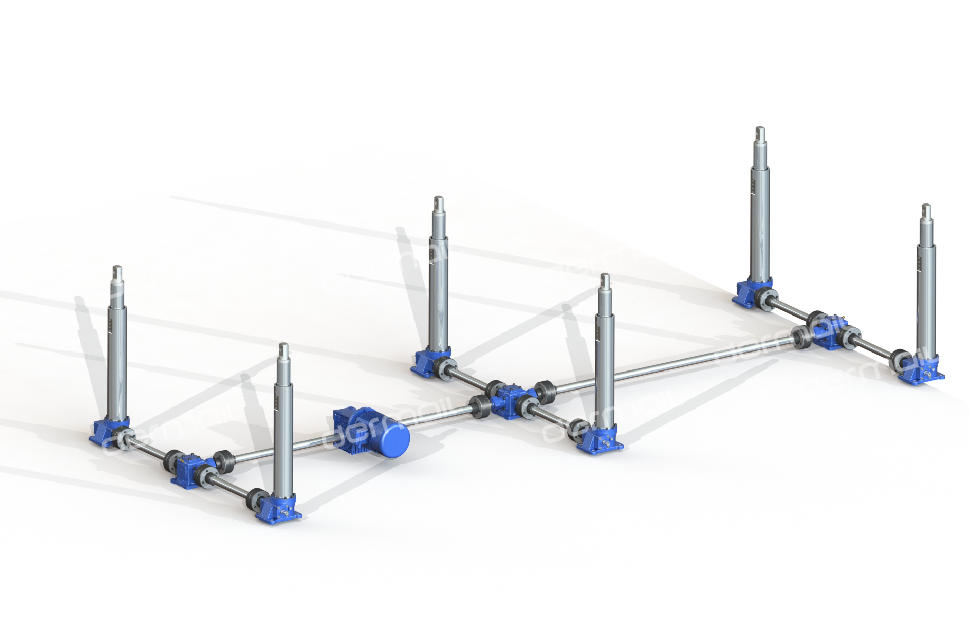
1. Installation Verticality and Stability
1.1 Precision Vertical Alignment
The screw must maintain absolute verticality relative to the mounting surface. Any lateral force applied to the screw due to misalignment will cause uneven wear, bending, or even system failure over time. Use professional tools (e.g., laser plumb bobs) to calibrate verticality, ensuring an error margin of ≤0.1 mm/m.
1.2 Mounting Base Specifications
The base must provide sufficient rigidity, flatness, and strength to withstand operational thrust/pull forces and torque. Level the base surface with a spirit level and secure the jack’s bottom plate using high-strength bolts (Grade 8.8 or higher). Tighten bolts diagonally to the specified torque to prevent uneven stress distribution.
1.3 Guide System Installation
Install guide mechanisms (e.g., linear rails, bushings) based on site conditions to prevent lateral forces from acting on the screw. Ensure the guide’s motion direction aligns precisely with the screw or nut’s movement path.
2. Environmental Adaptability
2.1 Dust and Water Protection
Deep fryer environments often contain oil, grease, and particulates. Equip screws with telescopic protective covers (e.g., bellow covers, metal corrugated tube covers) to block contaminants and prevent abrasive wear in the nut assembly.
2.2 Temperature Control
In high-temperature zones (e.g., near fryers), use high-temperature-resistant grease (e.g., molybdenum disulfide-based) and reduce rated load by 10–20% (heat weakens material strength). Avoid prolonged exposure to temperatures exceeding the jack’s specified limit.
2.3 Corrosion Resistance
For environments with corrosive agents (e.g., cleaning chemicals, steam), opt for stainless-steel screws (e.g., 304/316 grades) and avoid lubricants that react with corrosive substances. Use acid/alkali-resistant grease instead.
3. Load Management and Operational Standards
3.1 Strict Load Limits
Never exceed the rated load capacity (even short-term impact loads should stay within 1.2× the rated value). Overloading can deform the screw, fracture the nut, or cause catastrophic equipment failure.
3.2 Load Centering
Position loads symmetrically to align the center of gravity with the screw’s axis. For eccentric loads, add balancing guide systems (e.g., guide rods, linear rails) to distribute forces evenly.
3.3 Operational Sequence
- Pre-operation Check: Conduct a no-load trial run (1–2 full strokes) to verify smooth motion, abnormal noise, and acceptable motor/gearbox temperature rise.
- Shutdown Protocol: Lower loads to a safe position before powering off. Clean debris from the screw surface after each use.
3.4 Avoid Extreme Operations
Prohibit frequent start-stop cycles (>5 times/minute), abrupt reversals, or manual force intervention (e.g., pushing/pulling loads), as these actions damage transmission components.
4. Safety Protection and Emergency Response
4.1 Mechanical Limit Stops
Install reliable mechanical limit switches or stop blocks at the upper and lower travel extremes to prevent screw ejection or motor overload.
4.2 Electrical Protection
Equip systems with overload protection (e.g., current monitors, thermal relays) and use IP65-rated electrical components to resist oil/water ingress.
4.3 Personnel Safety
Operators must wear protective gear (gloves, goggles) and avoid contact with rotating screws/gears. Restrict access beneath lifting zones and install safety barriers or emergency stop buttons.
4.4 Emergency Procedures
If jamming, load slippage, or abnormal noise occurs, immediately power off and inspect for foreign objects, screw bending, or nut damage. Never force continued operation.
5. Lubrication and Maintenance
5.1 Lubrication Schedule
- Screw-Nut Interface: Apply lithium-based grease (e.g., #2 or #3) daily for ≤4 hours of operation/day or every 3 days for >8 hours/day.
- Gearbox: Use industrial gear oil (e.g., 150# or 220#). Change after 300 hours of initial use, then every 1,000 hours thereafter.
5.2 Routine Inspections
- Daily: Check surface cleanliness, bolt tightness, and no-load operation sounds.
- Weekly: Measure screw wear (replace if diameter reduction exceeds 0.2 mm) and inspect nut clearance.
- Monthly: Test motor insulation (≥0.5 MΩ with a multimeter) and check for seal leaks (e.g., oil seals, dust rings).
5.3 Long-Term Storage
For jacks unused >1 month, retract the screw to minimum length, clean surfaces, apply rust-preventive oil to exposed metal parts, and store in a dry, ventilated area.
Conclusion
Adhering to these installation and operation requirements ensures the reliability, safety, and longevity of dermail transmission screw jacks in deep fryer applications. Regular maintenance and proactive environmental management further minimize downtime and extend service life. For customized solutions, consult manufacturers to address specific operational challenges.








Tel:+86-317-7369999
E-mail: demai@demai.org
Mobile:+86-18653450543 (Wechat)
Address:No. 6, Haihe Road, economic development zone, Wuqiao County, Cangzhou City, Hebei Province

点击右上角
分享给朋友吧
Copyright ©2023 All Rights Reserved Hebei Demai Transmission Machinery Co.,Ltd.
Copyright ©2025 All Rights Reserved Hebei Demai Transmission Machinery Co.,Ltd.
