
Why Do Bevel Gear Screw Jacks Achieve High Transmission Speeds?
2026-01-19 09:45:31
Click:
“
In the domain of mechanical power transmission and screw jack systems, bevel gear screw jacks are recognized for their impressive ability to attain high transmission speeds.
”
In the domain of mechanical power transmission and screw jack systems, bevel gear screw jacks are recognized for their impressive ability to attain high transmission speeds. This distinct advantage is a result of a blend of their geometric design, efficient power - transfer mechanisms, optimized material selection, and advanced manufacturing processes, enabling them to outperform many other lifting devices in terms of speed.
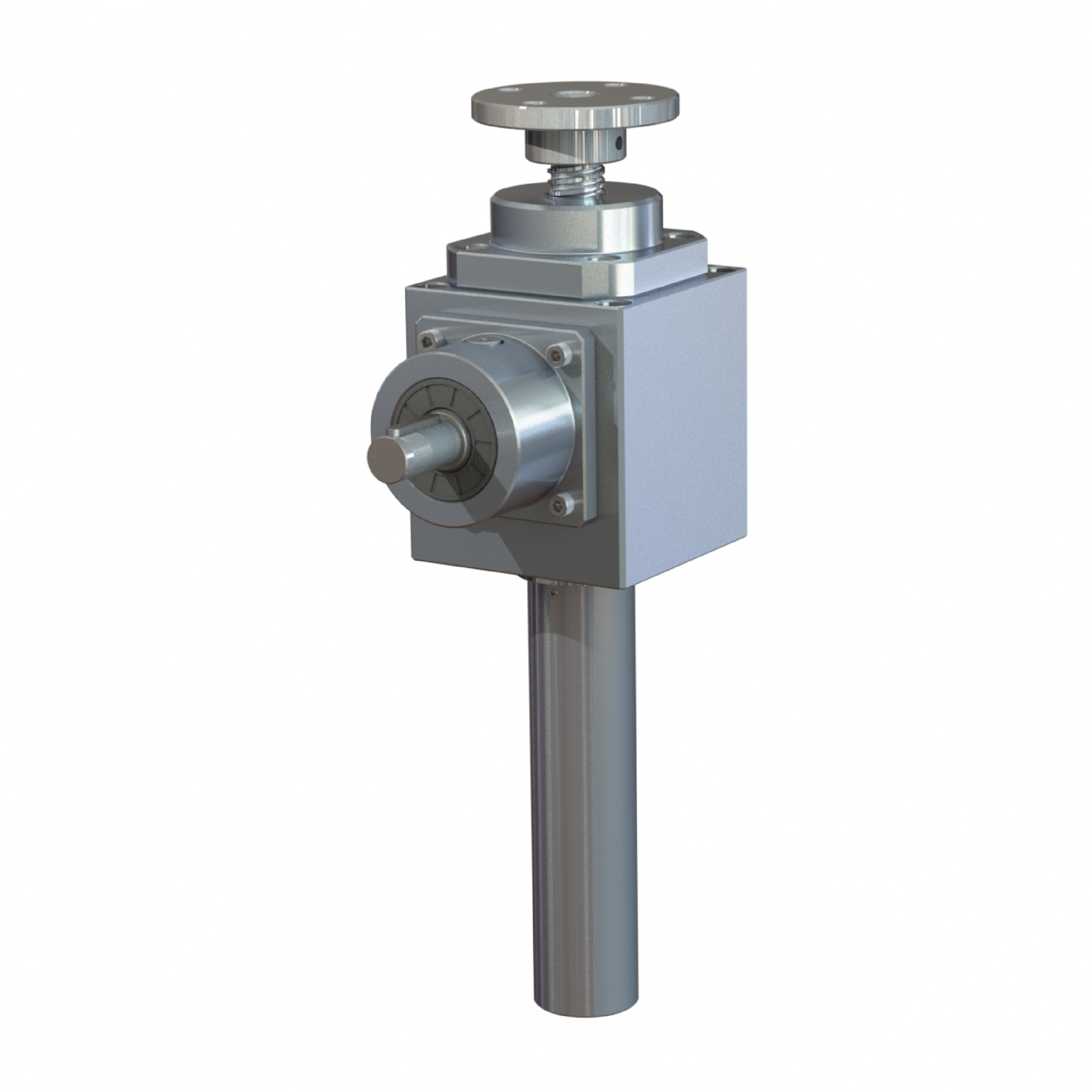
Geometric Design for Enhanced Speed Transmission
The most characteristic feature of bevel gear screw jacks lies in the integration of bevel gears and screw mechanisms. The bevel gears, with their conical tooth profile, are designed to transmit motion between intersecting shafts at various angles, which offers several inherent benefits for high - speed transmission.
Firstly, the conical shape of bevel gears provides a larger contact area between the teeth during meshing compared to some other gear types. This increased contact area distributes the load more evenly across the teeth, reducing stress concentrations. As a result, the gears can rotate at higher speeds without the risk of tooth failure. The smooth engagement of the conical teeth also minimizes vibration and noise, which is crucial for maintaining stable high - speed operation.
Secondly, the screw mechanism in bevel gear screw jacks can be precisely engineered to complement the high - speed capabilities of the bevel gears. The lead of the screw, which determines the linear displacement per revolution, can be optimized. A larger lead allows for faster linear movement of the load for a given rotational speed of the screw. When combined with the high - speed rotation enabled by the bevel gears, this results in a significant increase in the overall transmission speed of the jack.
Efficient Power Transfer Mechanisms
Bevel gear screw jacks employ a well - structured power transfer chain that maximizes efficiency and minimizes energy losses, facilitating high - speed operation.
The bevel gear pair serves as the core of the power transfer system. It acts as a speed reducer or multiplier depending on the gear ratio. In high - speed applications, the bevel gears are typically configured to provide an appropriate gear ratio that allows the input shaft (usually driven by a motor) to rotate at a relatively high speed. The output of the bevel gears is then transferred to the screw mechanism, which converts the rotational motion into linear motion. By optimizing the gear ratio, engineers can ensure that the maximum available power from the motor is effectively converted into the required lifting speed.
In addition to the bevel gears, high - precision bearings are used to support the rotating shafts of both the bevel gears and the screw. These bearings are designed to minimize friction and wear, ensuring smooth rotation even at high speeds. The use of low - friction seals and high - quality lubricants further reduces energy losses within the system, allowing it to operate more efficiently and achieve higher speeds.
Optimized Material Selection for High - Speed Performance
The choice of materials for constructing bevel gear screw jacks plays a critical role in their ability to handle high - speed operation. High - quality materials are selected to withstand the stresses and strains associated with rapid rotation while maintaining dimensional stability and durability.
For the bevel gears, alloy steels are commonly used due to their excellent strength, hardness, and wear resistance. These materials can be heat - treated to achieve the desired mechanical properties, such as high surface hardness for improved tooth durability and core toughness to resist fracture under high loads. Some advanced bevel gear screw jacks may even incorporate composite materials or ceramic coatings on the gears to further enhance their performance at high speeds by reducing friction and wear.
The screw in the jack is also made from high - strength materials. High - tensile steel is a popular choice as it can resist bending and torsion forces generated during high - speed rotation and load lifting. The housing components of the jack are typically constructed from rigid materials like cast iron or high - strength aluminum alloys to provide support and stability to the entire system, ensuring that it can withstand the dynamic forces at high speeds.
Advanced Manufacturing Techniques for Precision and Speed
The manufacturing process of bevel gear screw jacks significantly contributes to their high - speed capabilities. Modern manufacturing techniques, such as CNC (Computer Numerical Control) machining and grinding, are employed to produce gears, screws, and other components with extremely high precision.
CNC machining allows for the creation of complex gear tooth profiles and screw threads with tight tolerances. This precision ensures smooth and accurate meshing between the bevel gears and proper engagement of the screw with its nut, reducing backlash and vibration. Backlash and vibration are detrimental to high - speed operation as they can cause inefficiencies and potential damage to the components. Grinding processes further refine the surfaces of the gears and screws, removing any microscopic imperfections and achieving a high degree of surface finish. This minimizes friction between the mating surfaces, allowing the system to operate more smoothly and at higher speeds.
In addition to precision machining, advanced heat treatment and surface coating technologies are used to enhance the performance of the components. For example, case hardening processes can create a hard, wear - resistant surface layer on the gears and screws while maintaining a tough core, enabling them to withstand the high stresses of high - speed operation. Surface coatings, such as diamond - like carbon (DLC) coatings, can further reduce friction and improve the lifespan of the components, contributing to the overall high - speed performance of the bevel gear screw jack.
Conclusion
In conclusion, dermail transmission bevel gear screw jacks achieve high transmission speeds through a combination of their unique geometric design that integrates bevel gears and an optimized screw mechanism, efficient power transfer mechanisms, optimized material selection, and advanced manufacturing techniques. The conical tooth profile of bevel gears and the precisely engineered screw enable smooth and stable operation at high speeds, while the well - structured power transfer chain maximizes efficiency. High - quality materials and precision manufacturing ensure that the components can withstand the stresses and strains associated with rapid rotation, making bevel gear screw jacks an ideal choice for applications where high - speed lifting is required. As technology continues to advance, we can expect bevel gear screw jacks to become even more efficient and capable of achieving even higher transmission speeds in the future.








Tel:+86-317-7369999
E-mail: demai@demai.org
Mobile:+86-18653450543 (Wechat)
Address:No. 6, Haihe Road, economic development zone, Wuqiao County, Cangzhou City, Hebei Province

点击右上角
分享给朋友吧
Copyright ©2023 All Rights Reserved Hebei Demai Transmission Machinery Co.,Ltd.
Copyright ©2025 All Rights Reserved Hebei Demai Transmission Machinery Co.,Ltd.
