
Safety Risks of Using Screw Jacks in Low-Temperature Environments
2026-01-05 13:39:43
Click:
“
Screw jacks are widely used in industrial automation, material handling, and heavy-duty lifting applications due to their precise positioning and high load-bearing capacity.
”
Screw jacks are widely used in industrial automation, material handling, and heavy-duty lifting applications due to their precise positioning and high load-bearing capacity. However, when operating in low-temperature environments, such as cold storage facilities, polar regions, or outdoor winter operations, these devices face unique challenges that can compromise safety and reliability. This article explores the key safety risks associated with screw jacks in cold conditions and proposes mitigation strategies.
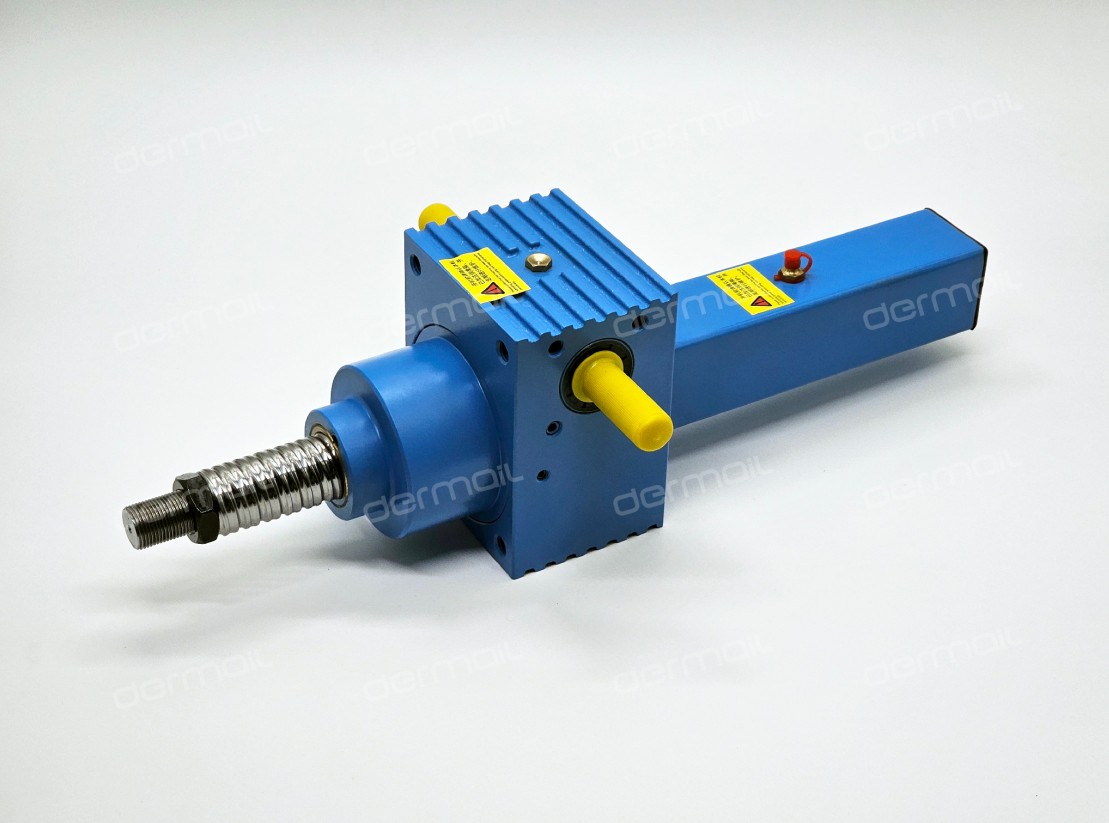
1. Material Brittleness and Fracture Risks
Low temperatures significantly reduce the ductility and toughness of metals, a phenomenon known as cold brittleness. Standard carbon steels, commonly used in dermail tranmission screw jacks, become prone to sudden fractures below -20°C, especially under cyclic loading or impact forces. For example, a screw jack operating in a -30°C cold storage warehouse may experience catastrophic failure if its lead screw or nut is made of untempered carbon steel.
Mitigation Strategies:
- Material Selection: Opt for austenitic stainless steels (e.g., 304/316) or alloy steels (e.g., 9Cr18Mo) with enhanced low-temperature toughness.
- Heat Treatment: Apply quenching and tempering processes to improve impact resistance.
- Non-Destructive Testing: Regularly inspect components for micro-cracks using ultrasonic or magnetic particle testing.
2. Lubrication Failure and Increased Wear
Lubricants thicken or solidify at low temperatures, reducing their ability to form a protective film between moving parts. This leads to increased friction, wear, and potential seizure of the screw-nut interface. For instance, a lithium-based grease rated for -20°C may become non-flowable at -40°C, causing the screw jack to jam during operation.
Mitigation Strategies:
- Low-Temperature Lubricants: Use synthetic lubricants (e.g., polyalphaolefin-based) or lithium-complex greases rated for temperatures as low as -60°C.
- Lubrication Frequency: Increase lubrication intervals to compensate for reduced oil film thickness.
- Pre-Heating: Warm the screw jack to operating temperature before use to soften lubricants.
3. Seal Degradation and Leakage
Rubber seals (e.g., O-rings, gaskets) harden and shrink in cold environments, compromising their ability to maintain pressure or exclude contaminants. A fluororubber (FKM) seal rated for -40°C may still lose elasticity at -50°C, leading to oil leakage or ingress of moisture and ice particles.
Mitigation Strategies:
- Seal Material Selection: Use silicone or perfluoroelastomer (FFKM) seals for temperatures below -60°C.
- Redundant Sealing: Implement double-lip seals or labyrinth designs to enhance protection.
- Regular Inspection: Check for signs of leakage or seal damage during maintenance.
4. Motor and Drive System Challenges
Electric motors and gearboxes may struggle to start or operate efficiently in cold conditions due to:
- Increased Viscosity of Lubricants: Gear oils thicken, increasing torque requirements.
- Battery Performance Degradation: Lithium-ion batteries lose capacity below 0°C, reducing runtime.
- Thermal Contraction: Mismatched thermal expansion coefficients between components can cause misalignment.
Mitigation Strategies:
- Motor Selection: Use motors with low-temperature-rated insulation (e.g., Class H) and built-in heaters.
- Battery Heating: Employ battery warmers or thermal insulation to maintain optimal operating temperatures.
- Soft Start Mechanisms: Implement variable frequency drives (VFDs) to reduce inrush current during startup.
5. Differential Thermal Contraction and Misalignment
Different materials in the screw jack assembly (e.g., steel screw vs. aluminum housing) contract at varying rates under temperature changes, potentially causing:
- Axial Misalignment: Leading to increased backlash or binding.
- Bearing Preload Loss: Reducing load capacity and precision.
- Structural Stress: Risking fatigue or fracture over time.
Mitigation Strategies:
- Material Pairing: Select materials with similar coefficients of thermal expansion (CTE).
- Preloaded Components: Use preloaded bearings or double-nut systems to compensate for contraction.
- Thermal Insulation: Minimize temperature gradients across the assembly.
6. Icing and Condensation Risks
In humid low-temperature environments, condensation can form on screw jacks, leading to:
- Corrosion: On unprotected metal surfaces.
- Icing: On moving parts, restricting motion or causing damage.
- Electrical Short Circuits: In motor windings or control systems.
Mitigation Strategies:
- Environmental Enclosures: Use IP65-rated housings to prevent moisture ingress.
- Dehumidification: Install desiccant breathers or space heaters in enclosed systems.
- Anti-Icing Coatings: Apply hydrophobic coatings to critical surfaces.
Conclusion
Operating screw jacks in low-temperature environments introduces a range of safety risks, from material failure to lubrication issues and electrical challenges. By selecting appropriate materials, lubricants, and seals, and implementing thermal management strategies, these risks can be significantly mitigated. Regular maintenance and real-time monitoring (e.g., vibration analysis, temperature sensors) are also essential to ensure safe and reliable operation in cold conditions. As industries such as cold chain logistics, renewable energy, and aerospace continue to expand into extreme environments, understanding and addressing these risks will be critical for ensuring operational safety and equipment longevity.








Tel:+86-317-7369999
E-mail: demai@demai.org
Mobile:+86-18653450543 (Wechat)
Address:No. 6, Haihe Road, economic development zone, Wuqiao County, Cangzhou City, Hebei Province

点击右上角
分享给朋友吧
Copyright ©2023 All Rights Reserved Hebei Demai Transmission Machinery Co.,Ltd.
Copyright ©2025 All Rights Reserved Hebei Demai Transmission Machinery Co.,Ltd.
