
The Advantages and Applications of Screw Jacks
2026-01-07 10:32:57
Click:
“
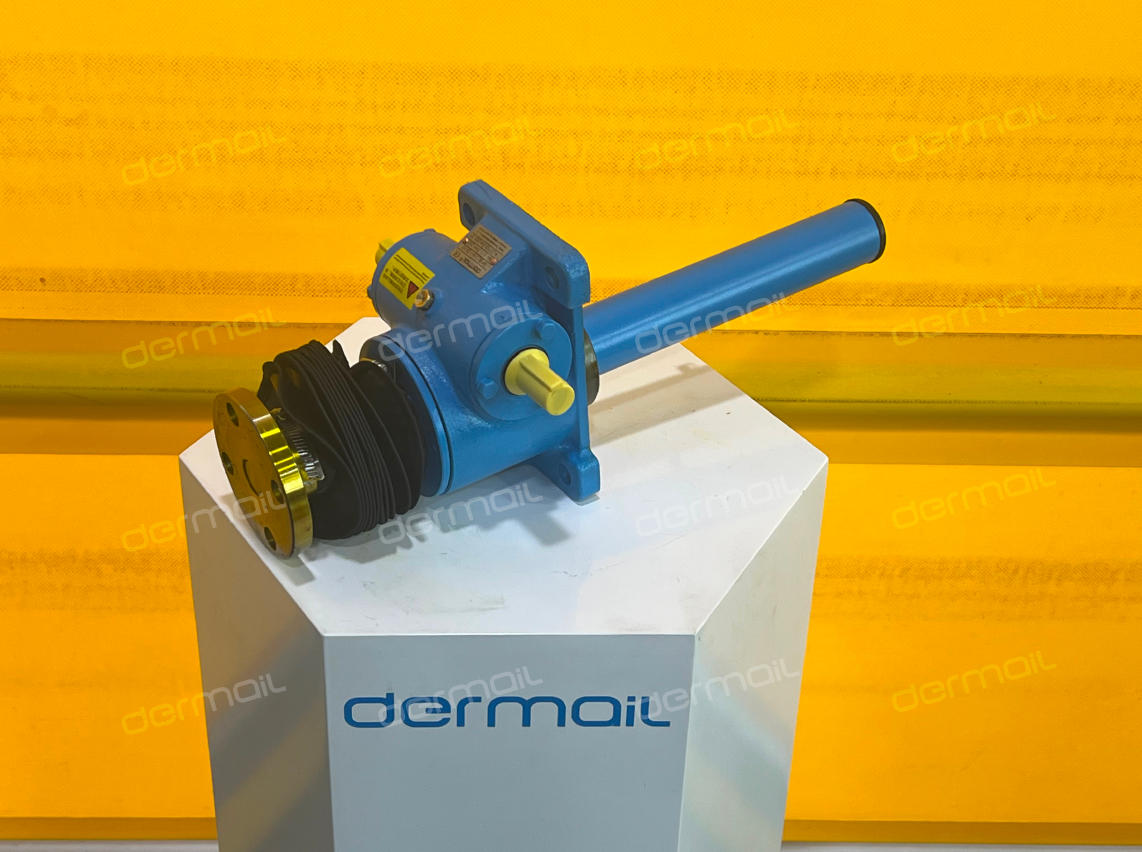
Screw jacks, also known as worm gear screw lifts, are mechanical devices that convert rotational motion into linear motion through the interaction of a worm gear and a screw.
”
Introduction
Screw jacks, also known as worm gear screw lifts, are mechanical devices that convert rotational motion into linear motion through the interaction of a worm gear and a screw. These versatile and reliable components have become indispensable in various industries due to their unique advantages and wide - ranging applications.
Advantages of Screw Jacks
1. High Precision and Accuracy
One of the most significant advantages of dermail screw jacks is their high level of precision. The worm - gear mechanism ensures that the linear movement is extremely accurate, with minimal backlash. This precision is crucial in applications where even a small deviation can lead to significant errors or safety hazards. For example, in the semiconductor manufacturing industry, where components need to be positioned with sub - micrometer accuracy, screw jacks can precisely control the movement of equipment, ensuring the quality and reliability of the production process.
2. Heavy Load Capacity
Screw jacks are capable of handling heavy loads. The design of the screw and the worm gear allows them to distribute the load evenly, enabling them to lift and support substantial weights. In the construction industry, large - scale screw jacks are used to support and adjust the height of heavy structures such as bridges and buildings during construction and maintenance. A single screw jack can often bear loads ranging from a few tons to several hundred tons, making them ideal for applications that require high - strength lifting solutions.
3. Compact Design and Space Efficiency
Compared to other lifting mechanisms, screw jacks have a relatively compact design. They can be installed in limited spaces, which is a great advantage in applications where space is at a premium. For instance, in automated production lines, where multiple components need to be arranged in a confined area, screw jacks can be easily integrated into the system without taking up excessive space. Their small footprint allows for more efficient use of the available workspace, improving overall productivity.
4. Self - Locking Feature
Screw jacks have a self - locking property, which means that once the load is lifted to the desired position, the screw will remain in place without the need for additional braking or locking mechanisms. This is particularly useful in applications where the load needs to be held steady for an extended period. In the aerospace industry, screw jacks are used to adjust the position of aircraft components during maintenance. The self - locking feature ensures that the components stay in the adjusted position, reducing the risk of accidents and improving the safety of the maintenance process.
5. Long Service Life and Low Maintenance
The robust construction of screw jacks, typically made of high - quality materials such as steel, ensures their durability and long service life. They are designed to withstand harsh operating conditions, including high loads, frequent start - stop cycles, and exposure to dust and moisture. Additionally, screw jacks require minimal maintenance. Regular lubrication and occasional inspection are usually sufficient to keep them running smoothly, reducing downtime and maintenance costs for businesses.
Applications of Screw Jacks
1. Industrial Automation
In industrial automation, screw jacks play a vital role in various processes. They are used to adjust the height of worktables, conveyor belts, and robotic arms. For example, in an automotive assembly line, screw jacks can precisely position the car body at different stages of the assembly process, ensuring that each component is installed accurately. They also enable the vertical movement of storage racks in automated warehouses, optimizing the use of storage space and facilitating efficient material handling.
2. Construction and Engineering
In the construction and engineering sector, screw jacks are widely used for tasks such as lifting and supporting heavy structures, adjusting the height of scaffolding, and leveling buildings. During the construction of high - rise buildings, screw jacks are employed to support the formwork, allowing for the precise pouring of concrete at different levels. In bridge construction, they are used to adjust the position of bridge segments during assembly, ensuring proper alignment and structural integrity.
3. Medical Equipment
Screw jacks find applications in the medical field as well. They are used in adjustable hospital beds, allowing patients to change their position comfortably. In surgical operating tables, screw jacks provide precise height and angle adjustments, enabling surgeons to perform operations with greater ease and accuracy. Additionally, they are used in medical imaging equipment, such as X - ray machines, to adjust the position of the imaging components for optimal patient positioning and image quality.
4. Energy and Utilities
In the energy and utilities industry, screw jacks are used for various purposes. In power plants, they are employed to adjust the position of valves and dampers, controlling the flow of fluids and gases. In wind turbines, screw jacks are used to adjust the pitch of the blades, optimizing the turbine's performance under different wind conditions. They are also used in solar power plants to track the movement of the sun, ensuring that solar panels are always oriented towards the sun for maximum energy absorption.
5. Entertainment and Stage Equipment
In the entertainment industry, screw jacks are used to create dynamic stage effects. They can lift and lower stage platforms, props, and lighting equipment, adding a sense of drama and excitement to performances. For example, in a large - scale musical or theater production, screw jcks can be used to create the illusion of objects floating in mid - air or to simulate the movement of scenery, enhancing the overall visual experience for the audience.
Conclusion
Screw jacks offer a range of advantages, including high precision, heavy load capacity, compact design, self - locking feature, and long service life with low maintenance. These advantages make them suitable for a wide variety of applications across different industries, from industrial automation and construction to medical equipment and entertainment. As technology continues to advance, the demand for screw jacks is likely to increase, and they will continue to play a crucial role in driving innovation and efficiency in various sectors.








Tel:+86-317-7369999
E-mail: demai@demai.org
Mobile:+86-18653450543 (Wechat)
Address:No. 6, Haihe Road, economic development zone, Wuqiao County, Cangzhou City, Hebei Province

点击右上角
分享给朋友吧
Copyright ©2023 All Rights Reserved Hebei Demai Transmission Machinery Co.,Ltd.
Copyright ©2025 All Rights Reserved Hebei Demai Transmission Machinery Co.,Ltd.
