
How to Use Screw Jacks in Dusty Environments
2025-12-20 13:30:09
Click:
“
However, when operating in dusty environments—such as mining sites, cement plants, or grain processing facilities—their performance and lifespan can be significantly compromised by particulate contamination.
”
Screw jacks are widely used in industrial automation, material handling, and construction equipment for their precise linear motion control. However, when operating in dusty environments—such as mining sites, cement plants, or grain processing facilities—their performance and lifespan can be significantly compromised by particulate contamination. This article outlines key strategies to ensure reliable operation and longevity of dermail transmission screw jacks in harsh, dust-laden conditions.
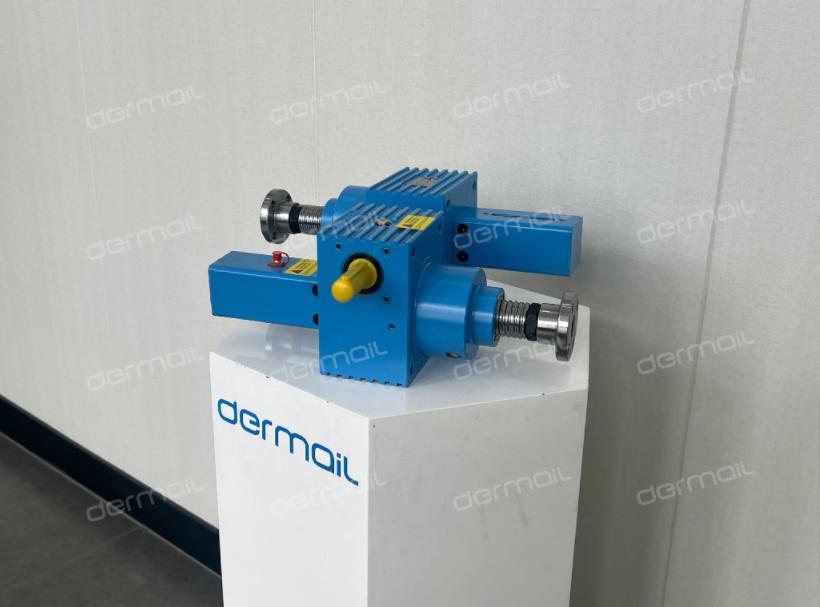
1. Enhanced Sealing Systems
Dust infiltration primarily occurs through gaps in mechanical joints and moving parts. To combat this:
- Multi-Layer Seals: Replace standard seals with dual-lip or triple-lip designs (e.g., TC-type oil seals) that combine dust exclusion with oil retention. Fluororubber or silicone seals are recommended for their wear resistance and temperature stability (-40°C to 200°C).
- Positive Pressure Protection: Introduce clean, filtered compressed air (0.02–0.05 MPa) into the housing to create a protective air curtain. Pair this with a high-efficiency air filter (≤5μm) to prevent clogging.
- Protective Covers: Install fully enclosed, removable metal or reinforced plastic covers (IP65-rated) over the screw shaft and coupling. Add PTFE wear sleeves to minimize clearance (0.05–0.1mm) and prevent large particles from jamming.
2. Optimized Lubrication Management
Dust mixed with lubricants forms abrasive pastes that accelerate wear. Mitigation measures include:
- High-Performance Grease: Use NLGI Grade 3 lithium-complex or polyurea-based greases with MoS₂ or graphite additives for enhanced boundary lubrication. For extreme temperatures, select greases with drop points ≥260°C (high-temp) or ≤-20°C (low-temp).
- Shortened Relubrication Intervals: Reduce the standard greasing cycle by 50% (e.g., every 500 hours) in dusty settings. Equip grease fittings with magnetic filters (≤10μm) to trap metal debris.
- Oil Sampling: Analyze grease samples every 1,000 hours. Replace lubricants immediately if dust content exceeds 3%.
3. Structural Reinforcements
- Surface Hardening: Apply nitriding (≥850HV) or hard chrome plating (≥20μm) to the screw shaft and worm gear to resist abrasive wear. Laser-quench worm gear teeth to a 0.8mm-deep hardened layer.
- Ventilation Control: Fit intake vents with washable dust screens (≤2mm pore size) and exhaust fans to maintain airflow. Activate automatic shutdown alerts when dust concentration surpasses 20mg/m³.
4. Operational Best Practices
- Avoid Forced Stops: Never manually override the drive system during operation, as sudden stops can cause particle compaction and mechanical damage.
- Load Management: Under loaded conditions, refrain from switching from motor-driven to manual mode to prevent high-speed rotation of input shafts.
- Intermittent Operation: Schedule 30-minute pauses after every 2 hours of continuous use for dust removal and cooling. Avoid peak dust generation periods (e.g., during crushing operations).
5. Proactive Maintenance
- Deep Cleaning: Disassemble protective covers every 500 hours and clean components with isopropyl alcohol to remove oil-dust residues.
- Precision Inspections: Use laser alignment tools to verify shaft coaxiality (≤0.1mm deviation) and measure screw straightness (≤0.05mm/m allowable bend).
- Spare Parts Inventory: Stock critical items like seals, dust filters, and grease to enable 48-hour replacements. Maintain a usage log to track replacement cycles.
Conclusion
By integrating robust sealing, targeted lubrication, structural upgrades, disciplined operation, and preventive maintenance, screw jacks can achieve reliable performance even in dusty environments. These measures not only extend service life but also reduce downtime and maintenance costs, ensuring optimal productivity in industrial applications.








Tel:+86-317-7369999
E-mail: demai@demai.org
Mobile:+86-18653450543 (Wechat)
Address:No. 6, Haihe Road, economic development zone, Wuqiao County, Cangzhou City, Hebei Province

点击右上角
分享给朋友吧
Copyright ©2023 All Rights Reserved Hebei Demai Transmission Machinery Co.,Ltd.
Copyright ©2025 All Rights Reserved Hebei Demai Transmission Machinery Co.,Ltd.
