
Lubrication Maintenance for Screw Jacks After Prolonged Operation
2025-12-05 12:59:28
Click:
“
Screw jacks, as critical mechanical components widely used in industrial automation, material handling, and precision positioning systems, are prone to wear and performance degradation after prolonged operation.
”
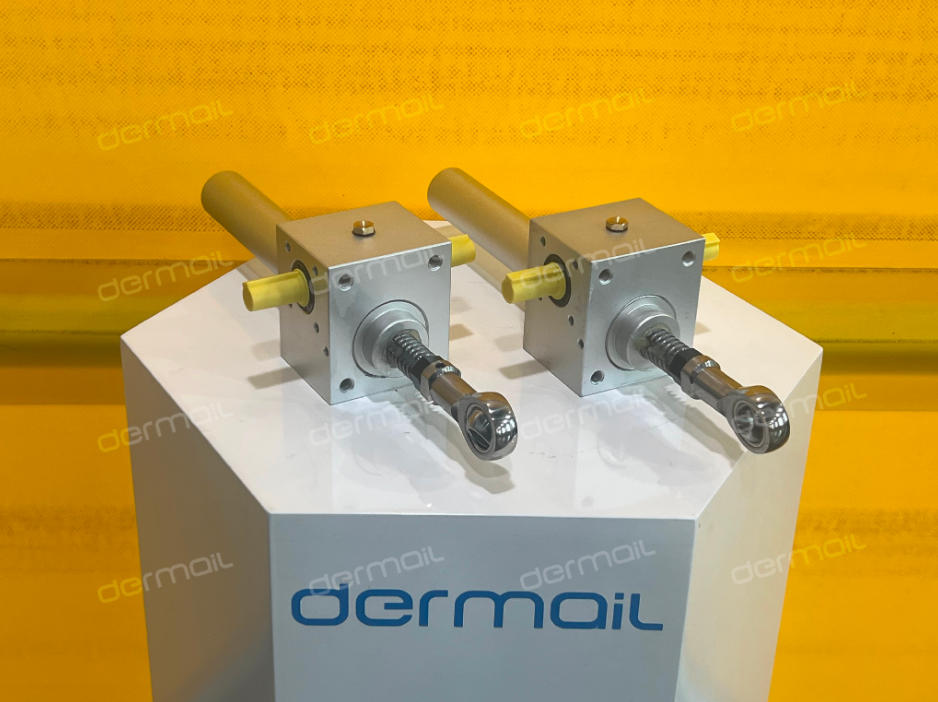
Screw jacks, as critical mechanical components widely used in industrial automation, material handling, and precision positioning systems, are prone to wear and performance degradation after prolonged operation. Effective lubrication maintenance is essential to ensure their reliable operation, extend service life, and reduce maintenance costs. This article provides a detailed guide on lubrication maintenance strategies for screw jacks after extended use.
1. Understanding the Importance of lubrication
Lubrication serves multiple critical functions in screw jacks:
- Reducing Friction and Wear: By forming a protective film between moving parts (e.g., screw and nut, worm gear and worm), lubricants minimize direct metal-to-metal contact, thereby reducing wear and extending component life.
- Dissipating Heat: Lubricants help dissipate heat generated during operation, preventing overheating that could lead to thermal deformation or lubricant degradation.
- Preventing Corrosion: Lubricants with anti-corrosion additives protect components from moisture, chemicals, and environmental contaminants, especially in harsh operating conditions.
- Sealing and Contaminant Exclusion: Proper lubrication helps seal gaps between components, preventing the ingress of dust, dirt, and other contaminants that could accelerate wear.
2. Selecting the Right Lubricant
The choice of lubricant depends on the operating environment, load conditions, and speed requirements of the screw jack:
2.1 Operating Environment
- High-Temperature Environments (>60°C):
Use synthetic lubricants (e.g., Klüber Lubrication GL261, Mobil SHC 100) with high-temperature stability (up to 150°C) and excellent oxidation resistance to prevent carbonization and sludge formation.
Example: In metallurgical applications, synthetic greases maintain performance at 80°C for over 5,000 hours without degradation. - Low-Temperature Environments (<-10°C):
Opt for low-temperature greases (e.g., Mobil SHC 007) with synthetic hydrocarbon base oils and a pour point as low as -60°C to ensure fluidity and start-up reliability.
Example: Cold storage lifters using low-temperature grease experience a 40% reduction in starting torque at -20°C. - Corrosive Environments (Salt Spray, Chemicals):
Choose corrosion-resistant greases (e.g., Great Wall 7019) containing rust inhibitors (e.g., molybdenum disulfide) to form a protective barrier against corrosive agents.
Example: Offshore platform lifters using corrosion-resistant grease show no rust after 720 hours of salt spray testing.
2.2 Load and Speed Conditions
- Heavy-Duty Applications (Load >80% of Rated Capacity):
Use extreme-pressure (EP) greases (e.g., Shell Alvania EP2) with sulfur-phosphorus additives to withstand shock loads (e.g., peak torque up to 3× rated value).
Example: Mining crusher lifters using EP grease reduce worm gear wear by 60%. - High-Speed Operation (Screw Speed >500 rpm):
Opt for low-viscosity oils (e.g., ISO VG 32) with a high viscosity index (>150) to minimize churning losses and power consumption.
Example: Photovoltaic panel production lifters using ISO VG 32 oil reduce energy consumption by 15%.
3. Lubrication Maintenance Procedures
3.1 Inspection and Cleaning
- Visual Inspection:
Regularly check for signs of lubricant leakage, contamination, or discoloration. Inspect seals for wear or damage. - Cleaning:
- Use compressed air (≤0.6 MPa) to blow dust off the screw surface. Avoid hard brushes that may scratch threads.
- For stubborn contaminants, wipe with a neutral cleaning agent (pH=7) soaked in a lint-free cloth. Never spray cleaners directly onto bearings or seals.
3.2 Lubricant Replenishment
Manual Lubrication
- Low-Frequency Use (<8 hours/day):
Apply grease (e.g., 3# lithium grease) to the screw threads every shift (8 hours), with a film thickness ≤0.1 mm to avoid over-lubrication. - High-Frequency Use (>8 hours/day):
Replenish grease every 4 hours or install an automatic lubrication pump (e.g., SKF Multilube) set to deliver 5 ml every 2 hours.
Oil Bath Lubrication
- Replace lubricating oil every 2,000 operating hours and clean the oil reservoir and filter (e.g., magnetic filters for metal particle removal).
Example: Automotive welding line lifters using oil bath lubrication extend oil change intervals from 1,000 to 2,000 hours.
3.3 Dynamic Adjustment Based on Operating Conditions
- Temperature Monitoring:
Install temperature sensors. If the screw surface temperature exceeds 80°C, halve the replenishment interval (e.g., from every 5,000 to 2,500 hours). - Load Monitoring:
Use torque sensors to detect load fluctuations. If loads consistently exceed 90% of rated capacity, replenish grease every 1,000 hours. - Dust Monitoring:
Install dust sensors in dust covers. If dust concentration exceeds 5 mg/m³, clean the cover and replenish grease every shift.
4. Troubleshooting and Fault Prevention
4.1 Common Lubrication-Related Issues
- Abnormal Noise:
A 'squeaking' sound indicates insufficient lubrication. Stop operation immediately and replenish grease. - Temperature Rise:
If the screw surface temperature exceeds 90°C, lubricant carbonization or viscosity breakdown may occur. Replace with high-temperature grease and check the cooling system. - Leakage:
Oil stains on the worm gearbox or bearing housing suggest seal failure. Replace O-rings or骨架油封 (e.g., fluororubber seals rated for ≥200°C).
4.2 Proactive Maintenance Strategies
- Lubrication Records:
Maintain a log documenting replenishment times, lubricant types, and operating parameters (temperature, load) to analyze trends and predict failures. - Operator Training:
Train personnel on the 'Five Fixed Principles' (fixed personnel, time, location, quality, and quantity) for lubrication maintenance. - Spare Parts Management:
Stock common lubricants (e.g., 3# lithium grease, ISO VG 32 oil) and seals to avoid delays due to part shortages.
5. Case Study: Optimization of a Photovoltaic Production Line Lifter
- Problem:
Original lithium grease failed under high-temperature (70°C), high-speed (800 rpm) conditions, causing 0.2 mm screw wear after 2,000 hours (standard: ≤0.05 mm) and synchronization errors. - Solution:
- Switched to synthetic grease (Klüber GL261) with 150°C stability.
- Installed an automatic lubrication pump delivering 3 ml every hour.
- Added a forced-air cooler to reduce screw temperature to <60°C.
- Result:
After optimization, screw wear was limited to 0.03 mm after 5,000 hours, and synchronization errors stayed within ±0.05 mm, reducing maintenance costs by 40%.
Conclusion
Effective lubrication maintenance is vital for the long-term reliability of dermail screw jacks. By selecting the right lubricant, implementing a structured maintenance schedule, and adopting proactive troubleshooting measures, operators can minimize wear, prevent failures, and optimize performance. Regular monitoring and adaptive maintenance strategies tailored to specific operating conditions are key to achieving these goals.








Tel:+86-317-7369999
E-mail: demai@demai.org
Mobile:+86-18653450543 (Wechat)
Address:No. 6, Haihe Road, economic development zone, Wuqiao County, Cangzhou City, Hebei Province

点击右上角
分享给朋友吧
Copyright ©2023 All Rights Reserved Hebei Demai Transmission Machinery Co.,Ltd.
Copyright ©2025 All Rights Reserved Hebei Demai Transmission Machinery Co.,Ltd.
