
The Safety Risks of Overloading Screw Jacks
2025-12-03 10:34:56
Click:
“
Screw jacks, as essential mechanical devices widely used in various industries such as manufacturing, construction, and logistics, play a crucial role in lifting, lowering, and positioning heavy loads with precision.
”
Screw jacks, as essential mechanical devices widely used in various industries such as manufacturing, construction, and logistics, play a crucial role in lifting, lowering, and positioning heavy loads with precision. However, when these screw jacks are overloaded, a series of serious safety issues can arise, posing significant threats to both personnel and equipment.
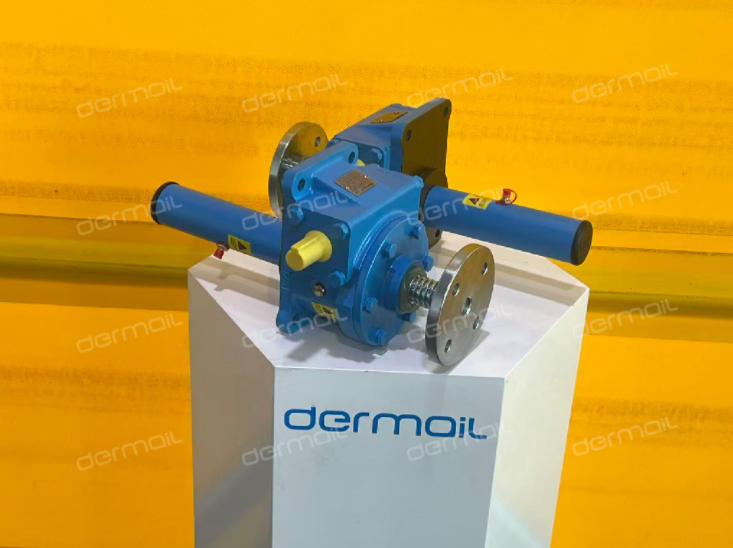
1. Structural Damage
One of the most immediate and obvious consequences of overloading a dermail transmission screw jack is structural damage. Screw jacks are designed with specific load - bearing capacities based on their material properties, dimensions, and engineering calculations. When the applied load exceeds this designed capacity, excessive stress is exerted on the screw, nut, housing, and other components.
The screw, which is the core part responsible for converting rotational motion into linear motion, may experience plastic deformation. This means that it will permanently change its shape, losing its original precision and ability to function properly. The threads on the screw can become distorted, leading to increased friction and difficulty in movement. In severe cases, the screw may even break, causing a sudden and catastrophic failure of the entire lifting system.
The nut, which meshes with the screw, is also at high risk. Overloading can cause the nut to wear out rapidly or crack. A worn - out nut will not fit snugly on the screw, resulting in increased backlash and reduced positioning accuracy. A cracked nut, on the other hand, can completely lose its load - bearing ability, causing the load to drop suddenly.
The housing of the screw jack, which provides support and protection for the internal components, may also be damaged under overload conditions. It can deform or crack, exposing the internal parts to external contaminants and further accelerating the wear and tear of the entire system.
2. Loss of Stability
Overloading can significantly affect the stability of the screw jack system. Screw jacks are often used in multi - jack configurations to support large and heavy loads. When one or more of the jacks are overloaded, the load distribution among the jacks becomes uneven.
This uneven load distribution can cause some jacks to bear more weight than they are designed for, while others may be under - loaded. As a result, the overall stability of the lifting platform or structure is compromised. The overloaded jacks may start to tilt or sink, leading to a shift in the center of gravity of the entire load. This shift can cause the load to become unbalanced, increasing the risk of tipping over. In industrial settings, a tipping load can not only damage the equipment and the surrounding infrastructure but also endanger the lives of nearby workers.
3. Increased Risk of Accidents during Operation
Overloading a screw jack also increases the likelihood of accidents during normal operation. For example, when trying to lift an overloaded load, the motor or driving mechanism of the screw jack may struggle to generate enough torque. This can cause the motor to overheat, potentially leading to a fire hazard if proper safety measures are not in place.
In addition, the increased friction and stress in the overloaded screw jack can make it difficult to control the movement of the load. The operator may find it challenging to stop the load at the desired position, resulting in over - travel or sudden drops. These unexpected movements can cause collisions with other equipment or structures in the workspace, causing damage and potentially injuring workers in the vicinity.
4. Reduced Service Life and Increased Maintenance Costs
Continuous overloading of a screw jack will significantly shorten its service life. The excessive wear and tear on the components, as described above, will require more frequent repairs and replacements. This not only increases the downtime of the equipment but also leads to higher maintenance costs.
Moreover, overloading can cause hidden damage to the screw jack that may not be immediately apparent. For example, internal micro - cracks may form in the metal components, which can gradually propagate over time and eventually lead to sudden failure. Identifying and repairing these hidden damages often requires more in - depth inspections and specialized testing equipment, further adding to the maintenance costs.
Conclusion
In conclusion, overloading a screw jack is a highly dangerous practice that can result in structural damage, loss of stability, increased operational risks, and higher maintenance costs. To ensure the safe and reliable operation of screw jacks, it is essential to strictly adhere to their rated load capacities. Regular maintenance and inspections should also be carried out to detect any potential problems early and prevent accidents from occurring. By following these safety guidelines, we can maximize the performance and lifespan of screw jacks while protecting the safety of personnel and equipment in the workplace.








Tel:+86-317-7369999
E-mail: demai@demai.org
Mobile:+86-18653450543 (Wechat)
Address:No. 6, Haihe Road, economic development zone, Wuqiao County, Cangzhou City, Hebei Province

点击右上角
分享给朋友吧
Copyright ©2023 All Rights Reserved Hebei Demai Transmission Machinery Co.,Ltd.
Copyright ©2025 All Rights Reserved Hebei Demai Transmission Machinery Co.,Ltd.
