
Can Screw Jacks Operate in High-Temperature Environments?
2025-11-07 14:01:42
Click:
“
Screw jacks, widely used in industrial automation, construction machinery, and heavy-duty lifting systems, are known for their precision, reliability, and ability to handle high loads.
”
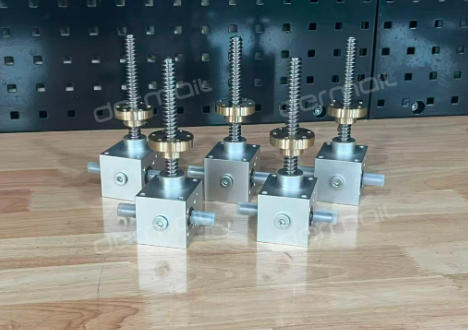
Screw jacks, widely used in industrial automation, construction machinery, and heavy-duty lifting systems, are known for their precision, reliability, and ability to handle high loads. However, their performance in extreme environments—particularly high-temperature conditions—raises critical questions about material durability, lubrication efficiency, and operational safety. This article explores the feasibility of using screw jacks in high-temperature settings and outlines strategies to ensure their stable operation.
1. Challenges in High-Temperature Environments
High temperatures pose three primary threats to screw jacks:
- Thermal Expansion: Metallic components (e.g., screw rods, worm gears) expand under heat, potentially causing misalignment, increased backlash, or even seizure.
- Lubricant Degradation: Standard greases and oils break down at elevated temperatures, losing viscosity and lubrication properties, leading to accelerated wear.
- Material Softening: Some metals and plastics lose hardness or structural integrity above their thermal limits, compromising load-bearing capacity.
For instance, a screw jack operating at 150°C may experience a 0.1–0.2mm axial expansion per meter of screw length, disrupting synchronization in multi-jack systems. Similarly, conventional lithium-based greases begin to carbonize above 120°C, forming abrasive deposits.
2. Design Adaptations for High-Temperature Resistance
To mitigate these risks, manufacturers employ specialized designs and materials:
A. Material Selection
- Screw Rods: Alloy steels (e.g., 42CrMo4) or stainless steels (e.g., 316L) with high-temperature tempering (≥500°C) resist deformation.
- Worm Gears: Case-hardened steels or nickel-based alloys (e.g., Inconel 718) maintain hardness up to 600°C.
- Housings: Cast iron or aluminum alloys with cooling fins enhance heat dissipation.
B. Lubrication Solutions
- High-Temperature Greases: Synthetic lubricants (e.g., polyurea-based or perfluoropolyether-based) withstand temperatures up to 250°C without breaking down.
- Solid Lubrication: Coatings like molybdenum disulfide (MoS₂) or graphite reduce friction even when oil films fail.
- Circulating Oil Systems: Forced lubrication with external coolers maintains optimal operating temperatures in continuous-duty applications.
C. Thermal Compensation Mechanisms
- Preloaded Springs: Compensate for thermal expansion in screw rods, maintaining precise positioning.
- Dual-Temperature Sensors: Monitor both ambient and internal temperatures, triggering alarms or shutdowns if thresholds are exceeded.
- Gap Adjustment: Some designs incorporate adjustable clearances between mating parts to accommodate expansion.
3. Industry Applications
Screw jacks with high-temperature adaptations serve in diverse sectors:
- Metallurgy: Adjusting electrode positions in electric arc furnaces (operating at 800–1,200°C).
- Energy: Solar tracking systems where jacks tilt photovoltaic panels under desert heat (up to 70°C ambient).
- Automotive: Testing rigs for engine components exposed to exhaust temperatures (500–900°C).
- Aerospace: Simulating launch vibrations on rocket components in thermal vacuum chambers (-180°C to 150°C).
A case in point is a steel mill in Germany that replaced hydraulic cylinders with screw jacks for electrode adjustment. The customized jacks, featuring Inconel worm gears and solid lubrication, operated reliably at 600°C for over 5 years with minimal maintenance.
4. Operational Guidelines for High-Temperature Use
To maximize lifespan and safety:
- Derate Load Capacity: Reduce rated loads by 20–30% when temperatures exceed 100°C.
- Limit Duty Cycles: Avoid continuous operation above 150°C; implement intermittent duty cycles with cooling periods.
- Regular Inspections: Check for signs of lubricant carbonization, gear tooth pitting, or housing distortion every 500 hours.
- Protective Enclosures: Shield jacks from direct flame or radiant heat using ceramic fiber insulation blankets.
Conclusion
Screw jacks can indeed operate in high-temperature environments, provided they are engineered with heat-resistant materials, advanced lubrication, and thermal compensation mechanisms. By adhering to strict operational guidelines, industries ranging from metallurgy to aerospace can leverage these versatile devices for precision lifting tasks under extreme conditions. As technology advances, further innovations—such as self-cooling screw jacks or AI-driven thermal management systems—promise to expand their applicability even further.
This article balances technical depth with practical insights, offering engineers and procurement specialists a clear roadmap for deploying screw jacks in high-temperature scenarios.








Tel:+86-317-7369999
E-mail: demai@demai.org
Mobile:+86-18653450543 (Wechat)
Address:No. 6, Haihe Road, economic development zone, Wuqiao County, Cangzhou City, Hebei Province

点击右上角
分享给朋友吧
Copyright ©2023 All Rights Reserved Hebei Demai Transmission Machinery Co.,Ltd.
Copyright ©2025 All Rights Reserved Hebei Demai Transmission Machinery Co.,Ltd.
