
Differences Between Screw Jacks and Electric Linear Actuators
2025-10-24 08:30:10
Click:
“
In the realm of mechanical motion control, screw jacks and electric linear actuators are two commonly used devices for converting rotational motion into linear motion.
”
In the realm of mechanical motion control, screw jacks and electric linear actuators are two commonly used devices for converting rotational motion into linear motion. While they share some similarities in functionality, they possess distinct characteristics that make them suitable for different applications. This article aims to elucidate the key differences between screw jacks and electric linear actuators in terms of design principles, performance features, and application scenarios.
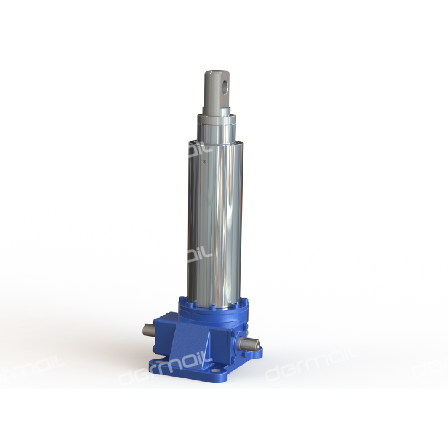
1. Design Principles and Structural Composition
Screw Jacks
Dermail screw jacks are mechanical devices that rely on the principle of a screw and nut mechanism to achieve linear motion. They typically consist of a worm gear, a worm wheel, and a lifting screw. The worm gear, driven by a motor or manual input, rotates the worm wheel, which in turn drives the lifting screw up or down. This design provides a high mechanical advantage, enabling screw jacks to handle heavy loads with relatively low input torque.
Electric Linear Actuators
Electric linear actuators, on the other hand, are electromechanical devices that integrate a motor, a gearbox, and a lead screw or ball screw mechanism. The motor converts electrical energy into rotational motion, which is then transmitted through the gearbox to the screw mechanism. The screw mechanism converts this rotational motion into linear motion, driving a load-carrying rod or piston. Electric linear actuators offer a more compact and integrated design compared to screw jacks.
2. Performance Features
Load Capacity and Speed
- Screw Jacks: Known for their high load-bearing capacity, screw jacks can handle loads ranging from a few hundred kilograms to several hundred tons. However, their speed is relatively limited due to the mechanical nature of the screw and nut mechanism. The lifting speed is typically in the range of a few millimeters to several centimeters per second.
- Electric Linear Actuators: While electric linear actuators may not match the extreme load capacities of screw jacks, they offer a wide range of load ratings suitable for various applications. Their speed can be adjusted more flexibly, with some models capable of achieving speeds exceeding 100 mm/s. This makes them suitable for applications requiring rapid linear motion.
Precision and Repeatability
- Screw Jacks: The precision of screw jacks is influenced by factors such as screw pitch, backlash, and manufacturing tolerances. While they can achieve reasonable accuracy for many applications, they may not be as precise as electric linear actuators in certain high-precision scenarios.
- Electric Linear Actuators: Electric linear actuators often incorporate advanced control systems, such as servo motors and feedback mechanisms, to achieve high precision and repeatability. They can be programmed to move to specific positions with sub-millimeter accuracy, making them ideal for applications requiring precise positioning.
Environmental Adaptability
- Screw Jacks: Screw jacks are generally robust and can withstand harsh environmental conditions, including high temperatures, dust, and vibration. However, they may require additional protection in corrosive environments, such as chemical plants or offshore installations.
- Electric Linear Actuators: The environmental adaptability of electric linear actuators varies depending on their design and materials. Some models are specifically engineered for harsh environments, featuring corrosion-resistant coatings, sealed housings, and temperature-tolerant components. These actuators can operate reliably in extreme temperatures, humidity, and even explosive atmospheres.
3. Application Scenarios
Screw Jacks
Screw jacks are widely used in heavy-duty industrial applications where high load capacity and durability are paramount. Examples include:
- Lifting and positioning heavy machinery in manufacturing plants.
- Adjusting the height of large structures such as bridges and platforms.
- Supporting and leveling heavy equipment in construction and mining operations.
Electric Linear Actuators
Electric linear actuators find applications in a diverse range of industries where precision, speed, and compactness are essential. Typical use cases include:
- Automated assembly lines in the automotive and electronics industries, where precise positioning of components is critical.
- Medical devices such as adjustable hospital beds and surgical robots, requiring smooth and quiet operation.
- Aerospace and defense applications, where lightweight, high-precision actuators are needed for flight control surfaces and weapon systems.
- Home automation and furniture, such as motorized blinds, adjustable desks, and reclining chairs.
4. Maintenance and Cost Considerations
Maintenance
- Screw Jacks: Screw jacks require periodic lubrication of the screw and nut mechanism to ensure smooth operation and prevent wear. Over time, the screw threads may need to be inspected and replaced if worn.
- Electric Linear Actuators: Electric linear actuators generally require less maintenance than screw jacks. However, they may need occasional inspection of electrical components, such as motors and sensors, and replacement of worn seals or bearings.
Cost
- Screw Jacks: The cost of screw jacks varies depending on their load capacity, size, and materials. While they may be more expensive than basic electric linear actuators for low-load applications, they offer better value for money in heavy-duty scenarios.
- Electric Linear Actuators: Electric linear actuators are available in a wide price range, from budget-friendly models for simple applications to high-end, precision-engineered actuators for demanding tasks. The overall cost depends on factors such as load capacity, speed, precision, and environmental protection features.
Conclusion
Screw jacks and electric linear actuators are both essential components in the field of mechanical motion control, each with its own set of advantages and limitations. Screw jacks excel in heavy-duty applications requiring high load capacity and durability, while electric linear actuators offer superior precision, speed, and compactness for a wide range of industries. When selecting between the two, it is crucial to consider the specific requirements of the application, including load capacity, speed, precision, environmental conditions, and cost constraints. By understanding the differences outlined in this article, engineers and designers can make informed decisions to optimize the performance and reliability of their mechanical systems.








Tel:+86-317-7369999
E-mail: demai@demai.org
Mobile:+86-18653450543 (Wechat)
Address:No. 6, Haihe Road, economic development zone, Wuqiao County, Cangzhou City, Hebei Province

点击右上角
分享给朋友吧
Copyright ©2023 All Rights Reserved Hebei Demai Transmission Machinery Co.,Ltd.
Copyright ©2025 All Rights Reserved Hebei Demai Transmission Machinery Co.,Ltd.
