
Diagnosing Screw Jack Bearing Failure via Sound & Vibration
2025-10-11 09:26:11
Click:
“
Screw jacks are essential for precise vertical motion in industrial applications, but bearing failures can compromise performance and safety.
”
Screw jacks (丝杆升降机) are essential for precise vertical motion in industrial applications, but bearing failures can compromise performance and safety. This guide explains how to detect bearing damage in screw jacks by analyzing sound and vibration patterns during operation, enabling proactive maintenance.
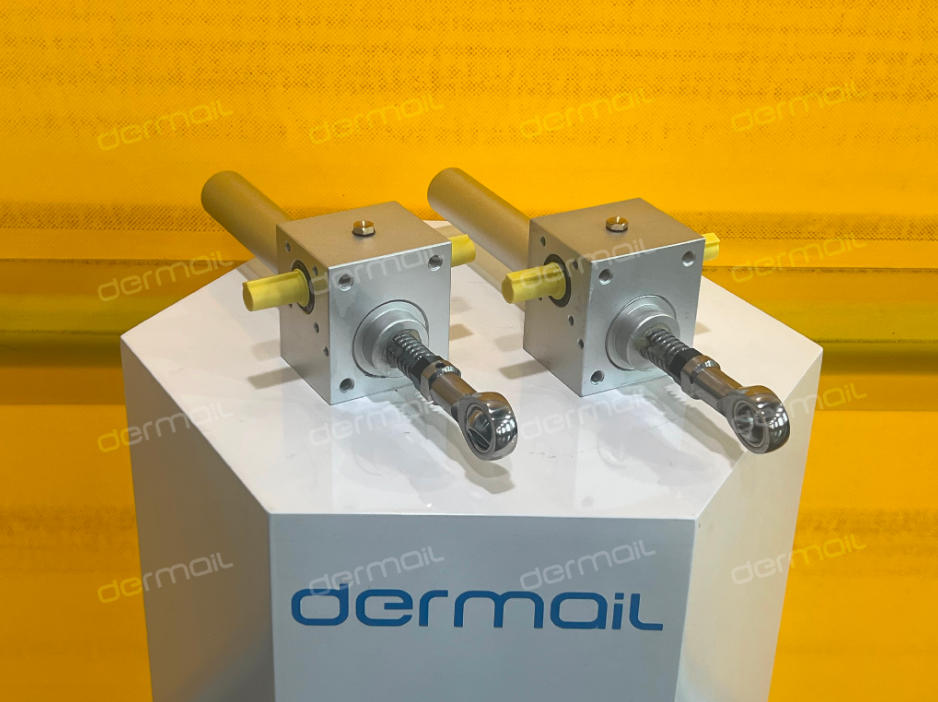
1. Common Bearing Issues in dermail Screw Jacks
Bearings in screw jacks face continuous mechanical stress, leading to:
- Surface Wear: Caused by inadequate lubrication or debris contamination.
- Fatigue Cracking: Repeated stress cycles induce micro-cracks on raceways.
- Misalignment: Improper installation or shaft deflection creates uneven loads.
- Lubrication Breakdown: Degraded grease accelerates wear and corrosion.
These issues often produce abnormal sounds or vibrations during screw jack operation.
2. Auditory Indicators of Bearing Damage
a. Key Noise Types and Their Causes
- Grinding/Screeching: High-pitched metallic noise signals insufficient lubrication or direct contact between rolling elements.
- Rumbling/Growling: Low-frequency, irregular sounds suggest pitting, debris, or misalignment.
- Clicking/Popping: Intermittent noises may indicate cracked bearings or trapped foreign particles.
- Squealing During Start/Stop: Sudden high-pitched sounds during acceleration/deceleration often result from bearing seizure.
Actionable Tip: Use a stethoscope or acoustic sensor to localize noise sources. Compare sounds under varying loads or speeds.
3. Vibration Analysis for Bearing Faults
a. Vibration Characteristics Linked to Bearing Issues
- Amplitude Increase: Elevated vibration levels (measured in mm/s² or g) correlate with bearing wear. Sudden spikes may signal imminent failure.
- Frequency Patterns:
- Outer Race Defects: Generate vibrations at 1x rotational speed (e.g., 1x RPM).
- Inner Race Defects: Produce higher frequencies (2x–5x RPM) due to rolling element impacts.
- Cage Damage: Causes irregular, broadband vibrations across multiple frequencies.
b. Tools for Effective Vibration Monitoring
- Handheld Vibration Meters: Quickly measure overall vibration levels to detect deviations from baseline readings.
- Spectrum Analyzers: Decompose vibrations into frequency components to pinpoint bearing-specific faults.
- Accelerometers: Mounted on screw jack housings to capture real-time vibration data.
Actionable Tip: Establish baseline vibration thresholds for each screw jack model. Schedule periodic measurements and compare results over time.
4. Practical Steps for On-Site Diagnosis
- Isolate the Noise/Vibration Source:
- Run the screw jack under controlled loads and speeds.
- Use vibration dampeners to minimize external interference.
- Conduct a Visual Inspection:
- Check for grease leakage, rust, or physical damage on bearing housings.
- Verify shaft alignment and coupling conditions.
- Perform Lubrication Checks:
- Ensure grease type and quantity match manufacturer specifications. Over-lubrication can cause overheating.
- Compare Symptoms:
- A bearing with outer race damage may produce consistent noise at a specific load, while inner race issues cause intermittent sounds during speed changes.
- A bearing with outer race damage may produce consistent noise at a specific load, while inner race issues cause intermittent sounds during speed changes.
5. When to Replace Bearings
- Critical Thresholds:
- Vibration amplitude exceeds 10 mm/s² (RMS) for roller bearings or 5 mm/s² for ball bearings.
- Audible noise persists after lubrication and cleaning.
- Temperature rise >15°C above baseline during operation.
- Preventive Replacement: Replace bearings proactively if they reach 75% of their calculated lifespan, especially in high-duty applications.
6. Best Practices for Bearing Maintenance
- Regular Lubrication: Use synthetic grease with anti-corrosion additives. Avoid mixing incompatible grease types.
- Alignment Checks: Realign shafts annually or after major component replacements.
- Environmental Control: Install seals or breathers to prevent moisture ingress in humid environments.
- Training: Equip maintenance teams with vibration analysis tools and noise-diagnosis protocols.
Conclusion
Early detection of bearing damage in screw jacks through sound and vibration analysis is critical for operational safety and efficiency. By integrating auditory inspections, vibration monitoring, and preventive maintenance, facilities can minimize downtime, reduce repair costs, and extend the service life of screw jack systems. Always consult manufacturer guidelines and engage certified technicians for complex diagnostics or replacements.
Keywords: Screw jack bearing diagnosis, vibration analysis, bearing noise, preventive maintenance.








Tel:+86-317-7369999
E-mail: demai@demai.org
Mobile:+86-18653450543 (Wechat)
Address:No. 6, Haihe Road, economic development zone, Wuqiao County, Cangzhou City, Hebei Province

点击右上角
分享给朋友吧
Copyright ©2023 All Rights Reserved Hebei Demai Transmission Machinery Co.,Ltd.
Copyright ©2025 All Rights Reserved Hebei Demai Transmission Machinery Co.,Ltd.
