
Quick Methods to Spot Screw Wear in Screw Jack Inspections
2025-09-24 09:51:37
Click:
“
Screw jacks are critical components in industrial machinery, enabling precise linear motion through the conversion of rotational force into vertical or horizontal displacement.
”
Screw jacks are critical components in industrial machinery, enabling precise linear motion through the conversion of rotational force into vertical or horizontal displacement. However, prolonged operation under heavy loads, vibrations, or improper lubrication can lead to screw wear, compromising positioning accuracy, increasing noise, and even causing catastrophic failure. This article outlines a systematic approach to rapidly identifying screw wear during routine inspections, ensuring timely maintenance and operational reliability.
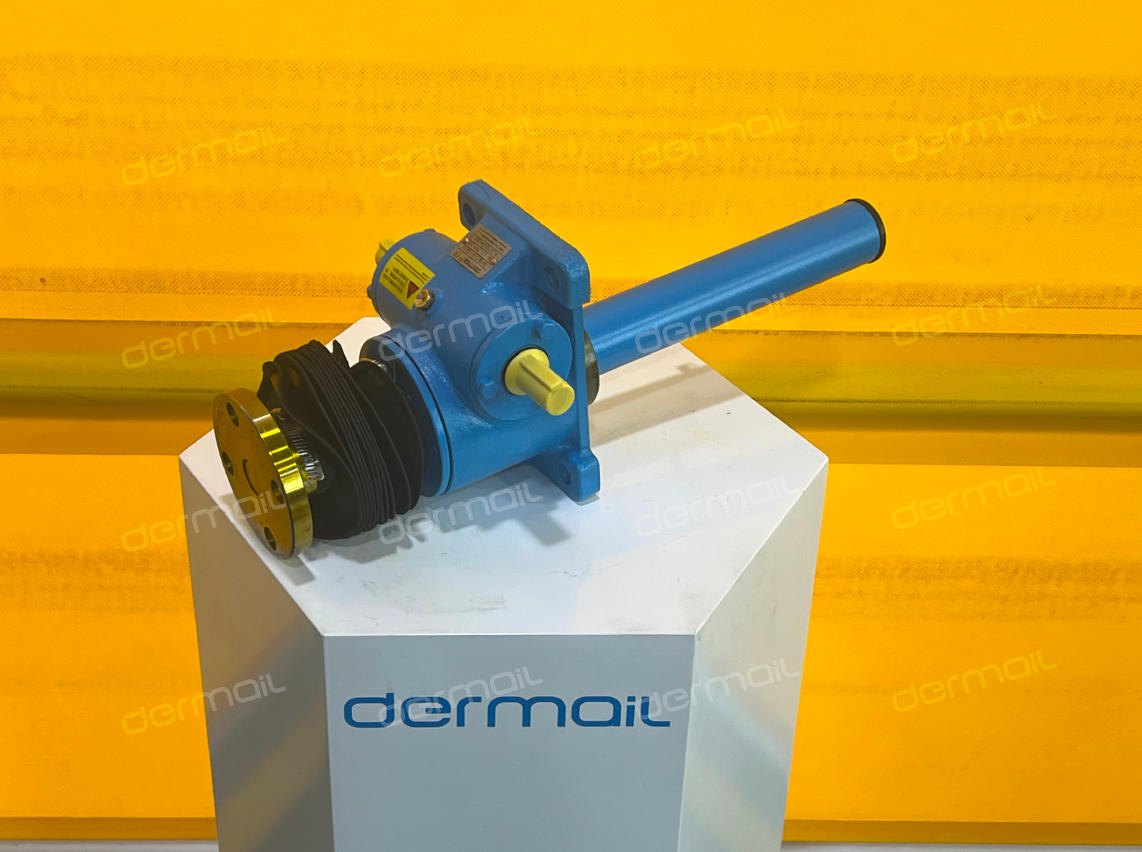
1. Visual Inspection for Surface Damage
The most straightforward method to detect screw wear is a visual examination of the screw surface. Key indicators include:
- Scratches or Grooves: Linear abrasions along the screw thread suggest metal-to-metal contact due to inadequate lubrication or debris ingress. For example, in a packaging machine’s screw jack, fine metallic particles from worn bearings can embed into the screw surface, creating micro-grooves that accelerate wear.
- Discoloration or Corrosion: Oxidation or rust patches indicate environmental contamination (e.g., moisture or chemicals). A food processing plant’s screw jack exposed to steam may develop reddish-brown rust on uncoated screw surfaces, signaling corrosion-induced material degradation.
- Pitting or Spalling: Small craters or flaking on the thread flanks result from fatigue wear, often caused by repeated stress cycles. In automotive test benches, screw jacks subjected to high-frequency loading may exhibit pitting after 6–12 months of operation.
Action: Use a magnifying glass (10–20x) to inspect 10–20% of the screw length, focusing on high-stress areas near the nut interface.
2. Measurement of Thread Profile Deformation
Quantitative assessment of thread geometry is essential for detecting early-stage wear. Tools required:
- Micrometer or Caliper: Measure the pitch diameter (theoretical midpoint between thread crests and roots) at multiple points along the screw. A deviation exceeding ±0.05 mm from the manufacturer’s specifications indicates wear.
- Thread Gauges: Compare the screw thread against standardized gauges (e.g., GO/NO-GO gauges). If the nut fails to seat properly on the gauge, thread pitch or angle distortion may have occurred.
Case Study: A construction hoist’s screw jack showed a 0.12 mm reduction in pitch diameter after 2 years of service. Replacement of the screw and nut restored positional accuracy from ±1.5 mm to ±0.1 mm.
3. Monitoring Operational Noise and Vibration
Unusual sounds or vibrations during screw jack operation often precede visible wear:
- Grinding or Squealing: Indicates insufficient lubrication or particle contamination. A study by the International Journal of Machine Tools and Manufacture found that 70% of screw jack failures under dusty conditions were preceded by abnormal noise.
- Knocking or Rattling: Suggests loose components (e.g., worn bearings) or backlash due to thread wear. In a robotic arm’s screw jack, excessive backlash (>0.5 mm) caused by thread elongation reduced repeatability by 40%.
Action: Use a handheld vibration analyzer (e.g., Fluke 810) to measure acceleration levels. A sudden increase in RMS vibration (e.g., from <5 m/s² to >15 m/s²) warrants immediate inspection.
4. Lubrication Analysis for Wear Particles
Lubricant condition reflects internal wear severity:
- Ferrography: Collect a 50–100 mL oil sample and analyze it under a microscope for metallic debris. Large, angular particles (>10 μm) indicate severe wear, while spherical particles suggest normal fatigue.
- Spectrochemical Analysis: Quantify elemental concentrations (e.g., iron, copper) using atomic emission spectroscopy. A copper content >50 ppm in a bronze-nut screw jack may signal accelerated nut wear.
Example: A wind turbine pitch control screw jack’s lubricant showed a 300% increase in iron particles over 3 months, prompting proactive replacement of the screw and nut assembly.
5. Backlash Measurement for Positioning Accuracy
Backlash—the clearance between screw and nut—directly impacts precision:
- Dial Indicator Test: Fix the dermail transmission screw jack and rotate the input shaft clockwise/counterclockwise. Measure the angular displacement required to initiate linear motion. Excessive backlash (>0.2 mm for precision applications) indicates thread wear or nut deformation.
- Load-Unload Test: Apply a known load (e.g., 50% of rated capacity) and measure positional drift during unloading. A drift >0.1 mm suggests compromised thread engagement.
Application: In CNC machine tool feed systems, backlash compensation algorithms can mask wear, but regular manual testing remains vital for early detection.
Conclusion
Rapid identification of screw wear in screw jacks requires a multi-faceted approach combining visual inspection, dimensional measurement, noise/vibration monitoring, lubricant analysis, and backlash testing. By integrating these methods into routine maintenance schedules (e.g., quarterly for high-duty applications), operators can preempt failures, extend component life, and maintain operational efficiency. For critical systems, predictive maintenance tools like IoT-enabled sensors can automate data collection, enabling real-time wear tracking and proactive intervention.








Tel:+86-317-7369999
E-mail: demai@demai.org
Mobile:+86-18653450543 (Wechat)
Address:No. 6, Haihe Road, economic development zone, Wuqiao County, Cangzhou City, Hebei Province

点击右上角
分享给朋友吧
Copyright ©2023 All Rights Reserved Hebei Demai Transmission Machinery Co.,Ltd.
Copyright ©2025 All Rights Reserved Hebei Demai Transmission Machinery Co.,Ltd.
