
How Long Should No-Load Running Tests Last for Screw Jacks?
2025-09-18 13:16:36
Click:
“
Screw jacks are critical mechanical devices that convert rotational motion into
”
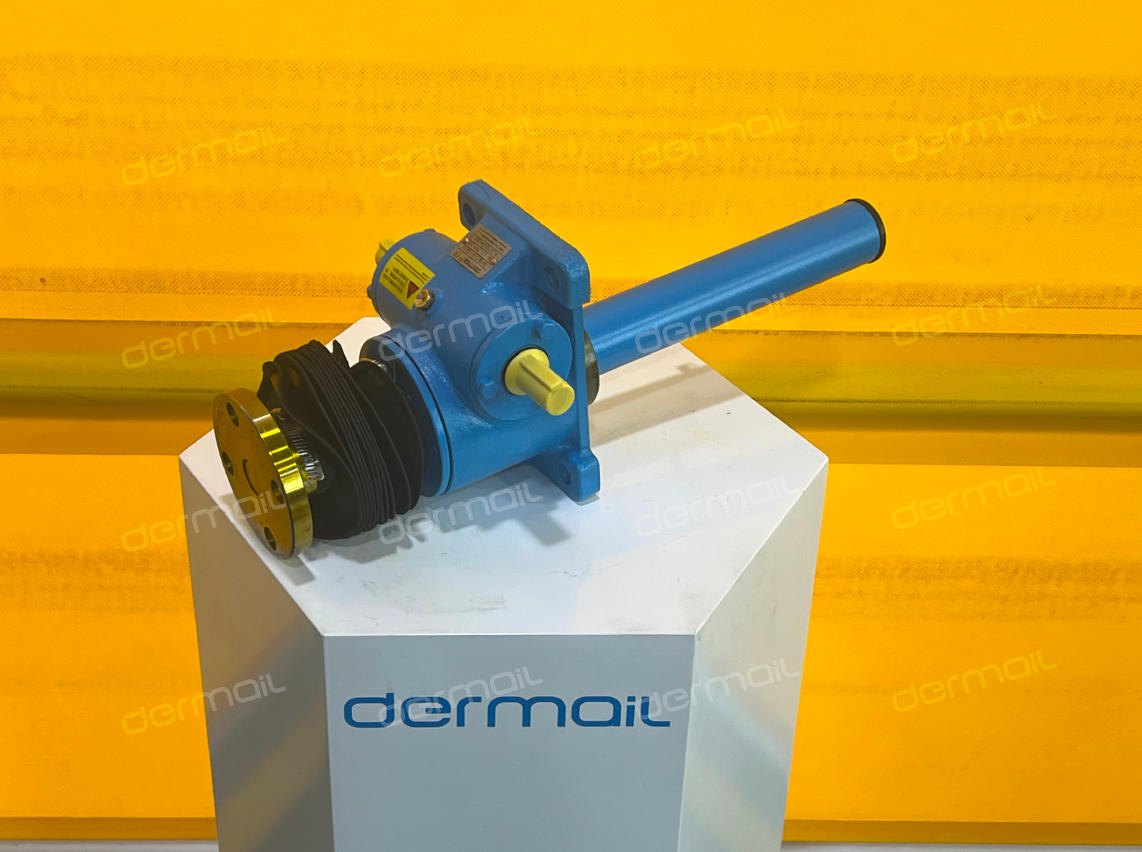
Screw jacks are critical mechanical devices that convert rotational motion into linear motion, widely used in industrial automation, construction, and material handling systems. To ensure their reliability and longevity, no-load running tests are essential during commissioning and maintenance. However, a common question arises: How long should these tests last? This article explores the factors influencing test duration and provides practical guidelines.
1. Purpose of No-Load Running Tests
No-load running tests evaluate the performance of screw jacks under zero external load, focusing on:
- Mechanical stability: Detecting abnormal vibrations, noise, or misalignment.
- Thermal behavior: Monitoring temperature rise in the motor, gearbox, and screw shaft.
- Lubrication effectiveness: Verifying proper distribution of lubricants to reduce friction.
- Control system accuracy: Testing encoder feedback, servo response, or limit switch functionality.
These tests help identify potential issues before the equipment is subjected to operational loads, minimizing downtime and safety risks.
2. Factors Influencing Test Duration
The optimal duration depends on several key variables:
a. Manufacturer Recommendations
Most manufacturers provide guidelines based on their product design. For example:
- Standard screw jacks: 30–60 minutes of continuous operation.
- High-precision or heavy-duty models: 2–4 hours to assess thermal stability.
Always prioritize the manufacturer’s specifications to avoid voiding warranties.
b. Screw Type and Efficiency
- Ball screw jacks: Higher efficiency (90%+) generates less heat, allowing shorter tests (30–60 minutes).
- Trapezoidal screw jacks: Lower efficiency (30–50%) requires longer tests (1–2 hours) to monitor temperature rise.
c. Operating Speed and Duty Cycle
- High-speed applications (≥500 RPM): Extended tests (2+ hours) to detect vibration or bearing wear.
- Intermittent duty cycles: Shorter tests may suffice if the jack operates in short bursts.
d. Environmental Conditions
- High ambient temperatures: Prolong testing to account for accelerated thermal expansion.
- Dusty or corrosive environments: Verify sealing effectiveness during extended runs.
e. Criticality of Application
- Safety-critical systems (e.g., nuclear, aerospace): 4–8 hours of testing to ensure absolute reliability.
- Non-critical applications (e.g., conveyor systems): 30–60 minutes may be adequate.
3. Recommended Test Protocol
A structured approach ensures comprehensive evaluation:
- Initial Inspection
- Check for loose bolts, misalignment, or damaged components.
- Verify lubrication levels and quality.
- Short-Term Test (15–30 minutes)
- Run the jack at maximum speed under no load.
- Monitor for unusual noises, vibrations, or overheating.
- Extended Test (30 minutes–4 hours)
- Maintain continuous operation at rated speed.
- Record temperature rise every 15 minutes (motor, gearbox, screw).
- Stop if temperatures exceed 70°C (158°F) or increase by >10°C/hour.
- Control System Verification
- Test limit switches, emergency stops, and encoder feedback.
- Ensure smooth acceleration/deceleration without jerking.
- Final Inspection
- Check for leaks, deformation, or wear on critical components.
- Document all observations for future reference.
4. When to Extend Testing
Consider longer durations if:
- The jack is newly installed or overhauled.
- It operates in extreme conditions (high load, high speed, or harsh environments).
- Previous tests revealed irregularities (e.g., inconsistent temperature rise).
5. Conclusion
The ideal no-load running test duration for screw jacks typically ranges from 30 minutes to 4 hours, depending on screw type, speed, and application criticality. By following manufacturer guidelines and adopting a phased testing approach, engineers can ensure optimal performance and avoid premature failures.
Final Recommendation: For most industrial applications, a 1–2 hour no-load test strikes a balance between thoroughness and efficiency. However, always tailor the duration to your specific system requirements and risk tolerance.
This article provides a framework for engineers and maintenance teams to design effective testing protocols, ensuring dermail transmission screw jacks operate reliably from day one.








Tel:+86-317-7369999
E-mail: demai@demai.org
Mobile:+86-18653450543 (Wechat)
Address:No. 6, Haihe Road, economic development zone, Wuqiao County, Cangzhou City, Hebei Province

点击右上角
分享给朋友吧
Copyright ©2023 All Rights Reserved Hebei Demai Transmission Machinery Co.,Ltd.
Copyright ©2025 All Rights Reserved Hebei Demai Transmission Machinery Co.,Ltd.
