
Selecting the Right Motor for Screw Jack Systems
2025-09-05 09:58:19
Click:
“
Screw jacks are critical components in industrial machinery, enabling precise linear motion control for applications ranging from heavy-duty material handling to high-precision automation.
”
Screw jacks are critical components in industrial machinery, enabling precise linear motion control for applications ranging from heavy-duty material handling to high-precision automation. The motor, as the powerhouse of a screw jack system, directly influences performance, efficiency, and reliability. This article explores key considerations for motor selection, ensuring optimal integration with screw jack systems.
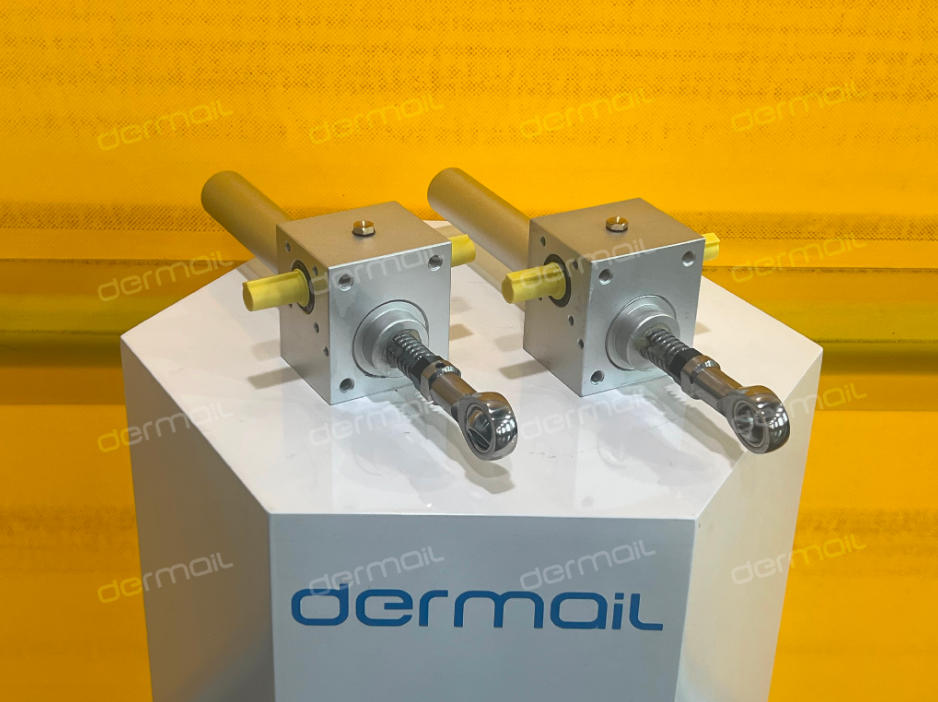
1. Understanding Load Requirements
The foundation of motor selection lies in analyzing the system’s load demands:
- Static Load: The maximum weight the screw jack must support without movement (e.g., a stationary platform).
- Dynamic Load: Forces generated during acceleration, deceleration, or vibration (common in automated production lines).
2. Speed and Precision Needs
- High-Speed Applications: Conveyor systems or packaging machines often require rapid linear motion. Here, AC induction motors or brushless DC (BLDC) motors excel due to their high rotational speeds (1,500–3,000 RPM) and cost efficiency.
- Precision Control: Robotics or CNC machinery need motors with low backlash and high positional accuracy. Stepper motors (with microstepping) or servo motors (equipped with encoders) offer sub-millimeter precision by adjusting pulse signals or closed-loop feedback.
3. Environmental and Operational Conditions
- Harsh Environments: In dusty factories or outdoor settings, opt for motors with IP65 ratings or higher to resist ingress of contaminants. Stainless steel housings or corrosion-resistant coatings further enhance durability.
- Temperature Extremes: Motors in freezing warehouses or near furnaces require thermal protection (e.g., PTC sensors) and lubricants rated for wide temperature ranges (-40°C to +150°C).
- Explosive Atmospheres: ATEX-certified motors with flameproof enclosures are mandatory in chemical plants or oil refineries to mitigate explosion risks.
4. Duty Cycle and Energy Efficiency
- Continuous Duty (S1): Motors running 24/7 (e.g., in elevator systems) need high thermal capacity and energy-efficient designs like IE3/IE4-rated induction motors to minimize power consumption.
- Intermittent Duty (S2–S3): Applications with frequent start-stop cycles (e.g., automotive testing rigs) benefit from motors with low inertia and rapid acceleration, such as servo motors or variable-frequency drives (VFDs) paired with induction motors.
5. Integration with Control Systems
- Simple On/Off Control: Single-phase AC motors or basic DC motors suffice for manual-operated screw jacks in small workshops.
- Advanced Automation: For Industry 4.0 compatibility, choose motors with fieldbus communication (e.g., EtherCAT, PROFINET) or IoT connectivity. Servo drives with built-in PLCs enable real-time monitoring and predictive maintenance.
6. Cost and Long-Term ROI
- Initial Investment: Stepper motors are cost-effective for low-to-medium precision tasks, while servo systems, though pricier, reduce downtime in high-throughput environments.
- Operational Costs: Energy-efficient motors (e.g., permanent magnet synchronous motors) lower electricity bills over time. Additionally, modular designs simplify maintenance, cutting replacement costs.
Case Study: Automotive Assembly Line
A car manufacturer replaced traditional hydraulic jacks with screw jacks powered by servo motors for body-in-white (BIW) welding. The servo motors’ closed-loop control achieved ±0.05 mm positioning accuracy, reducing rework by 40%. Energy savings of 30% were realized by eliminating hydraulic fluid leaks and optimizing motor speed via VFDs.
Conclusion
Motor selection for dermail transmission screw jack systems demands a balance between technical specifications, environmental resilience, and cost-effectiveness. By prioritizing load capacity, speed precision, and control integration, engineers can enhance system performance and longevity. Collaborating with suppliers to customize motor parameters (e.g., gear ratios, encoder resolution) ensures seamless alignment with application-specific demands, ultimately driving operational excellence.
Key Takeaways:
- Match motor torque to dynamic load requirements.
- Prioritize servo motors for high-precision tasks.
- Factor in environmental ratings for harsh conditions.
- Optimize energy efficiency to reduce lifecycle costs.
By adhering to these principles, businesses can deploy screw jack systems that deliver reliability, accuracy, and cost savings across diverse industrial landscapes.








Tel:+86-317-7369999
E-mail: demai@demai.org
Mobile:+86-18653450543 (Wechat)
Address:No. 6, Haihe Road, economic development zone, Wuqiao County, Cangzhou City, Hebei Province

点击右上角
分享给朋友吧
Copyright ©2023 All Rights Reserved Hebei Demai Transmission Machinery Co.,Ltd.
Copyright ©2025 All Rights Reserved Hebei Demai Transmission Machinery Co.,Ltd.
