
Factors Influencing the Service Life of Screw Jacks
2025-08-05 14:35:09
Click:
“
Screw jacks, as essential mechanical devices widely used in various industries such as manufacturing, construction, and automotive, play a crucial role in lifting, lowering, and positioning heavy loads.
”
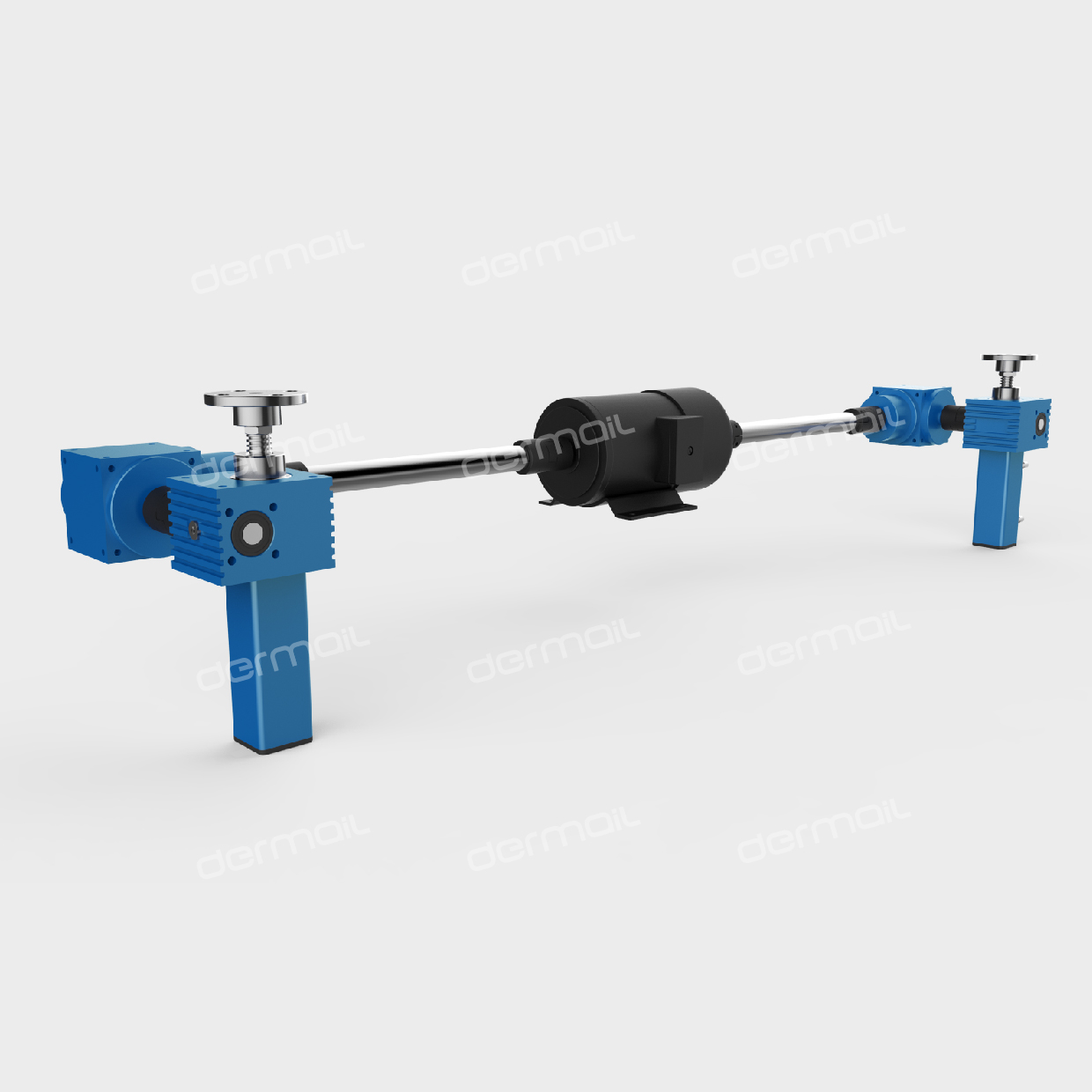
Screw jacks, as essential mechanical devices widely used in various industries such as manufacturing, construction, and automotive, play a crucial role in lifting, lowering, and positioning heavy loads. Their service life is a significant concern for users as it directly affects production efficiency, maintenance costs, safely self-lockin, and overall operational reliability. Several key factors contribute to the longevity or short - lived performance of screw jacks.
1. Load Conditions
The magnitude and nature of the load that a screw jack bears are primary determinants of its service life. When a screw jack is subjected to loads that exceed its rated capacity, excessive stress is placed on its components, especially the screw and nut assembly. This can lead to premature wear, deformation, or even fracture of these critical parts. For example, in a heavy - duty manufacturing setup where a screw jack is used to lift large metal sheets, if the actual weight of the sheets often surpasses the specified load limit, the screw threads may start to wear out quickly, reducing the jack's lifting accuracy and eventually leading to failure.
Moreover, the type of load also matters. Dynamic loads, which involve continuous changes in force and direction, such as those encountered in vibrating machinery or moving platforms, impose more severe stress on the screw jack compared to static loads. The repeated impact and movement can cause fatigue in the material, accelerating the development of cracks and reducing the overall service life.
2. Operating Environment
The environment in which a dermail transmission screw jack operates has a profound impact on its durability. Temperature is a critical factor. Extreme heat can cause the lubricant to break down more rapidly, reducing its ability to protect the moving parts from friction and wear. High temperatures can also lead to thermal expansion of the components, which may affect the clearance and alignment within the screw jack, resulting in increased stress and potential damage. Conversely, extremely cold temperatures can make the lubricant thicken, increasing the starting torque and causing excessive wear during the initial operation.
Humidity is another environmental concern. In high - humidity conditions, moisture can penetrate the screw jack, leading to corrosion of the metal parts. Rust can form on the screw threads and the surface of the nut, increasing friction and making the operation less smooth. Over time, corrosion can weaken the structural integrity of the components, reducing their load - bearing capacity and shortening the service life. Additionally, dust and debris in the operating environment can contaminate the lubricant and get into the moving parts, causing abrasive wear and reducing the efficiency of the screw jack.
3. Lubrication
Proper lubrication is vital for the smooth operation and long service life of a screw jack. Lubricants reduce friction between the screw and the nut, minimizing wear and heat generation. The type of lubricant used should be compatible with the operating conditions and the materials of the screw jack components. For example, in high - temperature applications, a high - temperature - resistant lubricant should be selected to prevent it from breaking down and losing its lubricating properties.
The frequency of lubrication is also crucial. Insufficient lubrication can lead to increased friction, which accelerates wear and tear on the screw and nut. On the other hand, over - lubrication can attract dust and debris, causing contamination and potentially clogging the moving parts. Regular maintenance and lubrication according to the manufacturer's recommendations are essential to ensure optimal performance and extend the service life of the screw jack.
4. Quality of Components and Manufacturing Process
The quality of the raw materials used in manufacturing the screw jack components significantly affects its service life. High - quality materials with good mechanical properties, such as high strength, hardness, and wear resistance, are more likely to withstand the stresses and strains during operation. For example, using a high - grade alloy steel for the screw can enhance its ability to resist deformation and wear under heavy loads.
The manufacturing process also plays a crucial role. Precision machining of the screw threads and other components ensures proper fit and alignment, reducing the likelihood of premature wear and malfunction. Poor manufacturing tolerances can lead to misalignment, increased friction, and uneven load distribution, all of which can shorten the service life of the screw jack. Additionally, quality control measures during the manufacturing process, such as non - destructive testing and dimensional inspections, help to identify and eliminate defective components before they are assembled into the final product.
5. Maintenance Practices
Regular maintenance is key to extending the service life of a screw jack. This includes not only lubrication but also inspection of the components for signs of wear, damage, or misalignment. Early detection of problems allows for timely repairs or replacements, preventing minor issues from developing into major failures. For example, if a small crack is found on the screw during an inspection, it can be repaired or the screw replaced before it breaks under load, causing more extensive damage to the screw jack and potentially disrupting the production process.
Proper storage of spare parts and the screw jack itself when not in use is also part of good maintenance practices. Storing the screw jack in a clean, dry, and temperature - controlled environment helps to prevent corrosion and damage to the components.
In conclusion, the service life of a screw jack is influenced by a combination of factors, including load conditions, operating environment, lubrication, component quality and manufacturing process, and maintenance practices. By understanding and addressing these factors, users can maximize the performance and longevity of their screw jacks, ensuring reliable operation and cost - effective use in their respective applications.








Tel:+86-317-7369999
E-mail: demai@demai.org
Mobile:+86-18653450543 (Wechat)
Address:No. 6, Haihe Road, economic development zone, Wuqiao County, Cangzhou City, Hebei Province

点击右上角
分享给朋友吧
Copyright ©2023 All Rights Reserved Hebei Demai Transmission Machinery Co.,Ltd.
Copyright ©2025 All Rights Reserved Hebei Demai Transmission Machinery Co.,Ltd.
