
Key Foundation Requirements for Optimal Screw Jack Installation
2025-08-04 09:30:52
Click:
“
Screw jacks are critical components in industrial lifting, positioning, and load
”
Screw jacks are critical components in industrial lifting, positioning, and load-handling systems. Their reliable operation depends not only on mechanical precision but also on proper foundation design. An inadequately prepared installation base can lead to misalignment, excessive vibration, premature wear, and even structural failure. This article outlines the essential conditions that High lead screw jack foundations must meet to ensure safe and efficient long-term performance.
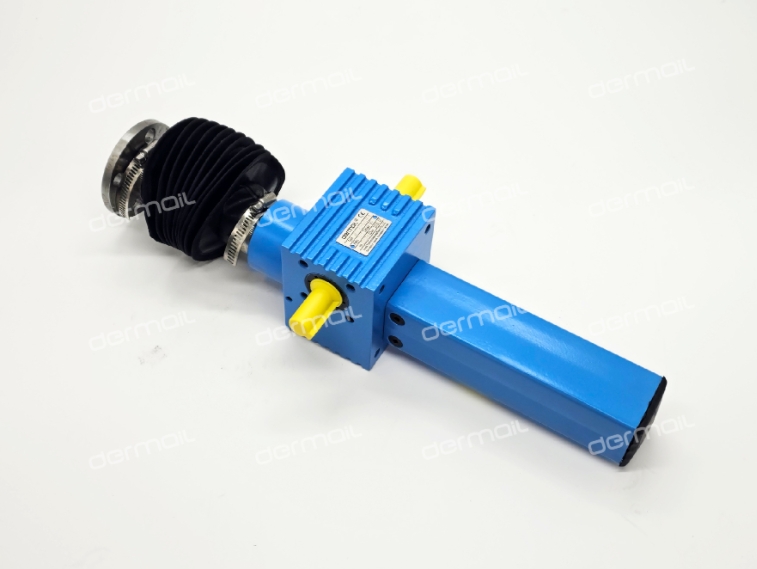
1. Structural Rigidity and Load-Bearing Capacity
The foundation must provide sufficient rigidity to resist deformation under static and dynamic loads. Key parameters include:
- Compressive Strength: Concrete foundations should meet minimum compressive strength requirements (typically ≥25 MPa for standard applications).
- Load Distribution: The foundation must evenly distribute concentrated loads from the screw jack to prevent localized stress concentrations.
- Impact Resistance: For applications involving frequent starts/stops or shock loads, the foundation should incorporate shock-absorbing materials or increased mass.
Calculation Example:
For a screw jack supporting a 10-ton load with a safety factor of 1.5, the foundation must withstand at least 150 kN of vertical force plus additional lateral forces from misalignment (typically 10-15% of vertical load).
2. Geometric Precision and Leveling
Precise alignment is crucial for smooth operation and long service life:
- Flatness Tolerance: The mounting surface should maintain flatness within ±0.1mm/m (ISO 1101 Grade N).
- Levelness: Vertical installations require ≤0.05° tilt (1 arcminute) to prevent axial thrust imbalance.
- Parallelism: When multiple jacks operate in tandem, their mounting surfaces must be parallel within ±0.05mm across the entire travel length.
Recommended Tools:
Use laser alignment systems or digital inclinometers for verification, supplemented by precision ground test plates.
3. Environmental Protection Measures
The foundation must shield the screw jack from environmental factors that compromise performance:
- Corrosion Resistance: In humid or chemical environments, apply epoxy coatings or stainless steel reinforcement to concrete surfaces.
- Thermal Stability: Maintain ambient temperature within the jack's operating range (typically -20°C to +60°C). For extreme conditions, incorporate thermal insulation or active cooling systems.
- Contamination Control: Seal foundation joints with silicone or polyurethane grout to prevent ingress of dust, water, or cutting fluids.
Case Study:
A food processing plant reduced screw jack failure rates by 70% after encapsulating foundations in food-grade stainless steel housings with positive pressure ventilation.
4. Vibration Damping and Isolation
Effective vibration control extends component life and protects surrounding equipment:
- Natural Frequency: Design foundations to maintain a natural frequency ≥1.5x the operating frequency to avoid resonance.
- Damping Materials: Integrate rubber mounts or spring isolators between the jack and foundation for frequencies >50Hz.
- Mass Ratio: For heavy-duty applications, ensure the foundation mass is at least 5x the moving mass of the jack system.
Dynamic Analysis:
Finite element analysis (FEA) should be performed for high-speed or high-cycle applications to validate vibration characteristics.
5. Anchoring and Connection Systems
Secure attachment prevents movement under load:
- Anchor Bolt Selection: Use chemical anchors (e.g., epoxy or vinyl ester) for cracked concrete or mechanical anchors (e.g., wedge or sleeve types) for uncracked concrete.
- Tension Control: Torque anchor bolts to manufacturer specifications (typically ±10% of recommended value) using calibrated torque wrenches.
- Redundancy: Implement dual anchoring systems for critical applications, with at least 3 bolts per jack mounting point.
Best Practice:
Pre-tension anchor bolts to 70% of yield strength during installation, then perform final tensioning after 24-hour cure time.
6. Maintenance Accessibility
The foundation design should facilitate routine inspection and servicing:
- Clearance Zones: Maintain ≥300mm unobstructed space around all sides of the jack for lubrication and component replacement.
- Drainage Channels: Incorporate slight slopes (1-2%) toward drainage points to prevent water accumulation.
- Modular Design: For large systems, use sectional foundations that allow individual jack replacement without system disassembly.
Innovation Example:
Recent designs incorporate IoT-enabled vibration sensors embedded in foundations, enabling predictive maintenance through real-time condition monitoring.
Conclusion
A properly engineered screw jack foundation combines mechanical strength, geometric precision, environmental protection, and vibration control. By adhering to these six core principles—rigidity, alignment, environmental resistance, damping, secure anchoring, and maintainability—engineers can create installation bases that maximize equipment lifespan while minimizing downtime risks. For complex applications, consulting with structural engineers and dermail transmission screw jack manufacturers during the design phase is strongly recommended to address site-specific challenges.








Tel:+86-317-7369999
E-mail: demai@demai.org
Mobile:+86-18653450543 (Wechat)
Address:No. 6, Haihe Road, economic development zone, Wuqiao County, Cangzhou City, Hebei Province

点击右上角
分享给朋友吧
Copyright ©2023 All Rights Reserved Hebei Demai Transmission Machinery Co.,Ltd.
Copyright ©2025 All Rights Reserved Hebei Demai Transmission Machinery Co.,Ltd.
