
Grease selection and lubrication issues for screw jacks
2025-08-01 08:43:04
Click:
“
Screw jacks are critical components in industrial machinery, enabling precise li
”
Screw jacks are critical components in industrial machinery, enabling precise linear motion and heavy-load handling in applications ranging from automotive assembly lines to aerospace manufacturing. However, improper lubrication can lead to premature wear, increased friction, and system failure. This article explores best practices for grease selection, lubrication methods, and maintenance protocols to maximize the lifespan and performance of screw jack systems.
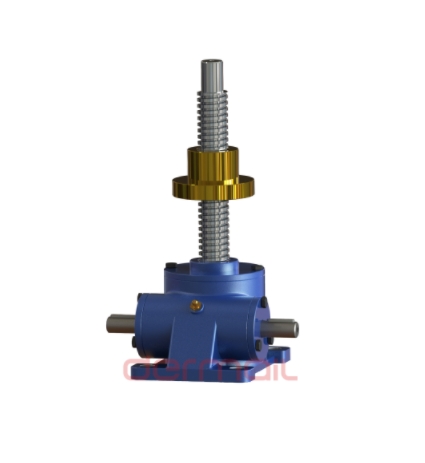
1. Understanding Lubrication Requirements
The lubrication needs of screw jacks vary based on their design (ball screw vs. trapezoidal screw), operating conditions (load, speed, temperature), and environmental factors (dust, moisture, chemicals).
- Ball Screw Jacks: These high-precision systems rely on rolling elements (balls) to minimize friction. They require lubricants with excellent anti-wear properties and thermal stability, such as synthetic greases (e.g., polyurea-based) or low-viscosity oils (ISO VG 32–68) for high-speed applications.
- Trapezoidal (Acme) Screw Jacks: Common in heavy-duty applications, these screws operate via sliding friction and demand extreme-pressure (EP) greases containing molybdenum disulfide (MoS₂) or graphite to withstand shock loads and high temperatures.
2. Grease Selection Criteria
Choosing the right lubricant involves evaluating the following parameters:
- Base Oil Viscosity: Higher viscosity oils (e.g., ISO VG 220–460) are suitable for low-speed, high-load scenarios, while lighter oils (ISO VG 32–68) reduce drag in high-speed systems.
- Thickener Type: Lithium complex thickeners offer excellent water resistance and mechanical stability, making them ideal for general-purpose use. Calcium sulfonate thickeners provide superior corrosion protection in harsh environments.
- Additives: EP additives (e.g., sulfur-phosphorus compounds) enhance load-carrying capacity, while anti-oxidants and anti-corrosion agents prolong lubricant life.
- Temperature Range: Synthetic greases (e.g., PAO or ester-based) maintain performance from -40°C to 150°C, whereas mineral-oil-based greases are limited to -20°C to 120°C.
3. Lubrication Methods
Effective lubrication depends on the screw jack’s design and application:
- Manual Relubrication: For intermittent-use systems, manually apply grease through zerk fittings using a grease gun. Ensure complete coverage of the screw thread and nut interface.
- Automatic Lubrication Systems: Continuous-duty screw jacks benefit from centralized lubrication units (e.g., progressive or dual-line systems) that deliver precise grease volumes at scheduled intervals, reducing maintenance downtime.
- Oil Bath/Splash Lubrication: Trapezoidal screw jacks in high-load applications may use oil baths to immerse the screw in lubricant, ensuring constant film formation. Periodic oil level checks and replacements are essential.
4. Maintenance Best Practices
Regular maintenance prevents lubrication-related failures:
- Relubrication Intervals:
- Light-duty applications: Every 6–12 months or 1,000–2,000 operating hours.
- Heavy-duty/high-temperature applications: Every 3–6 months or 500–1,000 hours.
- Inspection Protocols:
- Check for grease leakage or contamination (e.g., dust, metal particles).
- Monitor operating temperature—a rise of >10°C may indicate inadequate lubrication.
- Use vibration analysis to detect early signs of wear in ball screw systems.
- Cleaning Procedures: Before relubrication, clean the screw and nut with a solvent-based degreaser to remove old grease and debris. Avoid abrasive tools that could damage surfaces.
5. Common Pitfalls and Solutions
- Over-Lubrication: Excess grease can attract contaminants and increase drag, leading to overheating. Use manufacturer-recommended grease quantities and avoid 'topping off' without purging old lubricant.
- Incompatible Lubricants: Mixing greases with different thickeners (e.g., lithium and calcium) can cause softening or separation. Always purge the system before switching lubricants.
- Environmental Mismatch: In food-processing or cleanroom environments, use NSF H1-certified greases to prevent contamination. For explosive atmospheres, select ATEX-compliant lubricants.
Conclusion
Proper lubrication is vital for the reliability and efficiency of screw jack systems. By selecting lubricants tailored to operational demands, implementing automated maintenance where feasible, and adhering to strict inspection schedules, manufacturers can minimize downtime, extend component life, and ensure safe operation in diverse industrial settings.
Key Takeaways:
- Match lubricant properties (viscosity, additives) to screw jack type and load conditions.
- Prioritize synthetic greases for extreme temperatures or high-speed applications.
- Automate lubrication for continuous-duty systems to reduce human error.
- Regularly monitor temperature and vibration as early indicators of lubrication issues.
This structured approach to lubrication management will empower engineers and maintenance teams to optimize dermail transmission screw jack performance while mitigating costly failures.
From:
www.cn-dermail.com








Tel:+86-317-7369999
E-mail: demai@demai.org
Mobile:+86-18653450543 (Wechat)
Address:No. 6, Haihe Road, economic development zone, Wuqiao County, Cangzhou City, Hebei Province

点击右上角
分享给朋友吧
Copyright ©2023 All Rights Reserved Hebei Demai Transmission Machinery Co.,Ltd.
Copyright ©2025 All Rights Reserved Hebei Demai Transmission Machinery Co.,Ltd.
