
How to Accurately Select the Model of Screw Jacks
2025-07-08 10:47:32
Click:
“
AbstractScrew jacks are essential mechanical devices widely used in various indu
”
Abstract
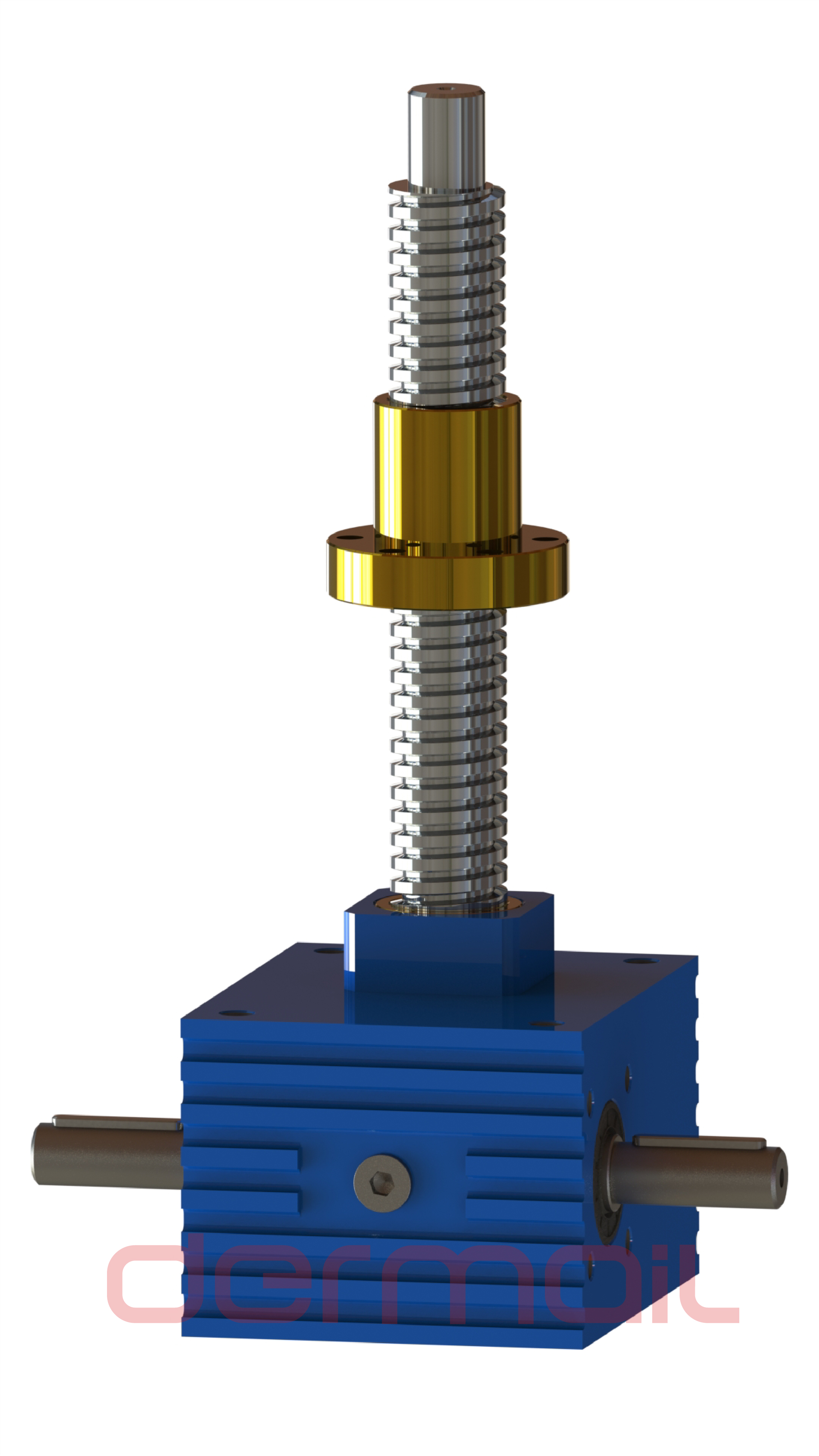
Screw jacks are essential mechanical devices widely used in various industries for lifting, lowering, or adjusting loads with precision. Selecting the right model of screw jack is crucial to ensure optimal performance, safety, and cost-effectiveness. This article provides a comprehensive guide on the key factors to consider when choosing a screw jack model, helping engineers and decision-makers make informed selections.
1. Load Capacity Requirements
1.1 Static Load
The first and foremost factor is the static load that the screw jack needs to support. This includes the weight of the object being lifted, as well as any additional static forces such as the weight of attachments or fixtures. Accurately measure or calculate the total static load to ensure that the selected screw jack has a rated load capacity that exceeds this value. For example, if the load to be lifted is 5 tons, it is advisable to choose a screw jack with a rated load capacity of at least 6 - 7 tons to provide a safety margin.
1.2 Dynamic Load
In addition to static loads, dynamic loads must also be considered. Dynamic loads occur during the starting, stopping, and movement of the load. Factors such as acceleration, deceleration, and vibration can significantly increase the forces acting on the screw jack. To account for dynamic loads, multiply the static load by a dynamic load factor. The value of this factor depends on the nature of the application, typically ranging from 1.2 to 2. For high-speed or highly dynamic applications, a higher factor should be used.
2. Lifting Speed and Stroke Length
2.1 Lifting Speed
The required lifting speed is another important consideration. Different applications have varying speed requirements, ranging from slow and precise movements in medical equipment to relatively fast lifting in material handling systems. The lifting speed of a screw jack is determined by its lead (the axial distance traveled in one revolution of the screw) and the input speed (usually the rotational speed of the motor). Select a screw jack with an appropriate lead to achieve the desired lifting speed. Keep in mind that higher lifting speeds may require larger motors and can generate more heat, which may affect the service life of the screw jack.
2.2 Stroke Length
The stroke length refers to the maximum distance that the screw jack can lift or lower the load. Measure the vertical distance that the load needs to travel and choose a screw jack with a stroke length that meets or exceeds this requirement. It is also important to consider any potential future changes in the application that may require a longer stroke length. Additionally, ensure that there is sufficient space for the screw jack to fully extend and retract without any obstructions.
3. Operating Environment
3.1 Temperature
The operating temperature range can have a significant impact on the performance and lifespan of a screw jack. Extreme temperatures, whether high or low, can affect the material properties of the screw, nut, and other components. For example, in high-temperature environments, the lubricant may break down more quickly, leading to increased friction and wear. In low-temperature environments, the materials may become brittle, increasing the risk of failure. Select a screw jack that is designed to operate within the expected temperature range of your application. If necessary, consider using special materials or coatings to improve the temperature resistance.
3.2 Humidity and Corrosion
In humid or corrosive environments, such as those found in chemical plants or marine applications, corrosion can be a major concern. Corrosion can weaken the structural integrity of the screw jack and reduce its service life. Look for screw jacks that are made of corrosion-resistant materials, such as stainless steel, or have protective coatings, such as zinc plating or epoxy paint. Additionally, ensure that the lubricant used is compatible with the operating environment and provides adequate corrosion protection.
3.3 Dust and Contaminants
Applications that generate a significant amount of dust or contaminants, such as mining or construction sites, can also affect the performance of a screw jack. Dust and debris can enter the internal components of the screw jack, causing wear and reducing its efficiency. Choose a screw jack with effective sealing mechanisms to prevent the ingress of dust and contaminants. Some screw jacks may also feature self-cleaning designs or easy-to-clean surfaces to simplify maintenance in dirty environments.
4. Mounting and Space Constraints
4.1 Mounting Options
Screw jacks can be mounted in various ways, including vertical, horizontal, and inverted positions. The mounting option depends on the specific requirements of your application and the available space. Ensure that the selected screw jack can be securely mounted in the desired position and that the mounting holes and dimensions match your installation requirements. Some screw jacks may also offer adjustable mounting brackets or flanges to facilitate installation in different configurations.
4.2 Space Limitations
Consider the available space around the screw jack, including the space required for the motor, coupling, and other accessories. In applications with limited space, compact screw jacks or those with integrated motor options may be more suitable. Additionally, ensure that there is sufficient clearance for the screw jack to operate smoothly without interfering with other components or structures in the vicinity.
5. Accuracy and Repeatability
5.1 Precision Requirements
For applications that require high precision, such as in semiconductor manufacturing or CNC machines, the accuracy and repeatability of the screw jack are critical. The accuracy of a screw jack is typically measured in terms of backlash, which is the amount of play between the screw and the nut. Look for screw jacks with low backlash values, usually less than 0.01mm, to ensure precise positioning. Some screw jacks may also incorporate anti-backlash mechanisms, such as preloaded nuts or spring-loaded systems, to further improve accuracy.
5.2 Repeatability
Repeatability refers to the ability of the screw jack to return to the same position repeatedly under the same operating conditions. This is important in applications where consistent positioning is required, such as in robotic assembly lines. Choose a screw jack with high repeatability, which is usually specified by the manufacturer in terms of a tolerance value. Regular maintenance and calibration can also help maintain the repeatability of the screw jack over time.
6. Cost and Budget
6.1 Initial Cost
The initial cost of the screw jack is an important factor to consider, especially for projects with limited budgets. Compare the prices of different screw jack models from various manufacturers, taking into account factors such as load capacity, features, and quality. However, it is important not to compromise on quality and performance solely for the sake of reducing costs, as this may lead to higher maintenance and replacement costs in the long run.
6.2 Total Cost of Ownership
In addition to the initial cost, consider the total cost of ownership (TCO) of the screw jack over its expected service life. The TCO includes factors such as maintenance costs, energy consumption, and downtime costs. A high-quality screw jack may have a higher initial cost but may require less maintenance and have a longer service life, resulting in a lower TCO in the long term. Evaluate the TCO of different screw jack models to make a more cost-effective decision.
Conclusion
Selecting the right model of screw jack system requires a comprehensive consideration of multiple factors, including load capacity, lifting speed and stroke length, operating environment, mounting and space constraints, accuracy and repeatability, as well as cost and budget. By carefully evaluating these factors and understanding the specific requirements of your application, you can choose a screw jack that provides optimal performance, reliability, and cost-effectiveness. Additionally, consulting with experienced manufacturers or suppliers can also provide valuable insights and recommendations to help you make the best selection.
Dermail Transmission is here to explain how to accurately select the model of screw jacks, hoping to offer you assistance in the selection process. If you have any other questions regarding screw jacks, please feel free to contact us at any time.








Tel:+86-317-7369999
E-mail: demai@demai.org
Mobile:+86-18653450543 (Wechat)
Address:No. 6, Haihe Road, economic development zone, Wuqiao County, Cangzhou City, Hebei Province

点击右上角
分享给朋友吧
Copyright ©2023 All Rights Reserved Hebei Demai Transmission Machinery Co.,Ltd.
Copyright ©2025 All Rights Reserved Hebei Demai Transmission Machinery Co.,Ltd.
