
How to Ensure the Stable Operation of Screw Jack Systems
2025-07-07 17:52:53
Click:
“
Screw jack systems are widely used in industrial automation, heavy machinery, an
”
Screw jack systems are widely used in industrial automation, heavy machinery, and infrastructure projects due to their precision, reliability, and load-bearing capacity. However, ensuring their stable operation requires a comprehensive approach covering design selection, installation, maintenance, and fault management. Below are key strategies to optimize performance and longevity:
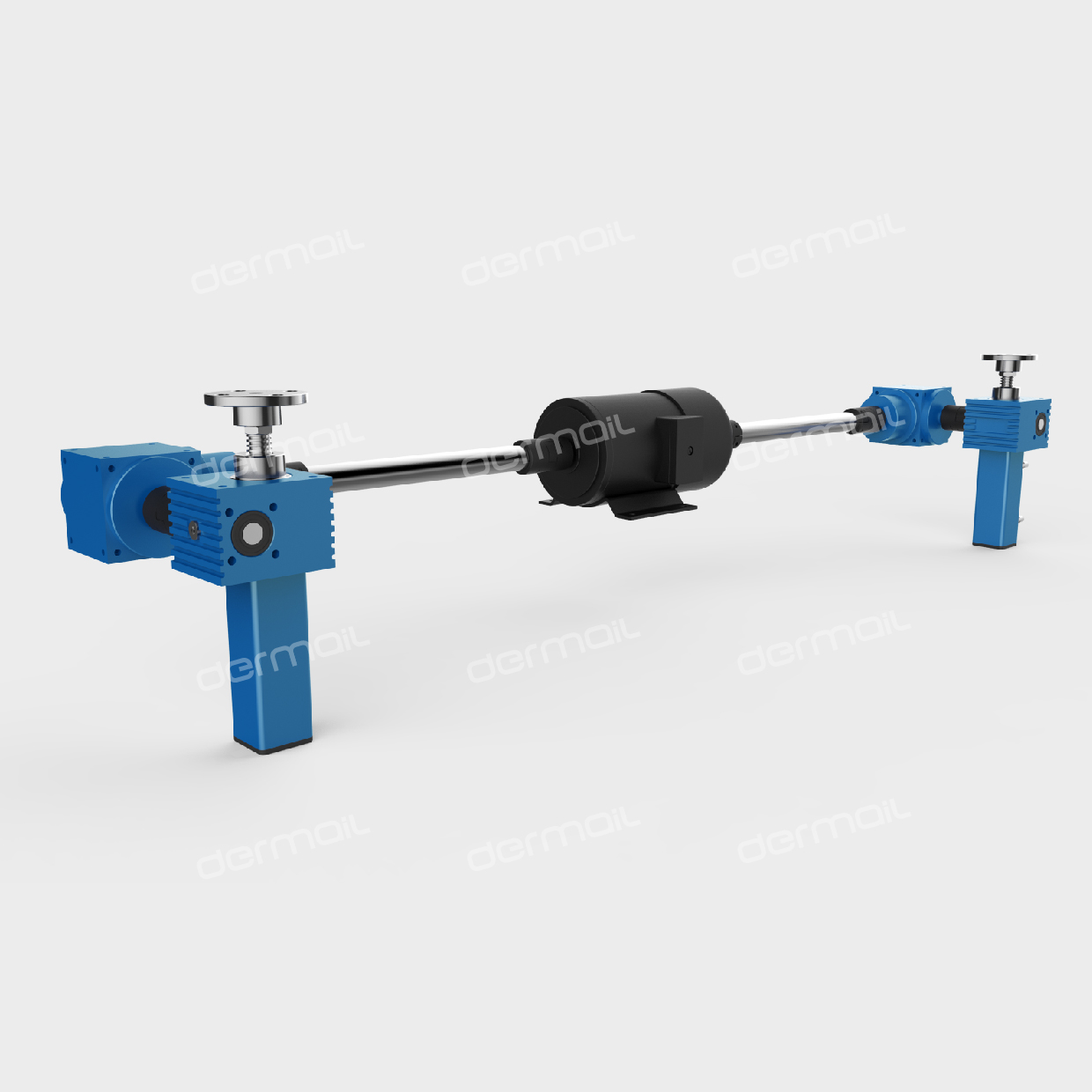
1. Precise Design and Component Selection
- Load Calculation: Account for static, dynamic, and shock loads during operation. For example, in metallurgical挤压 (extrusion) machinery, select a screw jack with a safety factor of 1.5–2 times the maximum rated load to prevent overload failures.
- Environmental Adaptation: Choose materials and coatings based on working conditions. For corrosive environments (e.g., wastewater treatment plants), opt for stainless steel or nickel-plated components to resist rust. In high-temperature settings, use high-temperature lubricants (e.g., Mobil SHC 600 series) to maintain performance.
- Transmission Ratio Matching: Select appropriate gear ratios (e.g., P-type for high-speed lifting or M-type for heavy-duty low-speed applications) to balance efficiency and torque output.
2. Rigorous Installation and Alignment
- Foundation Stability: Ensure the mounting base is rigid enough to minimize vibration. For 120-ton extrusion machines, concrete foundations should be at least 2 meters deep with reinforced steel bars.
- Axial and Vertical Alignment: Use laser alignment tools to maintain coaxiality errors ≤0.05mm between the motor, gearbox, and screw. Misalignment can cause premature wear or jamming.
- Lubrication Pre-filling: Apply the correct lubricant type and quantity (e.g., 80% of the housing capacity for grease-lubricated models) to reduce friction and heat generation during initial operation.
3. Proactive Maintenance Practices
- Lubrication Monitoring: Regularly check lubricant levels and quality. For continuous-duty systems, implement oil sampling and iron spectrum analysis to detect early signs of wear.
- Temperature Control: Use infrared thermometers to monitor operating temperatures. If the temperature rises by >40°C above ambient, investigate causes such as insufficient lubrication or overload.
- Load Monitoring: Install torque sensors to track real-time load changes. Sudden torque fluctuations (e.g., >±10%) may indicate misalignment or component failure.
4. Fault Prevention and Rapid Response
- Common Failure Diagnosis:
- Sticking/Jerking Motion: Often caused by inadequate lubrication or bent screws. Solution: Replenish lubricant or straighten the screw (straightness ≤0.05mm/m).
- Abnormal Noise: Check gear mesh clearance (standard: 0.1–0.3mm) or replace worn bearings if noise exceeds 75dB.
- Spare Parts Inventory: Stock critical components (e.g., seals, bearings) based on Mean Time Between Failures (MTBF) data to minimize downtime.
- Digital Upgrades: Integrate IoT sensors for real-time vibration, temperature, and displacement monitoring. Predictive maintenance can reduce unplanned outages by up to 30%.
Conclusion
By combining robust design, precise installation, proactive maintenance, and smart fault management, screw jack systems can achieve decades of reliable service even in demanding environments.
Thank you for your attention to Dermail Transmission. We are committed to providing you with exceptional service.








Tel:+86-317-7369999
E-mail: demai@demai.org
Mobile:+86-18653450543 (Wechat)
Address:No. 6, Haihe Road, economic development zone, Wuqiao County, Cangzhou City, Hebei Province

点击右上角
分享给朋友吧
Copyright ©2023 All Rights Reserved Hebei Demai Transmission Machinery Co.,Ltd.
Copyright ©2025 All Rights Reserved Hebei Demai Transmission Machinery Co.,Ltd.
