
Drive Sources of Screw Jacks: A Comprehensive Overview
2025-06-25 08:53:15
Click:
“
Screw jacks are versatile mechanical devices widely used in various industries f
”
Screw jacks are versatile mechanical devices widely used in various industries for lifting, lowering, and positioning heavy loads with precision. The choice of drive source plays a crucial role in determining the performance, efficiency, and suitability of a screw jack for a specific application. In this article, we will explore the different drive sources available for screw jacks.
1. Electric Motor Drive
The electric motor drive is one of the most common and popular methods for powering screw jacks. Here's a detailed look at its characteristics and advantages:
- Mechanism: An electric motor is connected to the screw shaft through components such as couplings or gearboxes. When the motor is energized, it generates rotational motion, which is transmitted to the screw. As the screw rotates, the nut (or the load-carrying component) moves along the screw thread, resulting in linear motion and lifting or lowering of the load.
- Advantages:
- Power and Efficiency: Electric motors offer high power output, enabling screw jacks to handle heavy loads efficiently. They provide a consistent and reliable source of power, ensuring smooth and precise operation.
- Control: Electric motor-driven screw jacks can be easily integrated with control systems, allowing for automated operation, speed regulation, and position control. This makes them suitable for applications that require precise positioning and synchronization.
- Versatility: They can be used in a wide range of environments, from industrial settings to commercial and residential applications.
- Applications: Electric motor-driven screw jacks are commonly used in conveyor systems, stage equipment, automotive manufacturing, and various automation processes where frequent and precise lifting operations are required.
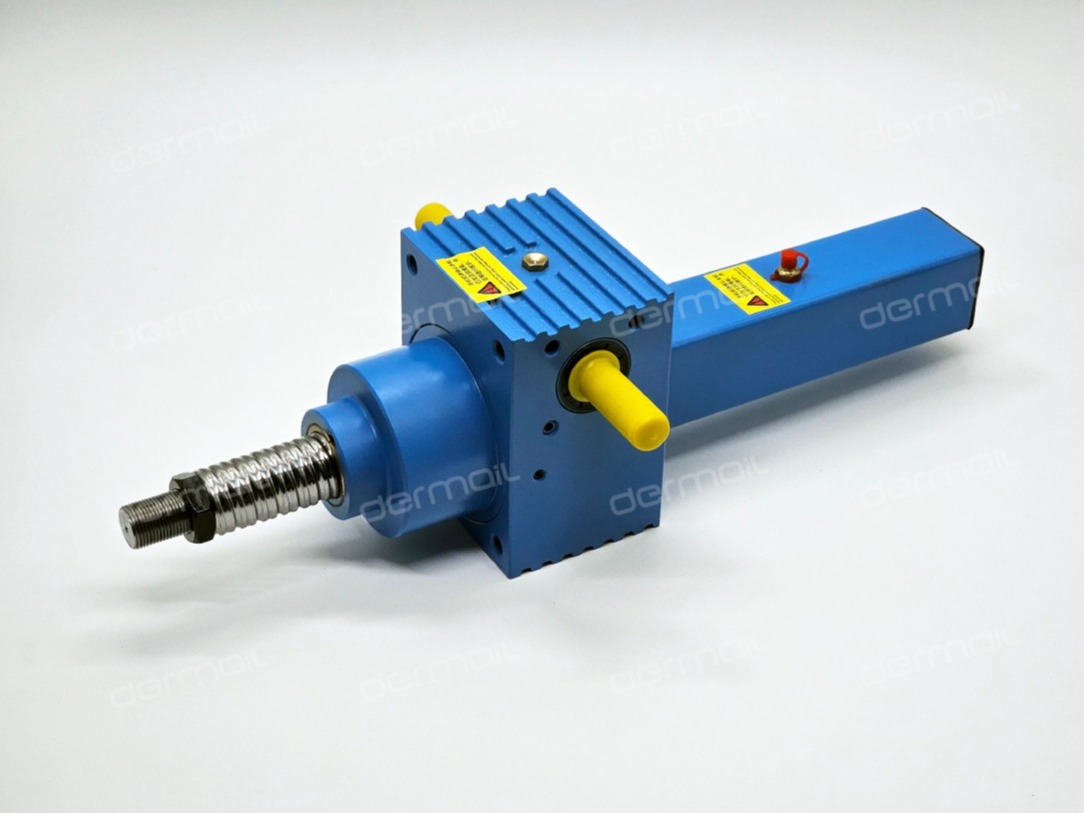
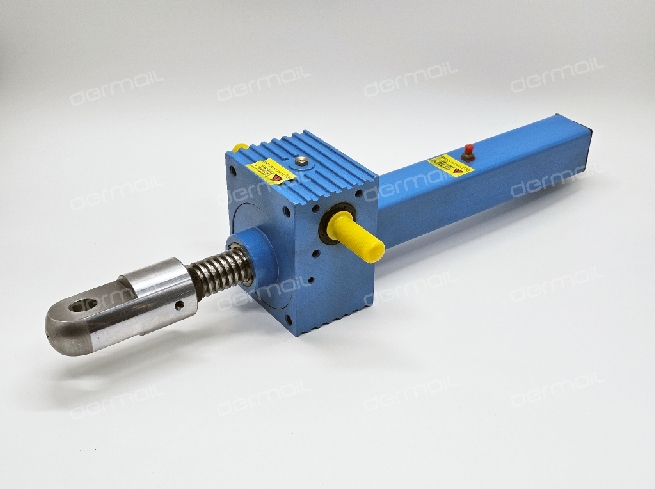
2. Manual Drive (Including Handwheel)
Manual drive, particularly through the use of a handwheel, is a simple yet effective option for certain applications.
- Mechanism: In a manual drive system, the operator turns a handwheel, which is connected to the worm gear or directly to the screw shaft. As the handwheel rotates, it drives the screw, causing the load to move up or down.
- Advantages:
- Cost-Effective: Manual drive screw jacks are generally more affordable compared to motor-driven ones, making them a budget-friendly choice for applications with low usage frequency or where automation is not necessary.
- Simplicity: They have a straightforward design with minimal components, reducing the risk of mechanical failures and simplifying maintenance.
- Portability: Manual screw jacks are lightweight and easy to transport, making them suitable for on-site or temporary applications.
- Limitations:
- Labor-Intensive: Operating a manual screw jack requires physical effort from the operator, which can be tiring, especially for heavy loads or prolonged use.
- Limited Speed and Precision: The lifting speed is relatively slow, and achieving high precision positioning may be challenging compared to motor-driven systems.
- Applications: Manual drive screw jacks are often used in maintenance work, small-scale lifting tasks, and applications where occasional adjustment is needed, such as in furniture assembly or simple machinery setup.
3. Hydraulic Drive
Hydraulic drive systems utilize the power of pressurized hydraulic fluid to operate screw jacks.
- Mechanism: A hydraulic pump supplies pressurized oil to a hydraulic cylinder or motor, which is connected to the screw jack. The hydraulic pressure generates force, causing the screw to rotate and move the load.
- Advantages:
- High Force Output: Hydraulic drives can generate extremely high forces, making them suitable for lifting very heavy loads that would be difficult or impossible for other drive sources to handle.
- Smooth Operation: Hydraulic systems provide smooth and controlled motion, reducing shock and vibration during the lifting process.
- Overload Protection: Hydraulic circuits can be designed with pressure relief valves to protect the screw jack and the load from damage in case of overload.
- Disadvantages:
- Complexity and Cost: Hydraulic systems are more complex and expensive to install and maintain compared to electric or manual drives. They require hydraulic pumps, valves, hoses, and reservoirs, which add to the overall cost and space requirements.
- Potential for Leakage: Hydraulic fluid leaks can occur, leading to environmental contamination and the need for regular maintenance and fluid replacement.
- Applications: Hydraulic drive screw jacks are commonly used in heavy-duty industrial applications, such as in mining equipment, construction machinery, and large-scale material handling systems.
4. Pneumatic Drive
Although less common than the other drive sources mentioned above, pneumatic drive can also be used for screw jacks in certain specialized applications.
- Mechanism: Compressed air is used to power a pneumatic motor or cylinder, which is connected to the screw jack. The pneumatic energy is converted into mechanical motion to drive the screw and lift the load.
- Advantages:
- Clean and Safe: Pneumatic systems use air as the working medium, which is clean, non-toxic, and non-flammable. This makes them suitable for applications in environments where hygiene or safety is a concern, such as in food processing or pharmaceutical industries.
- Fast Response: Pneumatic drives can provide rapid acceleration and deceleration, allowing for quick lifting and lowering operations.
- Limitations:
- Limited Force and Control: Pneumatic systems generally have lower force output compared to hydraulic or electric drives, and achieving precise position control can be more challenging.
- Air Supply Requirements: A reliable compressed air supply is necessary, which may require additional infrastructure and energy consumption.
- Applications: Pneumatic drive screw jacks may be used in light-duty applications, such as in packaging machinery, assembly lines, or where quick and simple lifting actions are needed in a clean environment.
In conclusion, the choice of drive source for a screw jack depends on various factors, including the load capacity, required speed, precision, operating environment, and budget. Electric motor drives offer high power and control, manual drives provide simplicity and cost-effectiveness, hydraulic drives excel in handling heavy loads, and pneumatic drives are suitable for clean and fast-acting applications. By carefully considering these factors, you can select the most appropriate drive source for your screw jack to ensure optimal performance and reliability in your specific application.
Thank you for your interest in Demai Transmission. If you have any other questions about screw jacks, please feel free to contact us at any time. Our technical engineers will be more than happy to assist you.








Tel:+86-317-7369999
E-mail: demai@demai.org
Mobile:+86-18653450543 (Wechat)
Address:No. 6, Haihe Road, economic development zone, Wuqiao County, Cangzhou City, Hebei Province

点击右上角
分享给朋友吧
Copyright ©2023 All Rights Reserved Hebei Demai Transmission Machinery Co.,Ltd.
Copyright ©2025 All Rights Reserved Hebei Demai Transmission Machinery Co.,Ltd.
