
Material Selection for Key Components of Screw Jack Systems: A Comprehensive Analysis
2025-06-24 14:38:11
Click:
“
Screw jack systems, essential linear motion devices, rely on precise material se
”
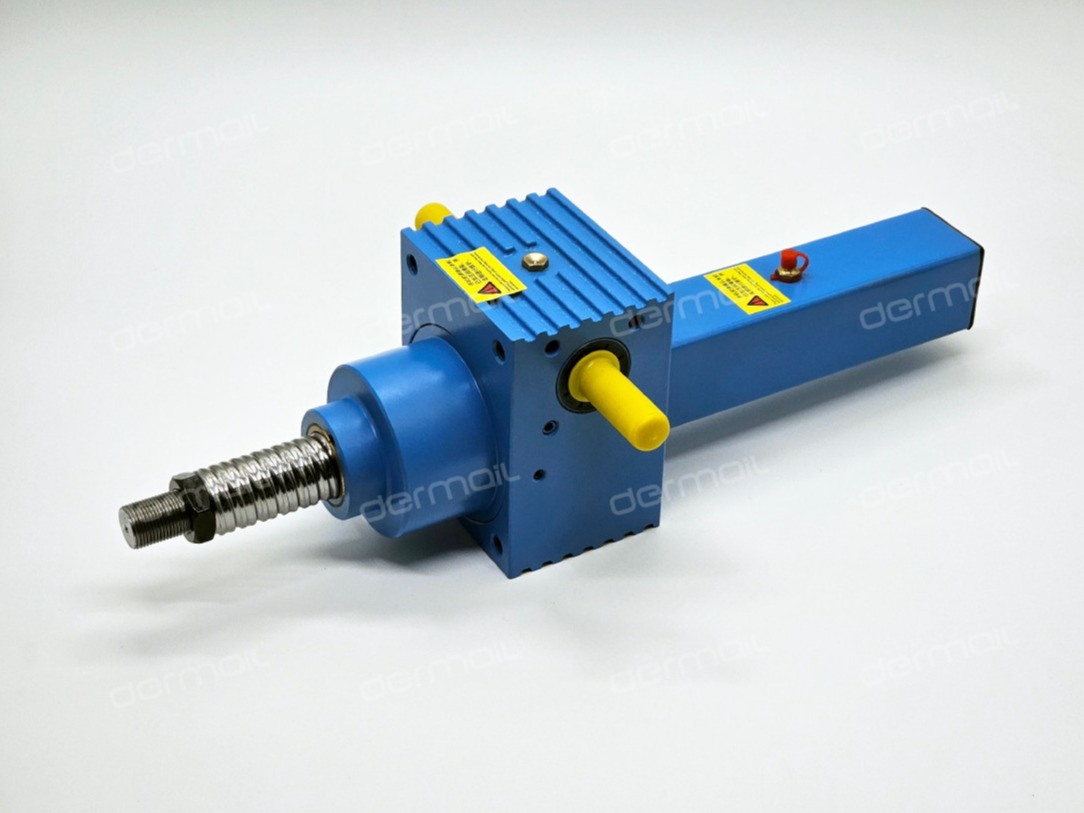
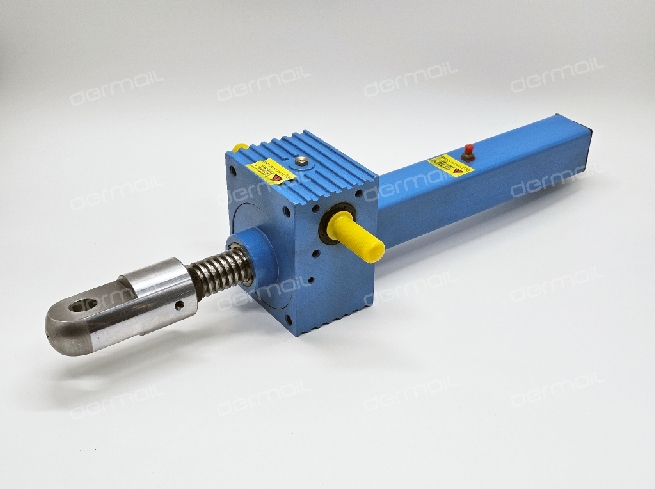
Screw jack systems, essential linear motion devices, rely on precise material selection to achieve optimal performance across diverse industrial applications. This article explores the critical components of screw jacks—including screws, nuts, drive mechanisms, and structural elements—and examines how material properties influence durability, precision, and environmental resistance.
1. Screw Materials: Balancing Strength and Corrosion Resistance
The screw serves as the core component, converting rotational motion into linear displacement. Material selection directly impacts load capacity, wear resistance, and operational lifespan:
- Stainless Steel (304/316): Widely used in pharmaceutical and food processing industries due to its corrosion resistance. The chromium-rich oxide layer prevents rust formation, making it ideal for environments with high humidity or chemical exposure. Its low friction coefficient enables micron-level positioning accuracy in precision machinery.
- Alloy Steel (40CrMo, 20CrMnTi): Enhanced with molybdenum and vanadium, these alloys exhibit superior tensile strength and fatigue resistance. 40CrMo, with its carbon content of 0.37-0.44%, is commonly employed in construction lifters for handling multi-ton loads. 20CrMnTi, featuring surface hardness up to 60 HRC after carburizing, excels in high-torque applications like port cranes.
- Carbon Steel (45# Steel): A cost-effective choice for moderate-load scenarios. However, its susceptibility to corrosion necessitates protective coatings in humid environments.
2. Nut Materials: Optimizing Friction and Wear Characteristics
Nuts must balance friction reduction and mechanical strength to ensure smooth operation:
- Bronze Alloy (ZCuSn10Pb1): Preferred in CNC machine tools for its self-lubricating properties. The tin content forms a tribofilm that reduces friction to 0.05-0.15 under oil lubrication, enabling sub-millimeter positioning accuracy.
- Brass Alloy (CuZn40): Combines affordability with adequate strength for light-duty applications. Commonly found in adjustable office furniture, its zinc content improves corrosion resistance compared to pure copper.
- Engineering Plastics (PTFE): Ideal for vacuum or radiation-exposed environments. PTFE’s 0.04-0.10 coefficient of friction eliminates the need for external lubrication, though its lower load capacity restricts it to low-force applications.
3. Drive Mechanism Materials: Ensuring Power Transmission Efficiency
The drive system, comprising worm gears and motors, requires materials that withstand high torque and cyclic loading:
- Worm Gears (Bronze Alloy): The low elastic modulus of bronze improves contact stress distribution, reducing noise by 10-15 dB compared to steel alternatives. In metallurgical equipment, bronze worm gears paired with alloy steel worms achieve 98% transmission efficiency.
- Worm Shafts (20CrMnTi Alloy Steel): Surface hardness of 58-62 HRC after carburizing enables 24/7 operation in port machinery, withstanding 10^6 stress cycles without failure.
4. Structural Components: Strength and Environmental Adaptability
The housing and support structures must protect internal components while resisting operational stresses:
- Ductile Iron (QT450-10): Offers 20% higher tensile strength than gray iron, making it suitable for mining machinery subjected to shock loads. Its vibration damping capacity reduces noise by 8-12 dB.
- Aluminum Alloy (6061-T6): Lightweight yet strong, with a density of 2.7 g/cm³—40% lighter than steel. Used in medical imaging equipment, its corrosion resistance extends service life in sterile environments.
5. Specialized Components: High-Precision Applications
For ultra-precise positioning, specialized materials and manufacturing processes are employed:
- Bearing Steel (GCr15): With 1.30-1.65% chromium content, this steel achieves 61-65 HRC hardness after quenching. Its carbon distribution density exceeds 500 particles/mm², enabling 0.003 mm/300 mm positioning accuracy in semiconductor manufacturing.
- Thrust Angular Contact Bearings: Customizable contact angles (30°-60°) and P4-grade precision enhance axial stiffness by 40% compared to standard thrust bearings. These are critical in robotic arm joints requiring sub-micron repeatability.
Conclusion
Material selection in screw jack systems represents a multidimensional engineering challenge. By integrating advanced alloys, precision manufacturing, and surface treatments, manufacturers can optimize performance across parameters such as load capacity, environmental resistance, and positional accuracy. As industries demand higher efficiency and reliability, ongoing material innovations will continue to drive advancements in screw jack technology.
Thank you for your interest in Demai Transmission. We sincerely hope to establish a cooperative partnership with you. We are committed to providing you with high-quality products and excellent services.








Tel:+86-317-7369999
E-mail: demai@demai.org
Mobile:+86-18653450543 (Wechat)
Address:No. 6, Haihe Road, economic development zone, Wuqiao County, Cangzhou City, Hebei Province

点击右上角
分享给朋友吧
Copyright ©2023 All Rights Reserved Hebei Demai Transmission Machinery Co.,Ltd.
Copyright ©2025 All Rights Reserved Hebei Demai Transmission Machinery Co.,Ltd.
