
Safety Protection Measures for Screw Jacks
2026-04-23 10:52:38
Click:
“
Screw jacks are widely used in various industrial fields, such as material handl
”
Screw jacks are widely used in various industrial fields, such as material handling, construction machinery, and automated production lines, due to their precise positioning, stable operation, and high load-bearing capacity. However, to ensure the safe and reliable operation of screw jacks and prevent potential accidents, a series of comprehensive safety protection measures must be implemented. This article will elaborate on the key safety protection measures for screw jacks from multiple perspectives.
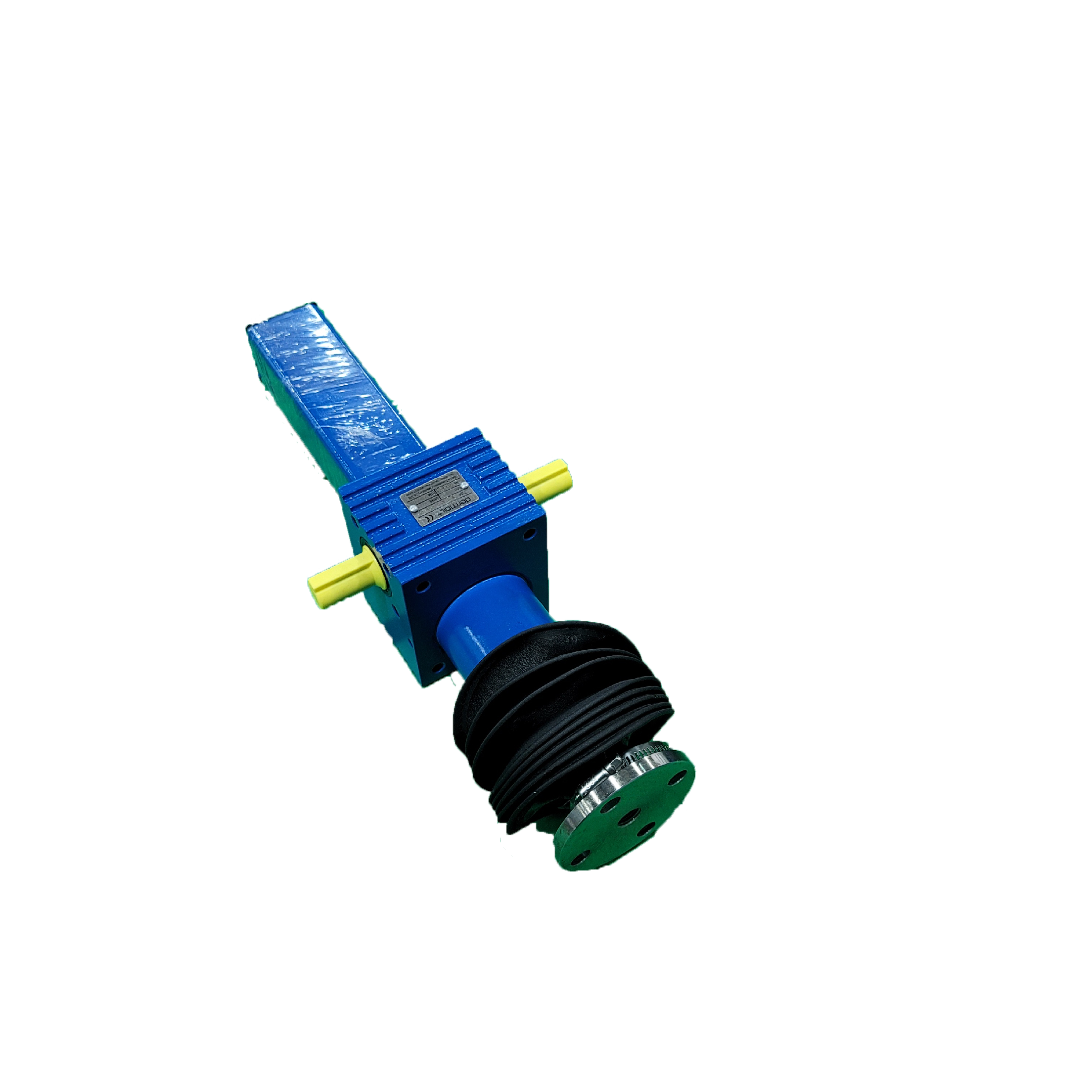
1. Mechanical Structure Protection
1.1 Overload Protection Mechanism
Screw Jack system are often subjected to heavy loads during operation. An overload protection mechanism is essential to prevent damage to the screw, nut, and other components caused by excessive force. One common method is to install a torque limiter on the input shaft of the screw jack. When the load exceeds the rated value, the torque limiter automatically disengages, cutting off the power transmission and protecting the internal components from damage. Another approach is to use a shear pin. When the overload occurs, the shear pin breaks, disconnecting the load from the screw jack and preventing further damage.
1.2 Anti-Reverse Mechanism
In some applications, such as vertical lifting, it is crucial to prevent the load from falling unexpectedly due to power failure or component failure. An anti-reverse mechanism can effectively solve this problem. The most common anti-reverse device is the worm gear and worm mechanism. Due to the self-locking property of the worm gear and worm, when the worm is the driving part, the worm gear cannot drive the worm to rotate in the reverse direction, thus preventing the load from descending. Additionally, a brake can be installed on the output shaft of the screw jack. When the power is cut off, the brake automatically engages, holding the load in place.
1.3 Limit Switches
Limit switches are used to limit the travel range of the screw jack. There are usually two types: upper limit switch and lower limit switch. When the screw jack reaches the upper or lower limit position, the limit switch is triggered, sending a signal to the control system to stop the motor or reverse its rotation. This prevents the screw from extending beyond its safe range, avoiding damage to the screw and nut and potential collisions with surrounding equipment.
1.4 Structural Reinforcement
The housing and support structure of the screw jack should be designed with sufficient strength and rigidity to withstand the maximum load and operating forces. Reinforcing ribs or gussets can be added to the housing to improve its structural stability. The mounting base of the screw jack should be firmly fixed to the foundation to prevent vibration and displacement during operation, which could affect the normal functioning of the safety devices.
2. Electrical Control Protection
2.1 Overcurrent Protection
Overcurrent can occur when the screw jack is overloaded, jammed, or encounters other abnormal conditions. Overcurrent protection devices, such as fuses or circuit breakers, are installed in the electrical circuit of the screw jack. When the current exceeds the rated value, these devices automatically cut off the power supply, protecting the motor and other electrical components from damage due to overheating.
2.2 Phase Loss Protection
In three-phase power systems, phase loss can cause the motor to run abnormally, generate excessive heat, and even burn out. Phase loss protection devices monitor the phase sequence and voltage of the three-phase power supply. When a phase loss is detected, the device immediately cuts off the power to the motor, preventing damage and ensuring the safety of the operation.
2.3 Emergency Stop Function
An emergency stop button should be installed in a conspicuous and easily accessible location near the screw jack. In case of an emergency, such as a sudden overload, component failure, or personnel safety hazard, the operator can quickly press the emergency stop button to immediately cut off the power supply to the screw jack, stopping its operation and preventing further accidents.
3. Environmental Protection
3.1 Dust and Water Protection
In dusty or humid environments, dust and moisture can enter the internal components of the screw jack, causing wear, corrosion, and electrical failures. To protect against dust and water, the screw jack can be equipped with dust covers or enclosures. These covers are designed to fit tightly around the screw and other moving parts, preventing the ingress of dust and water. Additionally, the electrical components can be sealed or coated with a waterproof material to enhance their resistance to moisture.
3.2 Temperature Control
Extreme temperatures can affect the performance and lifespan of the screw jack. In high-temperature environments, the lubricating oil may become thin, reducing its lubricating effect and increasing wear. In low-temperature environments, the lubricating oil may thicken, making it difficult for the screw to rotate smoothly. To address these issues, temperature control measures can be taken. For example, in high-temperature environments, a cooling system, such as a fan or a heat exchanger, can be installed to dissipate heat. In low-temperature environments, a heating device can be used to warm up the lubricating oil and ensure its proper viscosity.
4. Operational Safety Measures
4.1 Operator Training
Operators should receive comprehensive training on the operation, maintenance, and safety procedures of the screw jack before using it. The training should cover topics such as the correct starting and stopping procedures, load handling, emergency response, and regular maintenance tasks. Only trained and qualified operators should be allowed to operate the screw jack to ensure safe and efficient operation.
4.2 Regular Inspection and Maintenance
Regular inspection and maintenance are essential to keep the screw jack in good working condition and identify potential safety hazards in advance. A maintenance schedule should be established, which includes daily, weekly, monthly, and annual maintenance tasks. Daily tasks may include checking for abnormal noises, vibrations, and leaks. Weekly tasks may involve lubricating the moving parts and checking the tightness of bolts and nuts. Monthly tasks could include inspecting the electrical components and limit switches. Annual tasks may involve a comprehensive overhaul of the screw jack, including disassembly, cleaning, and replacement of worn parts.
4.3 Safe Working Load Limit
The safe working load limit of the dermail transmission screw jack should be clearly marked on the equipment and in the operating manual. Operators should strictly adhere to this limit and avoid overloading the screw jack. Overloading can not only damage the internal components but also lead to serious accidents, such as the collapse of the lifted load.
In conclusion, ensuring the safety of screw jacks requires a combination of mechanical structure protection, electrical control protection, environmental protection, and operational safety measures. By implementing these comprehensive safety protection measures, the risk of accidents can be significantly reduced, and the reliable and efficient operation of screw jacks can be guaranteed in various industrial applications.








Tel:+86-317-7369999
E-mail: demai@demai.org
Mobile:+86-18653450543 (Wechat)
Address:No. 6, Haihe Road, economic development zone, Wuqiao County, Cangzhou City, Hebei Province

点击右上角
分享给朋友吧
Copyright ©2023 All Rights Reserved Hebei Demai Transmission Machinery Co.,Ltd.
Copyright ©2025 All Rights Reserved Hebei Demai Transmission Machinery Co.,Ltd.
