
Heavy-Duty vs. Mini Electric Linear Actuators: Key Differences
2026-04-18 11:51:23
Click:
“
Electric linear actuators are widely used in industrial automation, robotics, and consumer applications, but their designs and capabilities vary significantly based on load requirements, environmental conditions, and cost constraints.
”
Electric linear actuators are widely used in industrial automation, robotics, and consumer applications, but their designs and capabilities vary significantly based on load requirements, environmental conditions, and cost constraints. Below is a detailed comparison between heavy-duty and mini electric linear actuators:
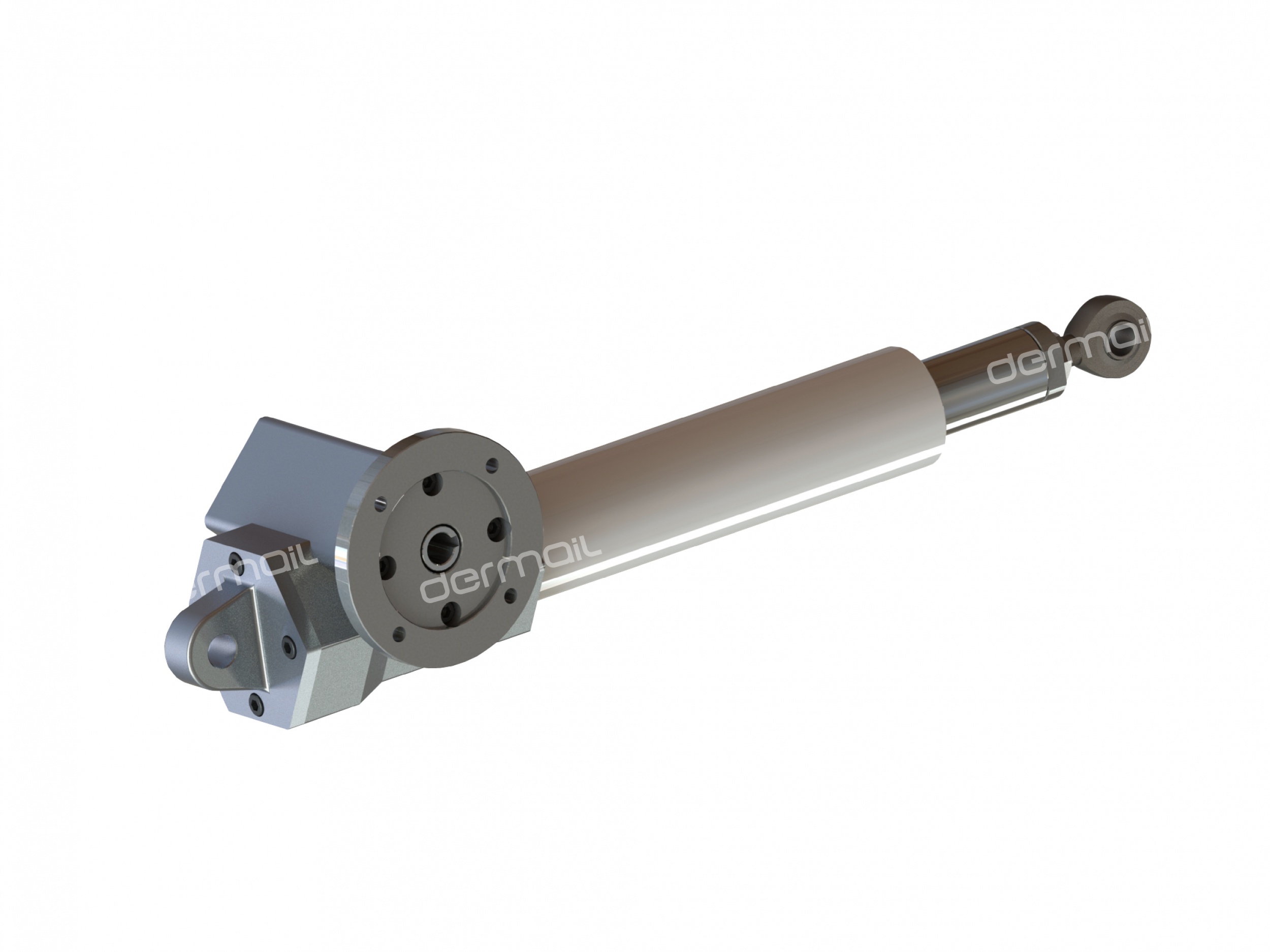
1. Load Capacity & Force Output
Heavy-Duty Electric Linear Actuators
- High thrust force: Typically range from 2,000 N (≈450 lbs) to 50,000 N (≈11,240 lbs) or more.
- Designed for heavy loads: Used in applications like mining equipment, construction machinery, and industrial presses.
- Example: A hydraulic press actuator may require 20,000 N of force to compress metal sheets.
Mini Electric Linear Actuators
- Low to moderate thrust force: Usually <1,200 N (≈270 lbs), suitable for light-duty tasks.
- Optimized for compactness: Used in smart furniture, medical devices, and consumer electronics.
- Example: An electric standing desk actuator may only need 500 N to adjust height.
2. Structural Design & Durability
Heavy-Duty Actuators
- Robust construction: Made of high-strength steel or aluminum alloys with reinforced housings.
- Protection against harsh environments:
- IP65–IP69K ratings (dustproof, waterproof, high-pressure cleaning resistant).
- Corrosion-resistant coatings for marine or chemical exposure.
- Vibration/shock resistance for mining or military use.
- Long lifespan: Often rated for >100,000 cycles under continuous operation.
Mini Actuators
- Lightweight & compact: Made of plastic or lightweight metals to reduce size and weight.
- Basic environmental protection: Typically IP54 (dust and splash resistance).
- Shorter lifespan: Usually 10,000–30,000 cycles, suitable for intermittent use.
3. Control Precision & Speed
Heavy-Duty Actuators
- High precision (if servo-controlled): ±0.1 mm positioning accuracy for robotics or CNC machines.
- Variable speed control: Adjustable from 1 mm/s to 500 mm/s depending on load.
- Feedback systems: Often equipped with encoders or Hall sensors for real-time position monitoring.
Mini Actuators
- Moderate precision: ±1–5 mm accuracy, sufficient for furniture or curtain adjustment.
- Fixed or limited speed control: Typically 10–50 mm/s for smooth motion.
- Open-loop control: No feedback sensors, relying on basic voltage/current regulation.
4. Power Consumption & Efficiency
Heavy-Duty Actuators
- High power consumption: Requires 24V/48V DC or even 3-phase AC for heavy loads.
- Energy-efficient designs: Some use brushless DC motors (BLDC) to reduce heat and improve efficiency.
- Regenerative braking (in advanced models): Recovers energy during deceleration.
Mini Actuators
- Low power consumption: Operates on 12V/24V DC with minimal current draw.
- Battery-friendly: Suitable for portable devices (e.g., smart locks, toys).
- High efficiency at low loads: Minimal energy waste in light-duty applications.
5. Environmental Adaptability
Heavy-Duty Actuators
- Extreme temperature resistance: Works in -40°C to +85°C (e.g., wind turbines in cold climates).
- Explosion-proof variants: Available for hazardous environments (e.g., oil & gas, mining).
- Salt-fog resistance: For marine or coastal applications.
Mini Actuators
- Moderate temperature range: Typically -10°C to +60°C (suitable for indoor use).
- Not designed for explosives or extreme conditions: Limited to consumer and light industrial settings.
6. Cost & Maintenance
Heavy-Duty Actuators
- High initial cost: Due to durable materials, precision components, and certification requirements.
- Lower long-term maintenance: Designed for minimal downtime in critical applications.
- Example: A heavy-duty actuator for a solar tracking system may cost 500–2,000.
Mini Actuators
- Low cost: Mass-produced for consumer markets, often <$100 per unit.
- Higher replacement frequency: Due to shorter lifespan and lower durability.
- Example: A smart curtain actuator may cost 20–50.








Tel:+86-317-7369999
E-mail: demai@demai.org
Mobile:+86-18653450543 (Wechat)
Address:No. 6, Haihe Road, economic development zone, Wuqiao County, Cangzhou City, Hebei Province

点击右上角
分享给朋友吧
Copyright ©2023 All Rights Reserved Hebei Demai Transmission Machinery Co.,Ltd.
Copyright ©2025 All Rights Reserved Hebei Demai Transmission Machinery Co.,Ltd.
