
How to Address Excessive Noise During the Operation of Screw Jacks
2025-11-12 15:47:47
Click:
“
Screw jacks are widely used in industrial automation, construction machinery, and precision equipment for their precise positioning and reliable self-locking capabilities.
”
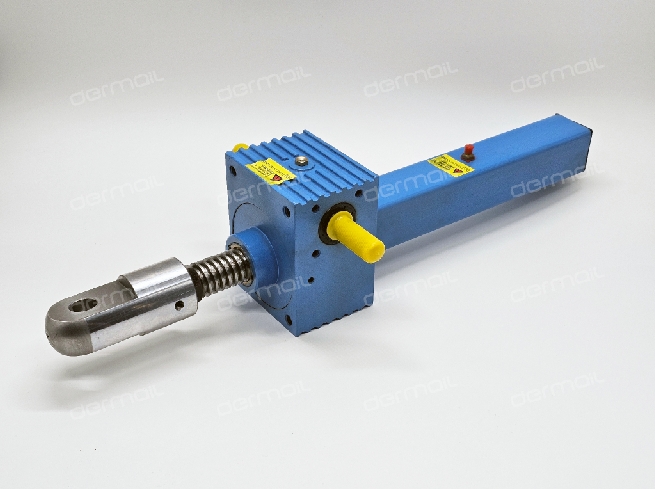
Screw jacks are widely used in industrial automation, construction machinery, and precision equipment for their precise positioning and reliable self-locking capabilities. However, excessive noise during operation—such as grinding, rattling, or humming—can disrupt workflows, indicate underlying mechanical issues, and even compromise safety. This article explores the root causes of noise in screw jacks and provides actionable solutions to mitigate it effectively.
1. Root Causes of Noise in Screw Jacks
1.1 Insufficient Lubrication
The friction between the screw shaft and nut generates heat and vibration. Without proper lubrication, metal-to-metal contact produces high-frequency noise, especially under heavy loads or high-speed operation.
1.2 Worn or Damaged Components
- Screw Shaft/Nut Wear: Pitting, scoring, or deformation on the threads due to prolonged use or contamination.
- Bearing Failure: Worn bearings in the support housing create rattling or grinding sounds.
- Loose Fasteners: Vibrations can loosen mounting bolts, causing misalignment and noise.
1.3 Installation Misalignment
Improper alignment of the screw jack—such as bent shafts, uneven mounting surfaces, or misaligned couplings—leads to uneven load distribution and increased vibration.
1.4 High-Speed or Overload Operation
Exceeding the rated speed or load capacity induces resonance, causing the screw jack to vibrate excessively and generate noise.
1.5 Environmental Factors
Dust, debris, or corrosive substances entering the housing can accelerate wear and create abrasive noise during operation.
2. Solutions to Reduce Noise
2.1 Optimize Lubrication
- Select the Right Lubricant: Use high-viscosity grease (e.g., lithium-based or polyurea-based) for general applications. For high-temperature environments, opt for synthetic greases with PTFE or molybdenum disulfide additives.
- Regular Maintenance: Reapply lubricant every 3–6 months (or more frequently for heavy-duty use). Clean the threads before relubricating to prevent contaminant buildup.
2.2 Inspect and Replace Worn Parts
- Check Thread Condition: Use a thread gauge or microscope to detect wear. Replace the screw shaft or nut if the pitch deviation exceeds 0.1mm.
- Replace Bearings: Install precision-grade bearings (e.g., angular contact bearings with C3 clearance) to reduce play and noise.
- Tighten Fasteners: Use torque wrenches to ensure all bolts meet the manufacturer’s specifications.
2.3 Ensure Proper Installation
- Align the Shaft: Use laser alignment tools or dial indicators to verify straightness (tolerance: ≤0.05mm/m).
- Level Mounting Surfaces: Shims or machined bases can correct unevenness.
- Balance Loads: Distribute weight evenly across multiple screw jacks to avoid side loading.
2.4 Adjust Operating Parameters
- Reduce Speed: Operate below the critical speed (typically 60–80% of the rated maximum) to minimize resonance.
- Avoid Overloading: Stay within the load capacity specified in the manufacturer’s manual.
- Implement Soft Start/Stop: Use variable-frequency drives (VFDs) to reduce acceleration/deceleration shocks.
2.5 Enhance Environmental Protection
- Install Seals: Use bellow boots or labyrinth seals to keep out dust and moisture.
- Clean Regularly: Wipe down the housing and threads to remove debris.
- Consider Enclosures: For harsh environments, house the screw jack in a protective casing.
3. Case Study: Noise Reduction in a CNC Machine Tool
A manufacturing plant reported grinding noises from a screw jack used in a CNC milling machine’s Z-axis. Investigations revealed:
- Issue: Worn nut threads and insufficient lubrication due to infrequent maintenance.
- Solution:
- Replaced the nut with a precision-ground alternative.
- Switched to a high-temperature grease with molybdenum disulfide.
- Added automatic lubrication pumps for consistent oil supply.
- Result: Noise levels dropped from 85 dB to 65 dB, and the machine’s positioning accuracy improved by 15%.
4. Conclusion
Excessive noise in screw jacks is often a symptom of deeper mechanical or operational issues. By addressing lubrication, component wear, installation alignment, and environmental factors, users can significantly reduce noise while extending equipment lifespan. Regular maintenance and adherence to operational guidelines are key to ensuring smooth, quiet, and reliable screw jack performance.
For complex cases, consult the manufacturer or a certified engineer to diagnose and resolve issues promptly.
This article provides a structured approach to diagnosing and mitigating noise in screw jacks, combining technical insights with practical solutions. Adjust the content as needed for specific industries or applications.








Tel:+86-317-7369999
E-mail: demai@demai.org
Mobile:+86-18653450543 (Wechat)
Address:No. 6, Haihe Road, economic development zone, Wuqiao County, Cangzhou City, Hebei Province

点击右上角
分享给朋友吧
Copyright ©2023 All Rights Reserved Hebei Demai Transmission Machinery Co.,Ltd.
Copyright ©2025 All Rights Reserved Hebei Demai Transmission Machinery Co.,Ltd.
