
The Impact of Excessive Fast or Slow Lifting Speeds on Screw Jacks
2025-10-08 10:23:47
Click:
“
Screw jacks are vital mechanical devices widely used in various industrial and commercial applications, such as material handling, construction equipment, and automated systems.
”
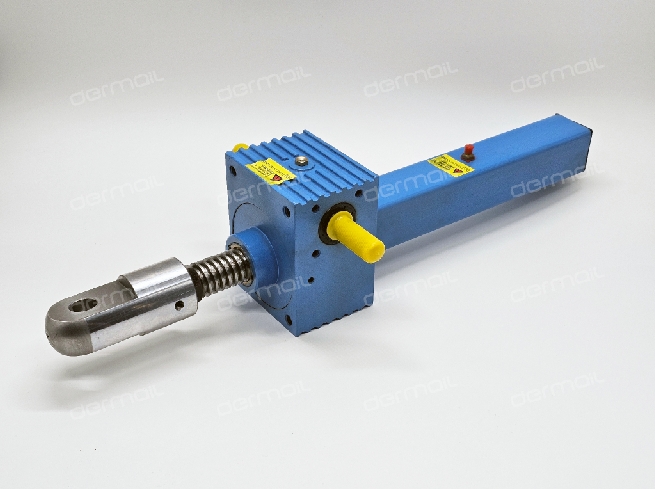
Screw jacks are vital mechanical devices widely used in various industrial and commercial applications, such as material handling, construction equipment, and automated systems. The lifting speed of a screw jack plays a crucial role in determining its performance, longevity, and overall operational efficiency. Both excessive fast and slow lifting speeds can have adverse effects on the screw jack. This article delves into the specific impacts of these two scenarios.
I. Impact of Excessive Fast Lifting Speeds
1. Mechanical Wear and Tear
- Accelerated Component Degradation: When a screw jack operates at an excessively high lifting speed, the friction between the screw and the nut increases significantly. This heightened friction generates more heat, which can lead to premature wear of the screw threads and the nut. Over time, the threads may become worn down, reducing the precision of the lifting motion and potentially causing binding or jamming.
- Bearing and Shaft Stress: High - speed operation also puts excessive stress on the bearings that support the screw and the shaft. The increased rotational forces can cause the bearings to overheat, leading to lubricant breakdown and eventual bearing failure. This, in turn, can result in misalignment of the screw, further exacerbating the wear on the entire system.
2. Reduced Accuracy and Stability
- Vibration and Oscillation: Fast lifting speeds can induce vibrations and oscillations in the screw jack. These vibrations can be transmitted to the load being lifted, causing instability and potentially damaging the load. Moreover, the vibrations can affect the overall structural integrity of the screw jack, leading to fatigue and cracks in the components over time.
- Positioning Errors: In applications where precise positioning is required, such as in robotics or automated assembly lines, excessive fast lifting speeds can make it difficult to achieve accurate positioning. The inertia of the moving parts can cause over - shooting or under - shooting of the desired position, resulting in reduced product quality and increased rework.
3. Safety Risks
- Load Instability: A high - speed lifting operation can cause the load to become unstable, especially if the load is not properly secured. Sudden movements or vibrations can cause the load to shift or fall, posing a significant safety hazard to operators and nearby equipment.
- Structural Failure: In extreme cases, the excessive forces generated during high - speed lifting can cause structural failure of the screw jack. This can lead to catastrophic accidents, such as the collapse of the lifting mechanism, which can result in serious injuries or property damage.
II. Impact of Excessive Slow Lifting Speeds
1. Reduced Productivity
- Longer Cycle Times: One of the most obvious drawbacks of slow lifting speeds is the increased cycle time. In industrial settings where time is money, longer cycle times can significantly reduce productivity. For example, in a manufacturing plant, a slow - moving screw jack can slow down the entire production line, leading to delays in product delivery and increased production costs.
- Inefficient Resource Utilization: Slow lifting speeds also result in inefficient utilization of resources. The equipment and labor are tied up for longer periods, reducing the overall throughput of the system. This can be particularly problematic in high - volume production environments where maximizing output is essential.
2. Increased Energy Consumption
- Prolonged Motor Operation: When a screw jack operates at a slow speed, the motor has to run for a longer duration to complete the lifting task. This prolonged operation leads to increased energy consumption, which not only raises the operating costs but also has a negative impact on the environment. In an era where energy efficiency is a top priority, excessive slow lifting speeds can be a significant drawback.
- Inefficient Power Transmission: Slow speeds can also cause inefficiencies in the power transmission system. The gears, belts, and other components in the drive train may not operate at their optimal efficiency levels, resulting in additional energy losses.
3. Potential for Stalling
- Overloading and Stalling: In some cases, slow lifting speeds can be an indication of overloading. If the load exceeds the capacity of the screw jack, the motor may struggle to lift the load at a reasonable speed, leading to stalling. Stalling can cause damage to the motor and other components, as well as disrupt the normal operation of the system.
- Thermal Issues: Prolonged slow - speed operation under heavy loads can also lead to thermal issues. The motor may overheat due to the continuous high - current draw, which can shorten the motor's lifespan and increase the risk of failure.
III. Optimal Lifting Speed Considerations
To ensure the optimal performance and longevity of a screw jack, it is essential to select the appropriate lifting speed. This involves considering several factors, including the load capacity, the application requirements, and the environmental conditions.
- Load Characteristics: The weight, size, and shape of the load being lifted play a crucial role in determining the optimal lifting speed. Heavier loads may require slower speeds to ensure stability and safety, while lighter loads can be lifted at faster speeds without compromising performance.
- Application Requirements: Different applications have different requirements in terms of speed and accuracy. For example, in a high - precision assembly line, a slower and more controlled lifting speed may be necessary, while in a material handling application, a faster speed may be more suitable.
- Environmental Factors: Environmental conditions such as temperature, humidity, and dust can also affect the performance of the screw jack. In harsh environments, slower speeds may be required to reduce wear and tear and ensure reliable operation.
In conclusion, both excessive fast and slow lifting speeds can have detrimental effects on screw jacks. Excessive fast speeds can lead to mechanical wear, reduced accuracy, and safety risks, while excessive slow speeds can result in reduced productivity, increased energy consumption, and potential stalling. By carefully considering the load characteristics, application requirements, and environmental factors, it is possible to select the optimal lifting speed for a screw jack, ensuring its reliable and efficient operation.








Tel:+86-317-7369999
E-mail: demai@demai.org
Mobile:+86-18653450543 (Wechat)
Address:No. 6, Haihe Road, economic development zone, Wuqiao County, Cangzhou City, Hebei Province

点击右上角
分享给朋友吧
Copyright ©2023 All Rights Reserved Hebei Demai Transmission Machinery Co.,Ltd.
Copyright ©2025 All Rights Reserved Hebei Demai Transmission Machinery Co.,Ltd.
