
Factors Influencing the Transmission Efficiency of Screw Jacks
2025-09-08 09:45:57
Click:
“
Screw jacks, as essential mechanical devices for lifting and lowering loads through the conversion of rotational motion into linear motion, find widespread applications across various industries
”
Screw jacks, as essential mechanical devices for lifting and lowering loads through the conversion of rotational motion into linear motion, find widespread applications across various industries, including construction, manufacturing, and logistics. The transmission efficiency of a screw jack is a critical parameter that directly impacts its performance, energy consumption, and operational cost. This article delves into the key factors influencing the transmission efficiency of screw jacks.
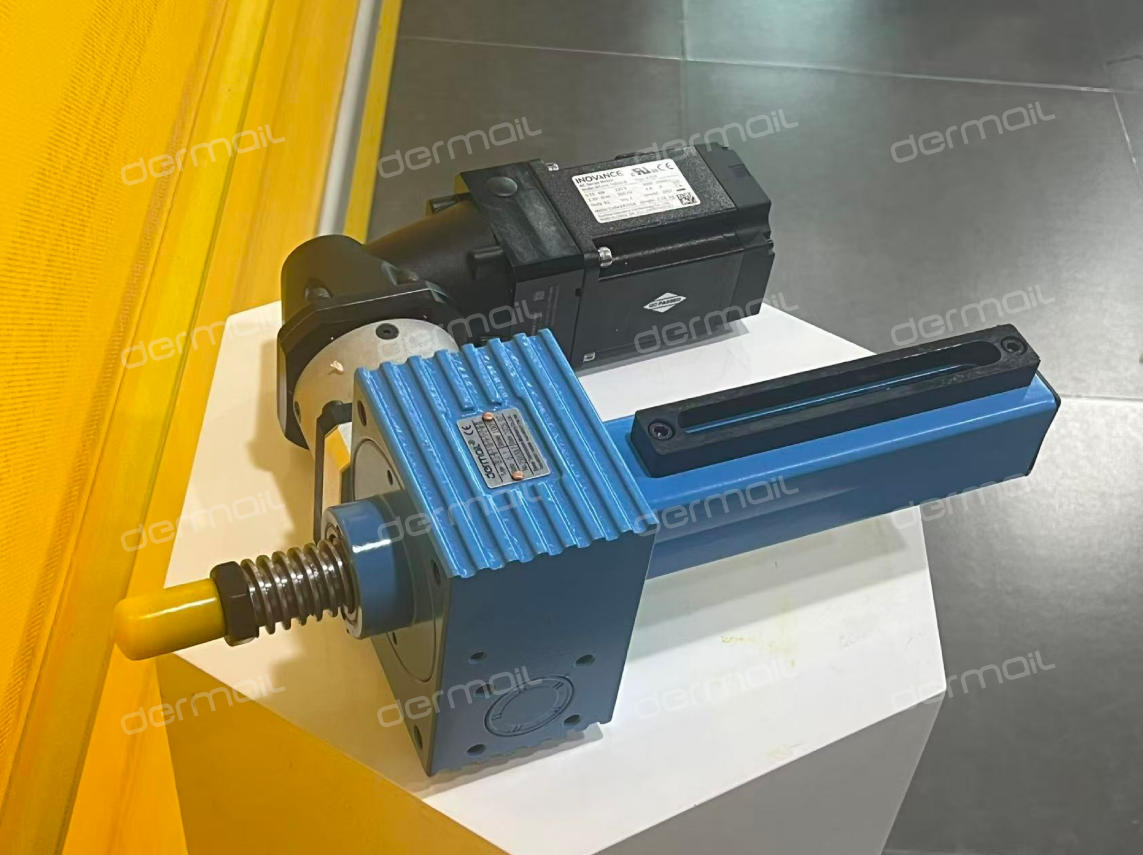
1. Screw Thread Type
The type of screw thread employed in a dermail transmission screw jack significantly affects its transmission efficiency. Common screw thread types include trapezoidal threads, square threads, and buttress threads. Square threads are renowned for their high efficiency due to their minimal friction loss during operation. The thread profile of square threads is designed to maximize the mechanical advantage, ensuring a more direct transfer of force from the input (rotational motion) to the output (linear motion). In contrast, trapezoidal threads, while offering better strength and wear resistance, exhibit relatively lower efficiency because of their larger contact area and increased friction. Buttress threads combine some advantages of both square and trapezoidal threads, providing good load-bearing capacity and moderate efficiency.
2. Material Selection
The materials used for constructing the screw and nut components of a screw jack play a vital role in determining its transmission efficiency. High-quality materials with low friction coefficients, such as bronze for the nut and hardened steel for the screw, are often preferred. Bronze nuts offer excellent wear resistance and self-lubricating properties, reducing friction and enhancing efficiency. The hardness and surface finish of the screw material also influence efficiency; a smoother and harder screw surface minimizes friction and wear, thereby improving the overall transmission performance. Additionally, the compatibility of materials between the screw and nut is crucial to prevent excessive wear and seizure, which can lead to a significant drop in efficiency.
3. Lubrication Conditions
Proper lubrication is essential for maintaining optimal transmission efficiency in screw jacks. Lubricants reduce friction between the screw and nut surfaces, minimizing energy losses due to heat generation and wear. The choice of lubricant depends on various factors, including the operating temperature, load conditions, and speed of the screw jack. For high-speed applications, lightweight lubricants with good thermal stability are recommended, while heavy-duty applications may require greases or oils with higher viscosity and extreme pressure additives. Regular maintenance and re-lubrication are also necessary to ensure consistent performance and prevent the degradation of lubrication over time, which can lead to a decline in efficiency.
4. Load Conditions
The magnitude and direction of the load applied to a screw jack have a direct impact on its transmission efficiency. Under heavy loads, the friction between the screw and nut increases, leading to higher energy losses and reduced efficiency. Moreover, the type of load (static or dynamic) also plays a role. Dynamic loads, which involve frequent changes in direction or magnitude, can cause additional stress and wear on the screw jack components, further affecting efficiency. Proper sizing and selection of the screw jack based on the expected load conditions are crucial to ensure optimal performance and efficiency.
5. Operating Speed
The operating speed of a screw jack is another factor that influences its transmission efficiency. At high speeds, the friction between the screw and nut surfaces increases due to the increased relative motion, leading to higher energy losses and heat generation. This can result in a decrease in efficiency and potential damage to the components if not properly managed. Conversely, operating at very low speeds may also lead to inefficiencies due to the increased influence of static friction. Therefore, it is essential to operate the screw jack within its recommended speed range to achieve optimal efficiency.
6. Manufacturing Precision
The manufacturing precision of the screw and nut components has a significant impact on the transmission efficiency of a screw jack. Tight tolerances and high-quality machining ensure proper fit and alignment between the screw and nut, minimizing friction and backlash. Any deviations from the specified dimensions or surface finish can lead to increased friction, wear, and inefficiency. Advanced manufacturing techniques, such as precision grinding and lapping, are often employed to achieve the required level of precision and improve the overall performance of the screw jack.
In conclusion, the transmission efficiency of a screw jack is influenced by a combination of factors, including screw thread type, material selection, lubrication conditions, load conditions, operating speed, and manufacturing precision. By carefully considering these factors during the design, selection, and operation of a screw jack, it is possible to optimize its performance, reduce energy consumption, and extend its service life. Understanding and addressing these influencing factors are essential for ensuring the reliable and efficient operation of screw jacks in various industrial applications.








Tel:+86-317-7369999
E-mail: demai@demai.org
Mobile:+86-18653450543 (Wechat)
Address:No. 6, Haihe Road, economic development zone, Wuqiao County, Cangzhou City, Hebei Province

点击右上角
分享给朋友吧
Copyright ©2023 All Rights Reserved Hebei Demai Transmission Machinery Co.,Ltd.
Copyright ©2025 All Rights Reserved Hebei Demai Transmission Machinery Co.,Ltd.
