
Key Parts to Monitor in Long-Run, High-Frequency Screw Jacks Operation
2025-08-09 15:51:10
Click:
“
Screw jacks are critical mechanical devices widely used in industrial automation, This article outlines the key parts demanding regular inspection and care under demanding operational conditions
”
Screw jacks are critical mechanical devices widely used in industrial automation, material handling, and heavy-duty lifting applications. When subjected to prolonged, high-frequency operation, their components experience accelerated wear, increasing the risk of malfunction or failure. To ensure reliability and extend service life, operators must prioritize the maintenance of specific components. This article outlines the key parts demanding regular inspection and care under demanding operational conditions.
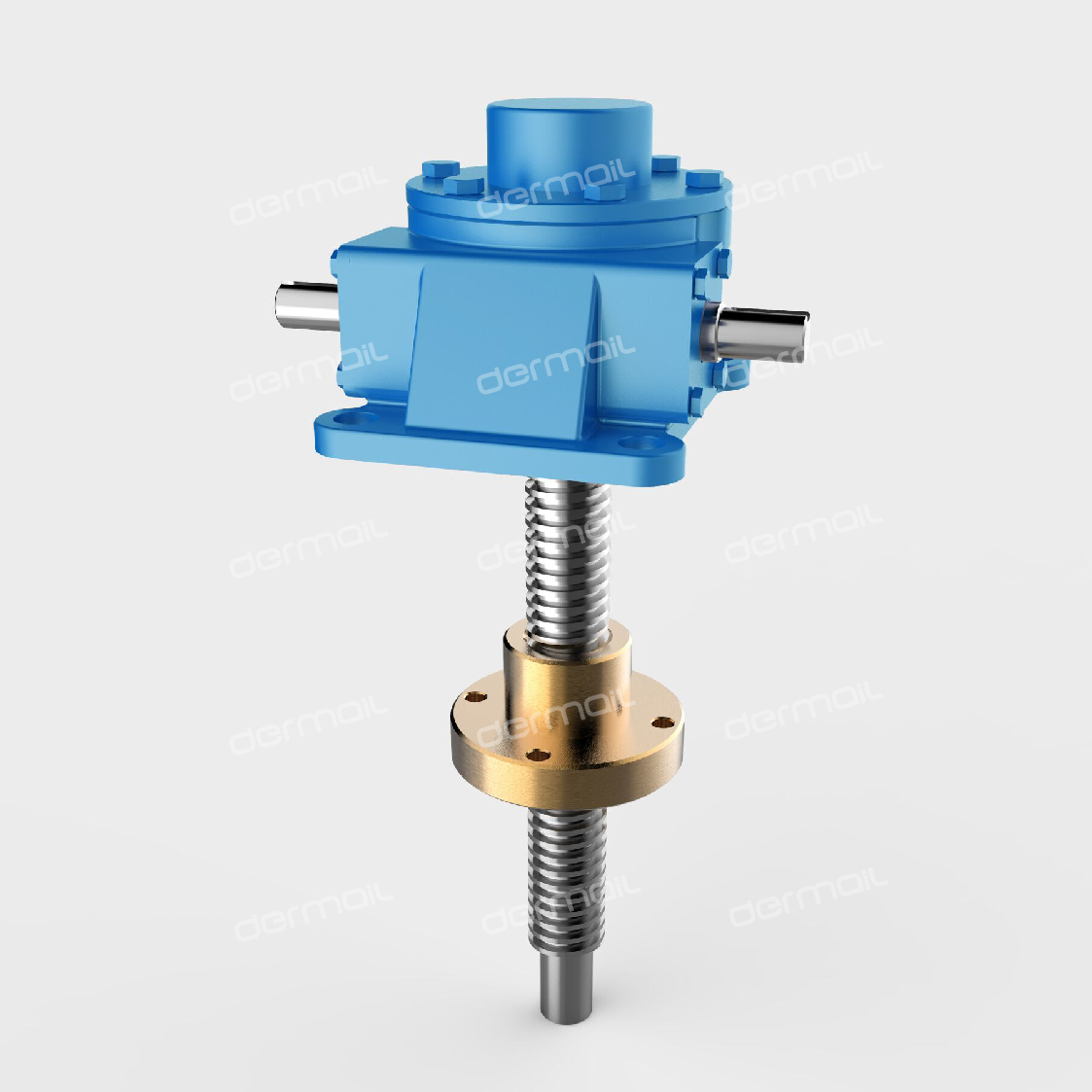
1. Screw Shaft and Nut Assembly
The screw shaft and nut form the core transmission mechanism, converting rotational motion into linear displacement. Prolonged high-frequency use leads to gradual wear of the thread surfaces, manifesting as increased backlash, noise, or vibration. Operators should:
- Monitor thread clearance: Use precision gauges to measure wear. Replace the nut or shaft if unilateral wear exceeds 0.1mm.
- Maintain lubrication: Apply high-performance grease (e.g., lithium-based or synthetic variants) every 200–500 operating hours, depending on load and environmental conditions. In dusty environments, seal the assembly with positive-pressure dust covers to prevent abrasive contamination.
- Check for deformation: Inspect the screw for bending or scoring, which may result from overload or misalignment. Even minor deformations can disrupt smooth operation and damage the nut.
2. Support Bearings
Support bearings stabilize the screw shaft, absorbing axial and radial forces. Under continuous stress, bearings may develop excessive play, leading to misalignment or premature failure. Critical maintenance steps include:
- Verify preload settings: For angular-contact bearings, ensure proper preload to maintain stiffness. Re-adjust or replace bearings every 2–3 years in high-speed applications or 5 years in low-speed settings.
- Lubricate regularly: Use grease compatible with bearing materials and operating temperatures. Avoid over-lubrication, which can trap heat and accelerate degradation.
- Inspect for corrosion: In humid or corrosive environments, apply anti-corrosion coatings or use stainless-steel bearings to prevent rust-induced failure.
3. Drive System (Gears and Gearboxes)
The drive system transmits power from the motor to the screw shaft. High-frequency cycling subjects gears to repetitive stress, causing tooth wear, pitting, or backlash. To mitigate these issues:
- Monitor gear mesh alignment: Ensure proper tooth contact (≥70% engagement) and adjust gearbox positioning if misalignment occurs.
- Check lubrication quality: Replace gear oil every 1,000–3,000 operating hours, or sooner if signs of contamination (e.g., metal particles, emulsification) appear.
- Listen for abnormalities: Unusual noises or vibrations often indicate worn gears or loose fasteners. Immediate inspection is necessary to prevent catastrophic failure.
4. Braking Mechanism
Brakes are essential for holding loads in position when the motor is inactive. Frequent activation and deactivation cycles wear brake linings and reduce friction efficiency. Key maintenance tasks include:
- Adjust clearance: Ensure a 0.3–0.5mm gap between brake pads and the braking surface. Excessive clearance reduces stopping power, while insufficient clearance causes overheating.
- Clean friction surfaces: Remove oil, grease, or debris from brake discs or drums to maintain consistent friction. In food-processing or cleanroom environments, use non-contaminating cleaning agents.
- Test brake response: Periodically verify braking time and holding force. Replace worn components if the system fails to stop within specified parameters.
5. Electrical Components
Motors, controllers, and wiring harnesses are vulnerable to heat, vibration, and electrical stress during prolonged use. Neglecting electrical maintenance can lead to unexpected downtime or safety hazards. Focus on:
- Inspect connections: Tighten loose terminals and check for signs of arcing or corrosion. In vibrating environments, use lock washers or thread-locking compounds to secure connections.
- Monitor temperature: Overheating motors or controllers indicate inadequate cooling or overload conditions. Install thermal sensors to trigger alarms or shutdowns if temperatures exceed safe limits.
- Verify grounding: Ensure all metal components are properly grounded to prevent electrostatic discharge or electrical shocks, especially in wet or dusty settings.
6. Fasteners and Structural Components
Vibration from high-frequency operation can loosen bolts, nuts, and mounting brackets, compromising structural integrity. Preventative measures include:
- Retighten critical fasteners: Use a torque wrench to check bolts on the base frame, motor mounts, and coupling flanges. Follow manufacturer-recommended torque values to avoid over-tightening.
- Replace worn hardware: Corroded or stripped threads reduce clamping force. Stock spare fasteners made from high-strength materials (e.g., grade 8.8 or 12.9 bolts) for quick replacements.
- Inspect welds and brackets: Look for cracks or deformation in load-bearing structures. Reinforce or replace damaged components before they fail under stress.
7. Environmental Protection Systems
Dust, moisture, and chemicals accelerate component degradation. In harsh environments, additional protective measures are essential:
- Seal enclosures: Use gaskets or O-rings to prevent ingress of contaminants into gearboxes, motors, and control panels.
- Install breathers and drains: In outdoor or washdown applications, equip enclosures with breathers to equalize pressure and drains to remove condensation.
- Apply protective coatings: Use epoxy paints or powder coatings on metal surfaces to resist corrosion. For extreme conditions, consider stainless-steel or anodized aluminum housing.
Conclusion
Long-term, high-frequency use of dermail transmission screw jacks demands a proactive maintenance strategy focused on wear-prone components, lubrication, and environmental protection. By implementing regular inspections, timely replacements, and preventive measures, operators can minimize downtime, enhance safety, and maximize the lifespan of these vital machines. A well-maintained screw jack not only ensures operational efficiency but also reduces long-term costs associated with repairs and replacements.








Tel:+86-317-7369999
E-mail: demai@demai.org
Mobile:+86-18653450543 (Wechat)
Address:No. 6, Haihe Road, economic development zone, Wuqiao County, Cangzhou City, Hebei Province

点击右上角
分享给朋友吧
Copyright ©2023 All Rights Reserved Hebei Demai Transmission Machinery Co.,Ltd.
Copyright ©2025 All Rights Reserved Hebei Demai Transmission Machinery Co.,Ltd.
