
The Core Components of Screw Jacks: A Comprehensive Overview
2025-08-07 15:39:30
Click:
“
Screw jacks, also widely recognized as mechanical linear actuators, play a pivotal role across industrial automation, heavy machinery, and precision engineering sectors.
”
Screw jacks, also known as mechanical linear actuators, are indispensable devices in industrial automation, heavy machinery, and precision engineering. By converting rotational motion into precise linear displacement, these robust systems enable lifting, lowering, and positioning of loads with high accuracy and reliability. This article delves into the core structural components that constitute a dermail transmission screw jack and their respective functions in achieving seamless mechanical operation.
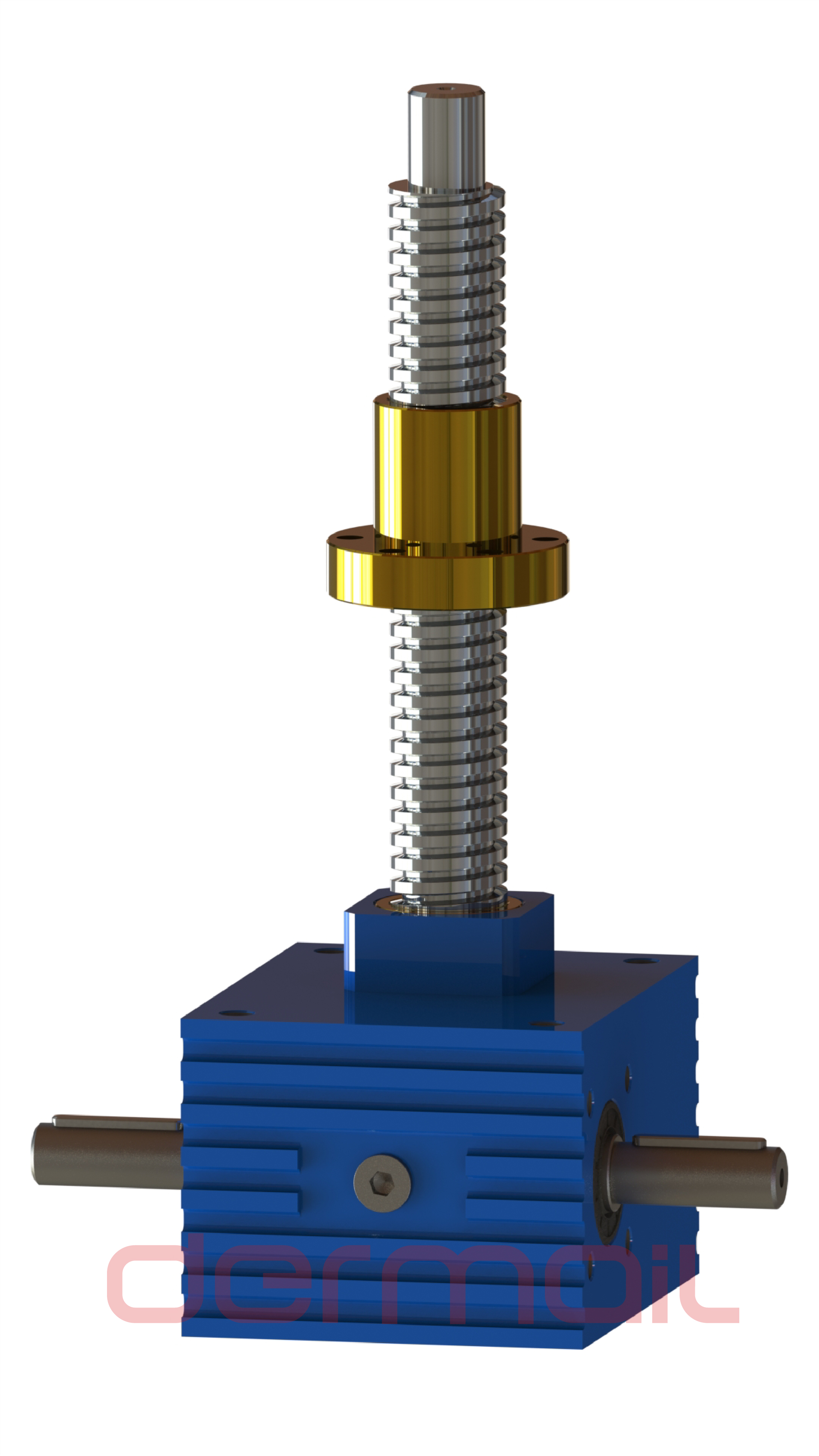
1. Screw Shaft (Lead Screw)
The screw shaft is the central element responsible for translating rotational force into linear movement. Typically forged from high-strength alloy steel or stainless steel, it features a helical thread profile that engages with the nut assembly. Two primary thread types dominate screw jack designs:
- Trapezoidal Threads: Characterized by their 29° thread angle, trapezoidal screws offer excellent self-locking capabilities, making them ideal for applications requiring load retention without external braking systems (e.g., manual lifting platforms).
- Ball Screws: Utilizing recirculating ball bearings between the screw and nut, ball screws reduce friction by up to 90% compared to trapezoidal designs. This enables higher efficiency (up to 98%), faster speeds, and longer service life in high-duty applications like CNC machining centers.
Key parameters include lead (linear distance traveled per revolution), pitch (axial distance between adjacent threads), and diameter, all of which determine the jack's load capacity, speed, and resolution.
2. Nut Assembly
The nut assembly houses the mating thread interface with the screw shaft and serves as the primary load-bearing component. Its design varies based on thread type:
- Sliding Nut: Used with trapezoidal screws, this bronze or steel component transfers force through direct metal-to-metal contact, generating higher friction but providing inherent self-locking.
- Ball Nut: Incorporates a precision-ground raceway filled with steel balls that recirculate through a return tube. This design minimizes friction and wear while maintaining high positional accuracy.
Advanced nut assemblies may include preloaded ball nuts to eliminate backlash, ensuring bidirectional repeatability critical for robotics and metrology applications.
3. Worm Gear Reduction Unit
To achieve high torque multiplication and precise speed control, screw jacks integrate a worm gear drive system consisting of:
- Worm Shaft: The input element driven by an electric motor, hand crank, or pneumatic actuator. Its helical groove meshes with the worm wheel at a 90° angle.
- Worm Wheel: Typically cast from bronze or steel, this large-diameter gear reduces rotational speed while amplifying torque output. The gear ratio (often ranging from 5:1 to 80:1) determines the jack's mechanical advantage and lifting capacity.
The worm gear's self-locking property prevents backdriving under load when the lead angle is less than the friction angle, eliminating the need for additional braking mechanisms in most static applications.
4. Housing and Bearings
The housing encloses all internal components, providing structural support and environmental protection. Key features include:
- Material Selection: Cast iron or aluminum alloy housings offer rigidity and vibration damping, while stainless steel variants resist corrosion in harsh environments.
- Sealing Systems: Multi-lip seals and gaskets prevent ingress of dust, moisture, and contaminants, extending component life.
- Bearing Arrangement: Angular contact bearings support the worm shaft, handling both radial and axial loads, while thrust bearings absorb the axial forces generated during lifting operations.
5. Drive Mechanisms and Accessories
Screw jacks accommodate various drive options to suit diverse applications:
- Electric Motors: AC or DC motors with integrated brakes provide automated control, often paired with inverters for variable-speed operation.
- Manual Handwheels: Offer a cost-effective solution for infrequent adjustments or emergency override scenarios.
- Limit Switches: Electromechanical or proximity sensors installed at travel endpoints prevent over-travel damage.
- Couplings and Flange Mounts: Flexible couplings compensate for misalignment, while flange mounts simplify integration into machinery frames.
6. Lubrication System
Proper lubrication is vital for reducing friction, dissipating heat, and preventing premature wear. Common approaches include:
- Grease Fittings: Manual relubrication points for low-speed applications.
- Oil Bath Lubrication: The worm gear submerged in oil ensures continuous lubrication, suitable for moderate-speed operations.
- Forced-Feed Lubrication: Automated oil pumps deliver precise lubricant quantities to high-speed or heavy-duty jacks.
Conclusion
The synergy of these core components—screw shaft, nut assembly, worm gear reduction unit, housing, bearings, and drive mechanisms—enables screw jacks to deliver unparalleled performance across industries. From adjusting solar panel angles to positioning aircraft components, their modular design allows customization for specific load, speed, and environmental requirements. As industrial automation advances, screw jacks continue to evolve with features like IoT connectivity for predictive maintenance and integrated servo drives for ultra-precise motion control, solidifying their role as workhorses of modern mechanical engineering.








Tel:+86-317-7369999
E-mail: demai@demai.org
Mobile:+86-18653450543 (Wechat)
Address:No. 6, Haihe Road, economic development zone, Wuqiao County, Cangzhou City, Hebei Province

点击右上角
分享给朋友吧
Copyright ©2023 All Rights Reserved Hebei Demai Transmission Machinery Co.,Ltd.
Copyright ©2025 All Rights Reserved Hebei Demai Transmission Machinery Co.,Ltd.
