
Key Considerations for Safe and Efficient Use of Screw Jacks
2025-07-10 14:35:08
Click:
“
Screw jacks are widely used in industrial automation, material handling, and mec
”
Screw jacks are widely used in industrial automation, material handling, and mechanical systems for precise linear motion control. However, improper operation or maintenance can lead to performance degradation, safety hazards, or premature failure. This article outlines critical aspects to ensure reliable and long-lasting screw jack performance.
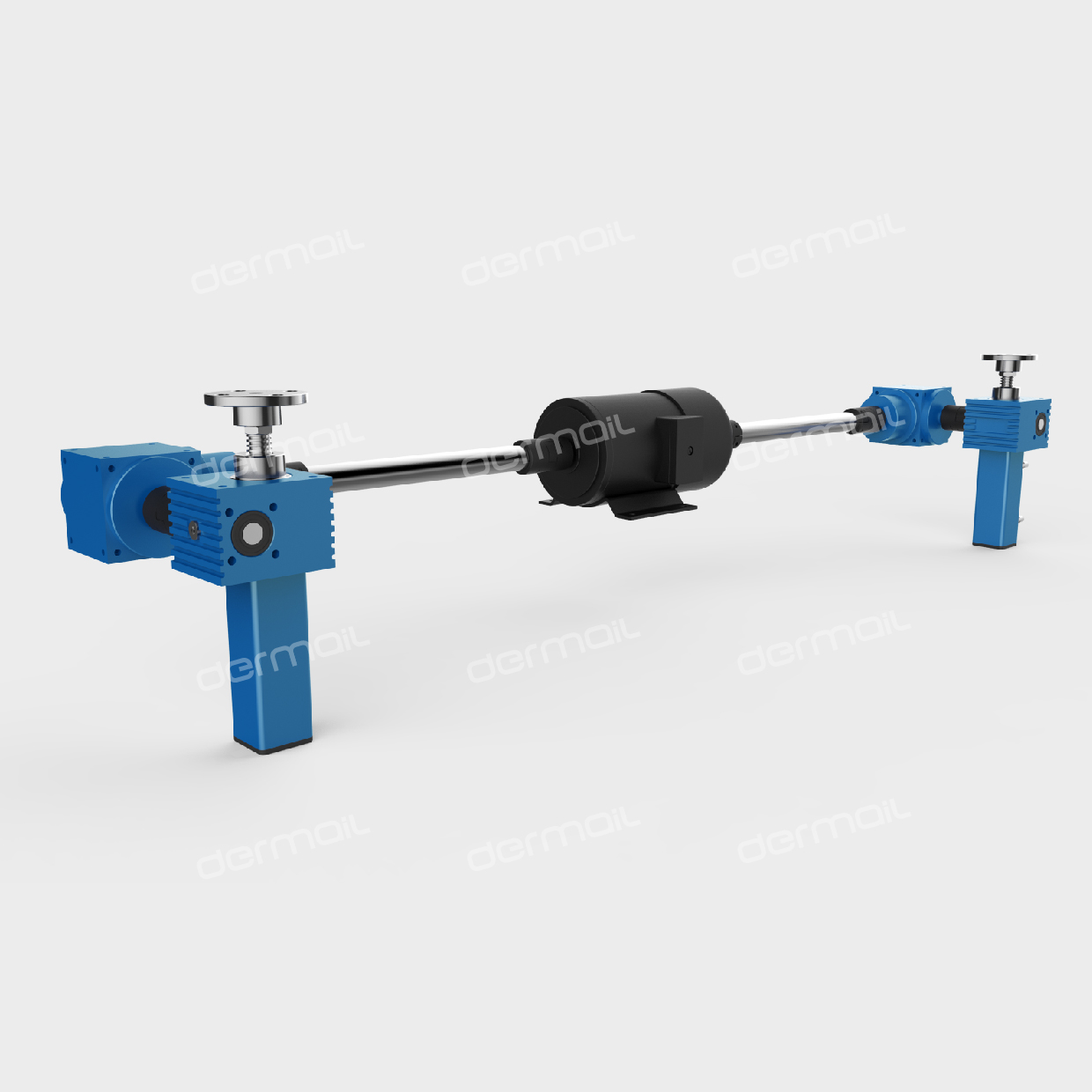
1. Proper Installation and Alignment
- Foundation Stability: Ensure the mounting surface is flat, rigid, and capable of supporting the load. Uneven bases can cause misalignment, leading to excessive wear or vibration.
- Horizontal Calibration: Use a spirit level to verify horizontal alignment (typically ≤0.1mm/m tolerance). Misalignment increases friction and accelerates component fatigue.
- Shaft and Nut Cleanliness: Thoroughly clean the screw shaft and nut before installation to remove debris, oil, or metal shavings that could cause jamming or abrasion.
- Lubrication: Apply a suitable grease (e.g., lithium-based) to the screw shaft and nut to reduce friction and prevent corrosion. Re-lubricate periodically based on usage frequency.
2. Load Management
- Avoid Overloading: Never exceed the rated load capacity (typically 80% of the maximum load for continuous operation). Overloading risks screw bending, nut failure, or drive system damage.
- Prevent Eccentric Loads: Distribute loads evenly to avoid side forces that can deform the screw or nut.
- Control Dynamic Loads: Minimize shock loads or sudden direction changes, which generate stress concentrations and reduce component lifespan.
3. Operational Best Practices
- Smooth Acceleration/Deceleration: Gradually start and stop the screw jack to prevent mechanical impact. Abrupt stops may damage gears or couplings.
- Direction Verification: Confirm the rotation direction matches the intended lifting/lowering motion before full-load operation.
4. Maintenance and Inspection
- Regular Lubrication: Replenish grease every 3–6 months (or more frequently in high-temperature/dusty environments). Clean old grease to prevent hardening.
- Fastener Checks: Periodically inspect bolts, nuts, and mounting brackets for loosening due to vibration. Tighten immediately if gaps are detected.
- Wear Monitoring: Listen for unusual noises (e.g., grinding, clicking) during operation, which may indicate worn bearings, misaligned gears, or a damaged nut.
- Shaft Straightness: Measure screw shaft runout annually. A deviation exceeding 0.5mm/m requires realignment or replacement.
5. Safety Precautions
- Guarding: Install physical barriers (e.g., safety fences, light curtains) around the lifting area to prevent accidental contact.
- Emergency Stop: Ensure the E-stop button is functional and easily accessible. Test limit switches and overload protectors regularly.
- Operator Training: Only trained personnel should operate or adjust the screw jack. Provide clear instructions on emergency procedures and load limits.
6. Troubleshooting Common Issues
- Stuck Movement: Check for insufficient lubrication, debris in the nut, or a bent screw shaft.
- Excessive Noise: Inspect bearings, gears, or couplings for wear or misalignment.
- Oil Leakage: Replace worn seals or gaskets if oil escapes from the housing.
7. Long-Term Storage
- Rust Prevention: Clean the screw jack, apply anti-corrosion coating, and store in a dry, ventilated area.
- Periodic Testing: Run the jack without load every few months to prevent lubricant solidification or component seizure.
Conclusion
By adhering to these guidelines, users can maximize the reliability, safety, and service life of screw jacks. Regular maintenance, proper load handling, and environmental controls are essential to minimizing downtime and costly repairs. Always consult the manufacturer’s manual for model-specific recommendations and safety standards compliance.
This concludes what dermail transmission has shared with you today. We hope this information has been helpful. If you have any further questions about screw jacks, please feel free to contact us at any time—we’re always here to assist you.








Tel:+86-317-7369999
E-mail: demai@demai.org
Mobile:+86-18653450543 (Wechat)
Address:No. 6, Haihe Road, economic development zone, Wuqiao County, Cangzhou City, Hebei Province

点击右上角
分享给朋友吧
Copyright ©2023 All Rights Reserved Hebei Demai Transmission Machinery Co.,Ltd.
Copyright ©2025 All Rights Reserved Hebei Demai Transmission Machinery Co.,Ltd.
