
Application of Screw jacks in Antenna Elevation Systems
2026-03-16 08:42:21
Click:
“
Antenna elevation systems are indispensable for optimizing signal transmission in communication, radar, and broadcasting applications. Screw jacks, as precision mechanical devices, play a critical role in achieving stable
”
Introduction
Antenna elevation systems are indispensable for optimizing signal transmission in communication, radar, and broadcasting applications. Screw jacks, as precision mechanical devices, play a critical role in achieving stable, controlled, and reliable antenna positioning. This article explores the technical principles, structural advantages, and real-world applications of screw jacks in antenna elevation systems, highlighting their superiority over traditional hydraulic or manual mechanisms.
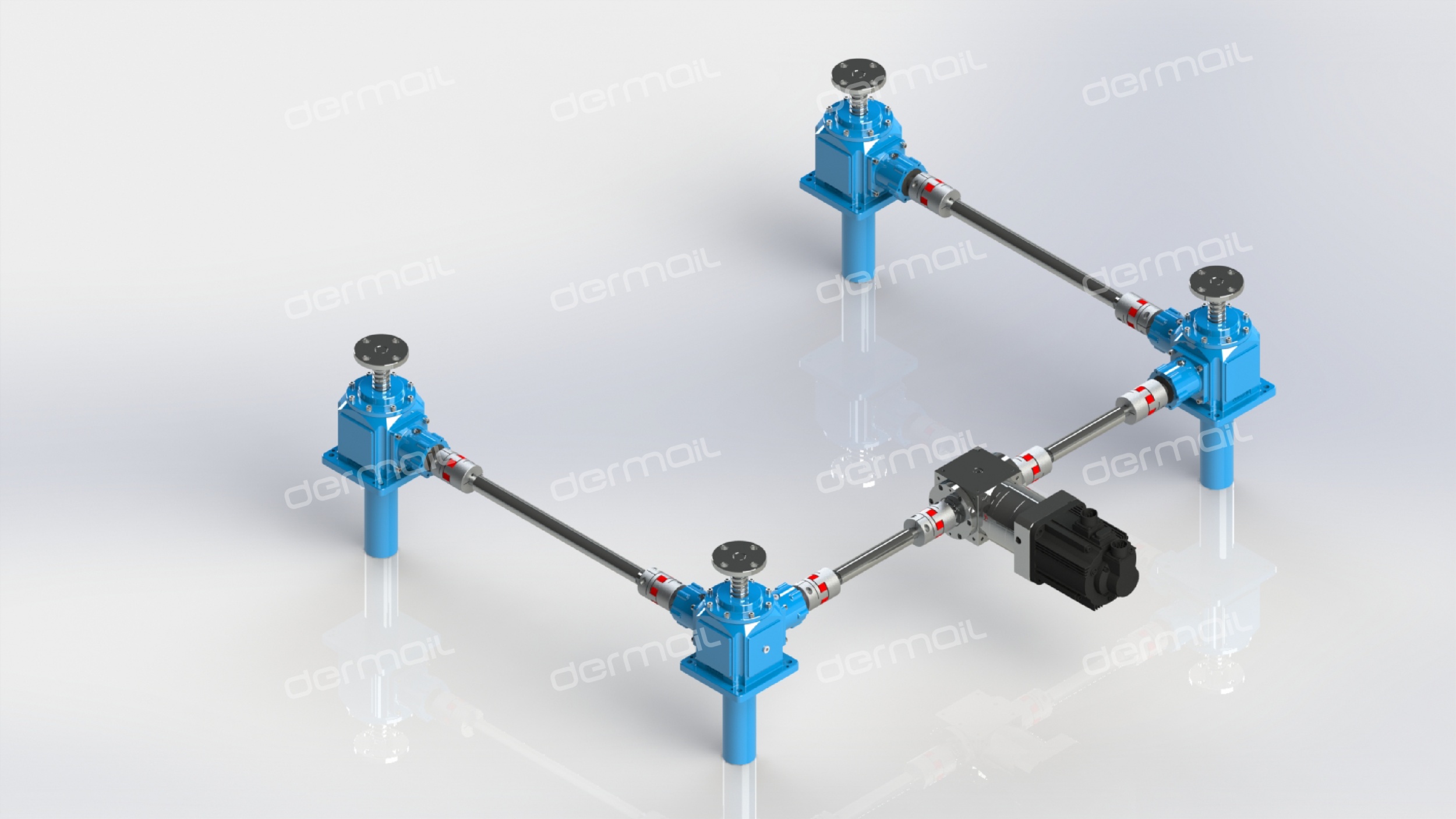
Technical Principles of Screw Jacks
Screw jacks convert rotational motion into linear displacement through the interaction of a worm gear and a threaded screw rod. The worm gear, driven by an electric motor or manual crank, rotates the screw rod via meshing threads, enabling precise vertical movement. This mechanism offers two key advantages:
- High Precision: The thread pitch determines the linear displacement per rotation, allowing millimeter-level accuracy in antenna height adjustment. For example, a standard metric screw jack with a 5 mm pitch achieves 5 mm of linear travel per full rotation.
- Self-Locking Capability: Due to the high friction between the worm gear and screw rod, the system remains locked in position without external power, preventing unintended antenna movement caused by gravity or vibrations. This is particularly critical for maintaining antenna alignment in windy or unstable environments.
For instance, the JWM series worm gear screw jack achieves a positioning accuracy of ±0.1 mm, making it ideal for applications requiring strict alignment, such as satellite communication antennas.
Structural Advantages in Antenna Systems
1. Compact Design and Space Efficiency
Screw jacks integrate the worm gear, screw rod, and housing into a compact unit, occupying minimal space compared to bulky hydraulic cylinders. This is crucial for vehicle-mounted antennas, where space constraints demand lightweight and streamlined designs. The 10-meter electric screw jack for mobile communication vehicles, for instance, weighs only 45 kg while supporting a 15 kg antenna load, ensuring stability during high-speed movement.
2. High Load Capacity and Durability
Screw jacks are engineered to withstand heavy loads and harsh environments. The use of alloy steel for the screw rod and bronze for the worm gear ensures resistance to corrosion, wear, and deformation. The 16-meter electric antenna mast, deployed in military reconnaissance, can lift a 20 kg payload to a height of 16 meters while enduring wind speeds of up to 80 km/h.
3. Low Maintenance and Long Service Life
Unlike hydraulic systems that require frequent oil changes and seal replacements, screw jacks operate with grease lubrication, reducing maintenance costs by 60%. The absence of hydraulic fluid leaks also eliminates environmental contamination risks, making them suitable for indoor applications like broadcasting studios.
Real-World Applications
1. Mobile Communication Vehicles
In emergency communication scenarios, screw jacks enable rapid antenna deployment. The 8-meter electric screw jack for disaster relief vehicles can extend the antenna to full height in 12 seconds, establishing a 50 km communication radius. Its IP65-rated enclosure ensures operation in rain, dust, or extreme temperatures (-30°C to 60°C).
2. Radar Systems
Military radar antennas demand precise elevation control to track moving targets. The 13-meter screw jack for air defense radars incorporates a dual-motor synchronization mechanism, adjusting antenna tilt angles from 0° to 90° with a repeatability error of less than 0.05°. This ensures accurate target acquisition even during vehicle motion.
3. Automotive Antennas
Modern vehicles, such as the Toyota Highlander, integrate electric screw jacks for retractable antennas. These systems reduce wind resistance by 12% when the antenna is lowered, improving fuel efficiency by 3% during highway driving. The screw jack’s quiet operation (below 40 dB) also enhances passenger comfort.
4. Astronomical Observatories
Radio telescopes require ultra-stable antenna positioning to minimize signal interference. The 20-meter screw jack for the Five-hundred-meter Aperture Spherical Telescope (FAST) achieves a positional stability of ±0.01 mm over 24 hours, enabling precise cosmic observations.
Future Trends
- Smart Control Integration: The adoption of PLC controllers and sensors enables real-time monitoring of load, temperature, and vibration, triggering automatic adjustments or alerts for preventive maintenance.
- Lightweight Materials: Carbon fiber-reinforced screw rods reduce system weight by 40% without compromising strength, facilitating aerial drone-mounted antennas.
- Energy Efficiency: Brushless DC motors and regenerative braking systems cut power consumption by 30%, extending battery life for solar-powered remote antennas.
Conclusion
Dermail transmission Screw jacks have emerged as the preferred solution for antenna elevation systems due to their precision, reliability, and adaptability. From mobile communication vehicles to cutting-edge radar installations, these devices ensure optimal signal performance while withstanding the rigors of real-world operation. As technology advances, screw jacks will continue to evolve, driving innovation in global communication infrastructure.








Tel:+86-317-7369999
E-mail: demai@demai.org
Mobile:+86-18653450543 (Wechat)
Address:No. 6, Haihe Road, economic development zone, Wuqiao County, Cangzhou City, Hebei Province

点击右上角
分享给朋友吧
Copyright ©2023 All Rights Reserved Hebei Demai Transmission Machinery Co.,Ltd.
Copyright ©2025 All Rights Reserved Hebei Demai Transmission Machinery Co.,Ltd.
