
Application of Screw Jacks in Automotive Manufacturing Equipment
2026-03-04 15:58:02
Click:
“
Screw jacks, renowned for their precision, high load capacity, and reliable control, have become indispensable components in modern automotive manufacturing. From assembly lines to welding stations and quality inspection systems
”
Abstract
Screw jacks, renowned for their precision, high load capacity, and reliable control, have become indispensable components in modern automotive manufacturing. From assembly lines to welding stations and quality inspection systems, these mechanical devices ensure efficient, safe, and accurate operations. This article explores the key applications, technical advantages, and real-world implementations of dermail screw jacks in automotive production facilities.
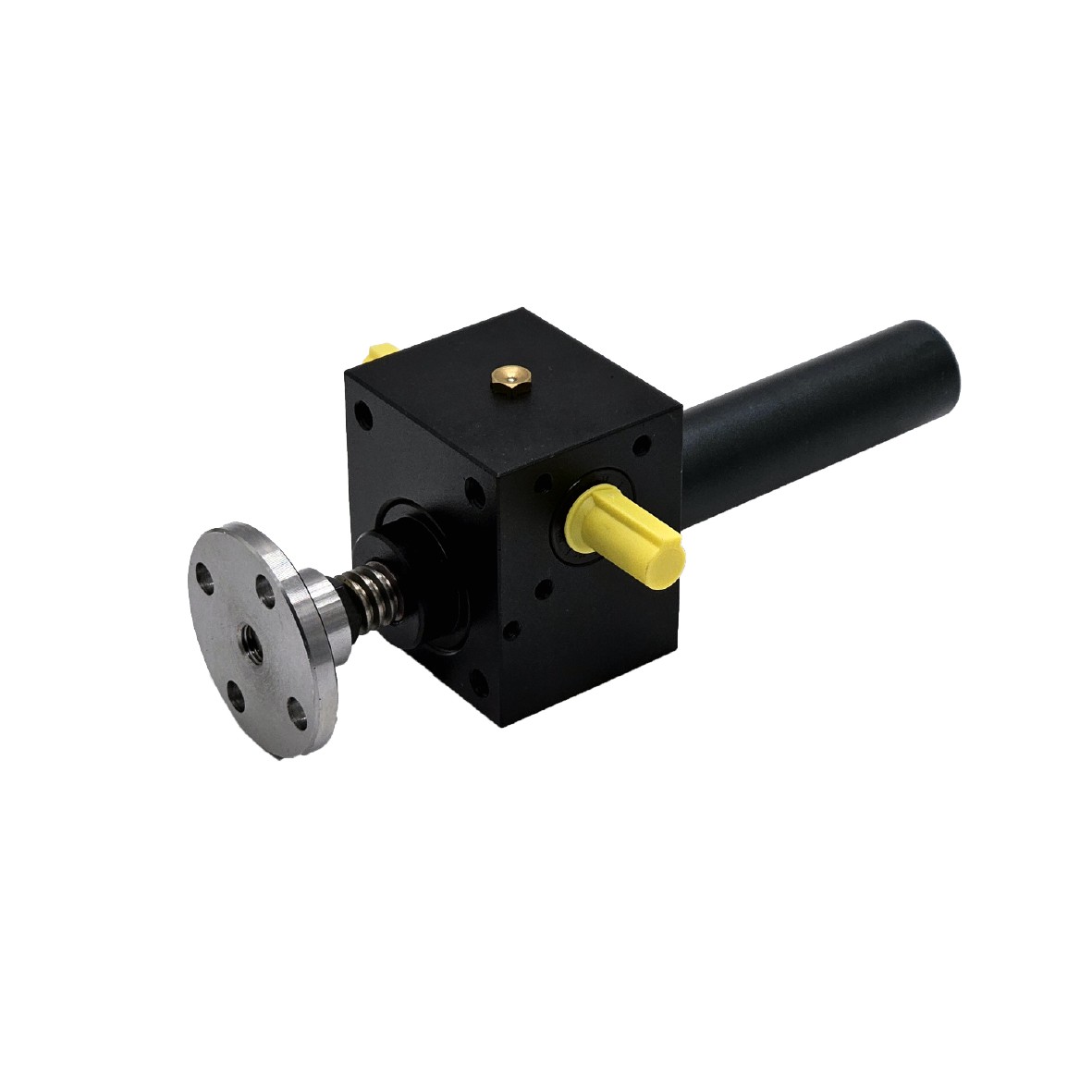
1. Key Applications in Automotive Manufacturing
1.1 Body-in-White (BIW) Assembly Lines
During vehicle frame assembly, screw jacks are used to:
- Position and Align Body Panels: Automated screw jacks precisely lift and adjust door panels, roofs, and floor sections to sub-millimeter accuracy, ensuring seamless welding and fitment.
- Support Heavy Tooling: In robotic welding stations, screw jacks hold and position large fixtures (weighing up to 10 tons) for consistent weld quality.
- Enable Multi-Level Conveyors: Vertical screw jacks integrate into conveyor systems to transfer partially assembled bodies between production floors, optimizing plant layout efficiency.
1.2 Powertrain and Engine Assembly
- Engine Block Handling: Screw jacks lift engine blocks onto assembly pallets, synchronizing with robotic arms for precise component insertion (e.g., crankshafts, camshafts).
- Transmission Testing Rigs: In end-of-line testing, screw jacks apply controlled loads to simulate real-world driving conditions, verifying transmission durability and shift accuracy.
- Electric Vehicle (EV) Battery Assembly: For EV battery pack installation, screw jacks provide vibration-free lifting to prevent damage to sensitive lithium-ion cells.
1.3 Paint Shop and Final Assembly
- Paint Booth Door Adjustment: Screw jacks automate the opening/closing of paint booth doors, maintaining airtight seals to prevent contamination during coating processes.
- Tire Mounting Stations: Pneumatic-assisted screw jacks lift vehicles to optimal heights for robotic tire installation, reducing operator strain and improving cycle times.
- End-of-Line Inspection: In automated inspection systems, screw jacks position vehicles under 3D scanners or laser measurement tools to detect dimensional deviations with ±0.05mm accuracy.
2. Technical Advantages
2.1 High Precision and Repeatability
Screw jacks achieve positional accuracy of ±0.02–0.1mm through worm gear reduction mechanisms, ensuring consistent component placement in automated assembly processes.
2.2 Heavy-Duty Performance
With load capacities ranging from 0.5 to 200 tons, screw jacks handle everything from lightweight body panels to massive engine blocks without deformation or backlash.
2.3 Self-Locking Safety
The worm gear design inherently prevents unintended movement under load, eliminating the need for additional braking systems in critical applications like overhead conveyors.
2.4 Durable Construction
- Alloy Steel Components: Hardened screws and nuts resist wear from continuous operation.
- Corrosion-Resistant Coatings: Nickel-plated or epoxy-coated housings withstand paint shop chemicals and humid environments.
- Sealed Design: IP65-rated screw jacks prevent dust/water ingress, ensuring reliability in harsh factory conditions.
2.5 Customization Flexibility
Manufacturers offer tailored solutions, including:
- Multi-Jack Synchronization: For large-scale lifting (e.g., vehicle body transfer).
- Explosion-Proof Variants: For paint booths with flammable vapors.
- ATEX-Certified Models: For use in hazardous zones like battery assembly areas.
3. Real-World Implementation Examples
3.1 Tesla Gigafactory (Battery Pack Assembly)
Tesla uses electric screw jacks with servo motors to lift battery modules onto chassis with micro-level precision, minimizing alignment errors and improving assembly speed by 30% compared to hydraulic systems.
3.2 BMW Regensburg Plant (Body Shop)
BMW integrated self-locking screw jacks into robotic welding stations to hold body panels during laser welding. The system reduced vibration-induced defects by 95% and cut downtime for tooling adjustments by 50%.
3.3 Toyota Motor Manufacturing Kentucky (Paint Shop)
Toyota deployed stainless-steel screw jacks with food-grade lubricants to adjust paint booth doors. The corrosion-resistant design extended maintenance intervals from 3 months to 18 months, lowering annual costs by $120,000 per line.
4. Future Trends
- Smart Screw Jacks: Integration with IoT sensors for real-time load monitoring and predictive maintenance.
- Lightweight Materials: Carbon fiber-reinforced screws to reduce energy consumption in EV battery assembly.
- Collaborative Robotics (Cobots): Screw jacks paired with cobots for flexible, small-batch production of niche vehicle models.
Conclusion
Screw jacks are vital to the efficiency, precision, and safety of automotive manufacturing. Their ability to handle heavy loads with sub-millimeter accuracy, coupled with customizable designs for harsh environments, makes them ideal for an industry driven by automation and quality demands. As automotive production evolves toward electrification and smart factories, screw jacks will continue to adapt, ensuring they remain at the heart of vehicle assembly innovation.
Keywords: Screw jack, automotive manufacturing, precision assembly, heavy-duty lifting, Industry 4.0








Tel:+86-317-7369999
E-mail: demai@demai.org
Mobile:+86-18653450543 (Wechat)
Address:No. 6, Haihe Road, economic development zone, Wuqiao County, Cangzhou City, Hebei Province

点击右上角
分享给朋友吧
Copyright ©2023 All Rights Reserved Hebei Demai Transmission Machinery Co.,Ltd.
Copyright ©2025 All Rights Reserved Hebei Demai Transmission Machinery Co.,Ltd.
