
Selection of Drive Sources for Screw Jacks: A Comprehensive Guide
2025-07-03 14:45:11
Click:
“
IntroductionScrew jacks are essential mechanical devices used for lifting, lower
”
Introduction
Screw jacks are essential mechanical devices used for lifting, lowering, or positioning heavy loads with precision and reliability. Their applications span across industries such as industrial automation, construction, material handling, and environmental equipment. One of the critical decisions in designing or selecting a screw jack system is choosing the appropriate drive source. The drive source determines the performance, efficiency, cost, and adaptability of the screw jack to different operating conditions. This article explores the common drive sources for High lead screw jacks—electric motors, manual drives, and hydraulic systems—and provides insights into their selection based on application requirements.
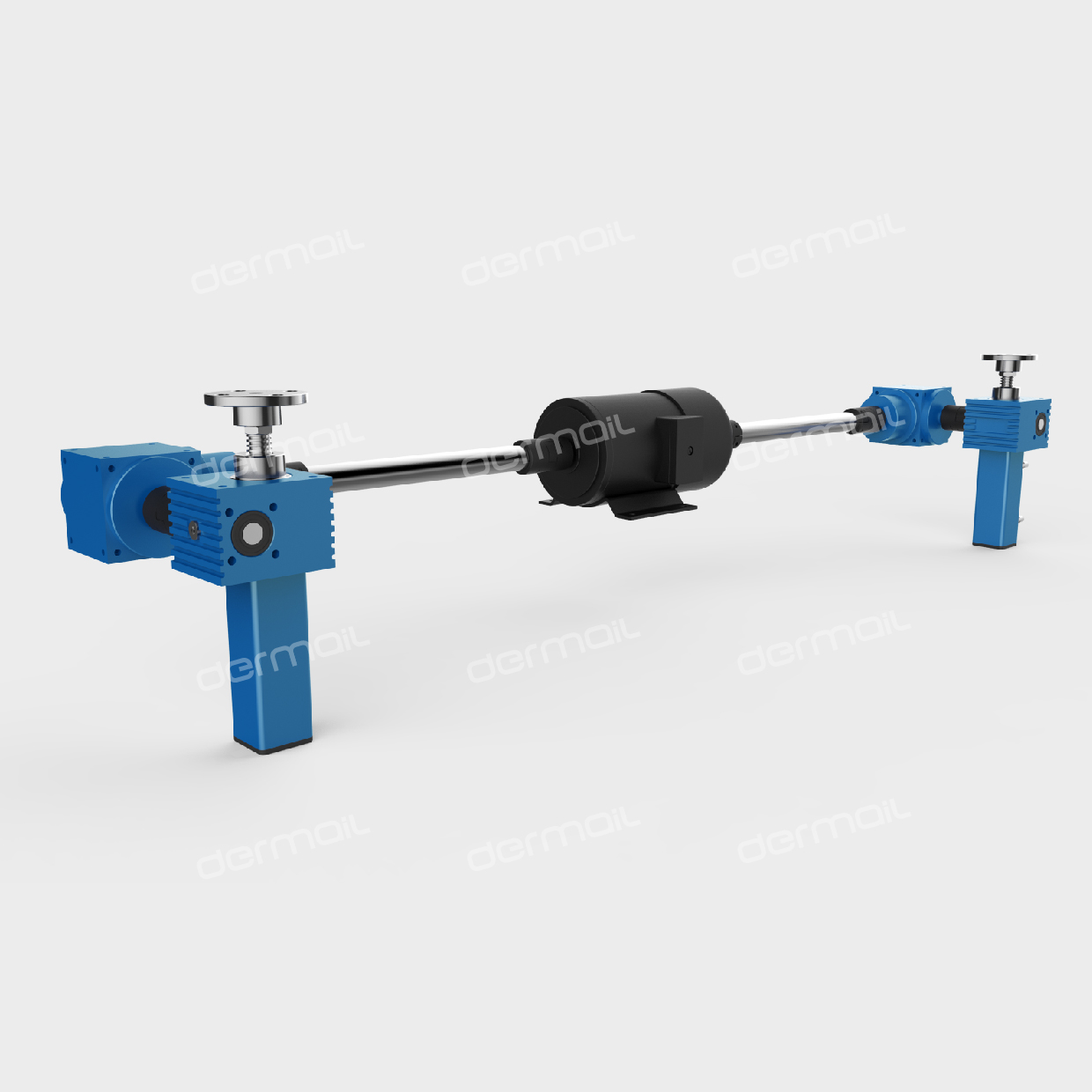
1. Electric Motor Drives: The Most Popular Choice
Electric motors are the most widely used drive sources for screw jacks due to their versatility, precision, and automation capabilities. They are suitable for high-frequency, continuous-duty applications where precise control and repeatability are essential.
Key Advantages of Electric Motor Drives:
- High Precision Control: Electric motors, especially servo and stepper motors, enable precise positioning with micro-level accuracy, making them ideal for applications like CNC machinery, robotics, and automated assembly lines.
- Automation Compatibility: They integrate seamlessly with PLCs (Programmable Logic Controllers), HMI (Human-Machine Interfaces), and IoT systems, allowing for remote monitoring and control.
- Energy Efficiency: Modern electric motors, such as brushless DC (BLDC) and variable frequency drive (VFD) controlled AC motors, offer high efficiency and low power consumption.
- Variable Speed Control: By adjusting the motor speed, the lifting or lowering speed of the screw jack can be precisely controlled, enhancing operational flexibility.
- Low Maintenance: Electric drives have fewer moving parts compared to hydraulic systems, reducing maintenance requirements and downtime.
Common Electric Motor Types for Screw Jacks:
- AC Induction Motors: Cost-effective and durable, suitable for general-purpose applications.
- DC Motors (Brushed/Brushless): Provide excellent speed control and are ideal for battery-powered or portable systems.
- Servo Motors: Offer high precision and dynamic response, commonly used in robotics and high-accuracy positioning systems.
- Stepper Motors: Precise angular control, suitable for low-to-medium load applications with intermittent operation.
When to Choose Electric Motor Drives:
- High-precision lifting (e.g., in semiconductor manufacturing, medical equipment).
- Automated production lines requiring synchronization with other machinery.
- Applications where noise and vibration must be minimized.
- Environments where hydraulic fluid leakage is unacceptable (e.g., food processing, cleanrooms).
2. Manual Drives: Simple, Reliable, and Cost-Effective
Manual drives, such as hand wheels or crank handles, are used in applications where electric or hydraulic power is unavailable, impractical, or unnecessary. They are ideal for low-frequency, light-duty tasks or emergency backup systems.
Key Advantages of Manual Drives:
- No Power Requirement: Operates independently of electricity or hydraulics, making it suitable for remote or outdoor applications.
- Simple and Robust: Minimal components reduce the risk of mechanical failure.
- Cost-Effective: Lower initial investment and maintenance costs compared to motorized or hydraulic systems.
- Instant Operation: No startup delay, allowing for immediate manual adjustment.
When to Choose Manual Drives:
- Light-duty lifting (e.g., adjusting workbenches, small gates).
- Emergency override systems in motorized screw jacks.
- Portable or temporary setups where power is not readily available.
- Budget-constrained projects requiring basic lifting functionality.
3. Hydraulic Drives: High Force and Smooth Operation
Hydraulic systems use pressurized fluid to drive the screw jack, offering high force output and smooth, controlled motion. They are preferred in heavy-duty applications where extreme loads or shock absorption is required.
Key Advantages of Hydraulic Drives:
- High Load Capacity: Hydraulic screw jacks can handle much larger loads than electric or manual systems, making them suitable for construction, mining, and large-scale material handling.
- Overload Protection: Hydraulic systems inherently provide safety against overloading by limiting pressure buildup.
- Damping Effect: The incompressibility of hydraulic fluid reduces vibrations and shocks, ensuring stable operation.
- Constant Force Delivery: Hydraulic drives maintain consistent force regardless of speed, which is beneficial in applications like press machines and injection molding.
When to Choose Hydraulic Drives:
- Extremely heavy loads (e.g., lifting bridges, large industrial machinery).
- Applications requiring shock absorption and smooth motion (e.g., foundry equipment, stamping presses).
- Environments where explosion-proof or fire-resistant fluids are necessary.
Disadvantages of Hydraulic Drives:
- Higher Initial Cost: Hydraulic systems are more expensive due to pumps, valves, and fluid reservoirs.
- Maintenance Intensive: Requires regular checks for fluid leaks, contamination, and component wear.
- Environmental Concerns: Hydraulic fluid leakage can pose environmental hazards, limiting use in clean industries.
Conclusion: How to Choose the Right Drive Source
Selecting the optimal drive source for a screw jack depends on several factors:
| Factor | Electric Motor | Manual Drive | Hydraulic System |
|---|---|---|---|
| Load Capacity | Medium to High | Low | Very High |
| Precision Control | Excellent | Low | Moderate |
| Speed Control | Highly Adjustable | Fixed (Manual) | Limited (Flow-dependent) |
| Maintenance | Low | Minimal | High |
| Initial Cost | Moderate to High | Very Low | High |
| Environmental Impact | Clean (No fluid leaks) | Clean | Risk of fluid leakage |
- For high-precision, automated, and clean applications, electric motor drives are the best choice.
- For simple, low-cost, and infrequent use, manual drives offer reliability and simplicity.
- For ultra-heavy-duty, shock-absorbing applications, hydraulic drives provide unmatched force and stability.
By carefully evaluating these factors, engineers and designers can select the most suitable drive source to ensure optimal performance, efficiency, and cost-effectiveness in their screw jack systems.
That's all the content Dermail Transmission is presenting to you today. We hope it can be of help to you. If you have any other questions regarding screw jacks, please feel free to contact us via WeChat at any time. Our WeChat ID is: demai-ln. We will serve you wholeheartedly.
Keywords: Screw Jack, Drive Source Selection, Electric Motor Drive, Manual Drive, Hydraulic System, Industrial Automation, Load Lifting, Precision Control.








Tel:+86-317-7369999
E-mail: demai@demai.org
Mobile:+86-18653450543 (Wechat)
Address:No. 6, Haihe Road, economic development zone, Wuqiao County, Cangzhou City, Hebei Province

点击右上角
分享给朋友吧
Copyright ©2023 All Rights Reserved Hebei Demai Transmission Machinery Co.,Ltd.
Copyright ©2025 All Rights Reserved Hebei Demai Transmission Machinery Co.,Ltd.
