
Key Differences Between Trapezoidal Screw Jacks and Ball Screw Jacks
2025-06-23 08:58:57
Click:
“
Key Differences Between Trapezoidal Screw Jacks and Ball Screw JacksWhen selecti
”
Key Differences Between Trapezoidal Screw Jacks and Ball Screw Jacks
When selecting a screw jack system for industrial or mechanical applications, understanding the distinctions between trapezoidal screw jacks and ball screw jacks is crucial. Each type offers unique advantages and limitations, making them suitable for different operational requirements. Below is a detailed comparison to guide your decision-making process.
1. Design and Construction
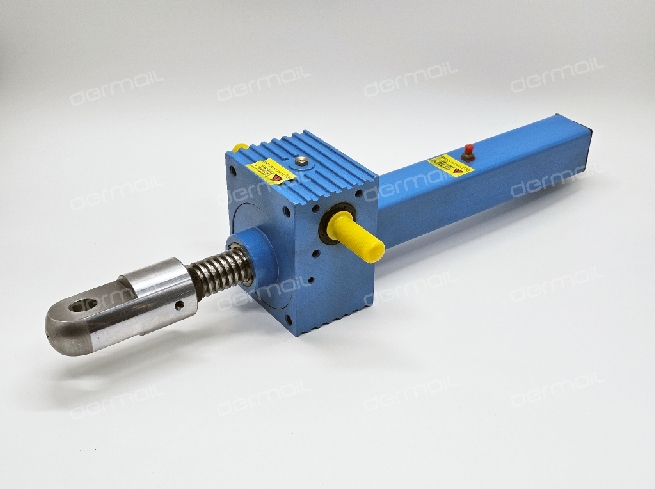
- Trapezoidal Screw Jacks
- Thread Type: Utilize a trapezoidal (ACME) thread profile, characterized by a wide, flat thread form.
- Contact Mechanism: The nut and screw engage through sliding friction, where the nut’s internal threads slide directly over the screw’s external threads.
- Materials: Typically constructed from carbon steel or stainless steel, with the nut often made of bronze or polymer for wear resistance.
2. Efficiency and Performance
- Trapezoidal Screw Jacks
- Mechanical Efficiency: Lower efficiency (typically 20–40%) due to sliding friction, requiring more torque to operate.
- Load Capacity: Capable of handling higher axial loads (up to several tons) but at slower speeds.
- Speed Limitations: Suitable for low-speed applications (typically <500 RPM) due to heat generation from friction.
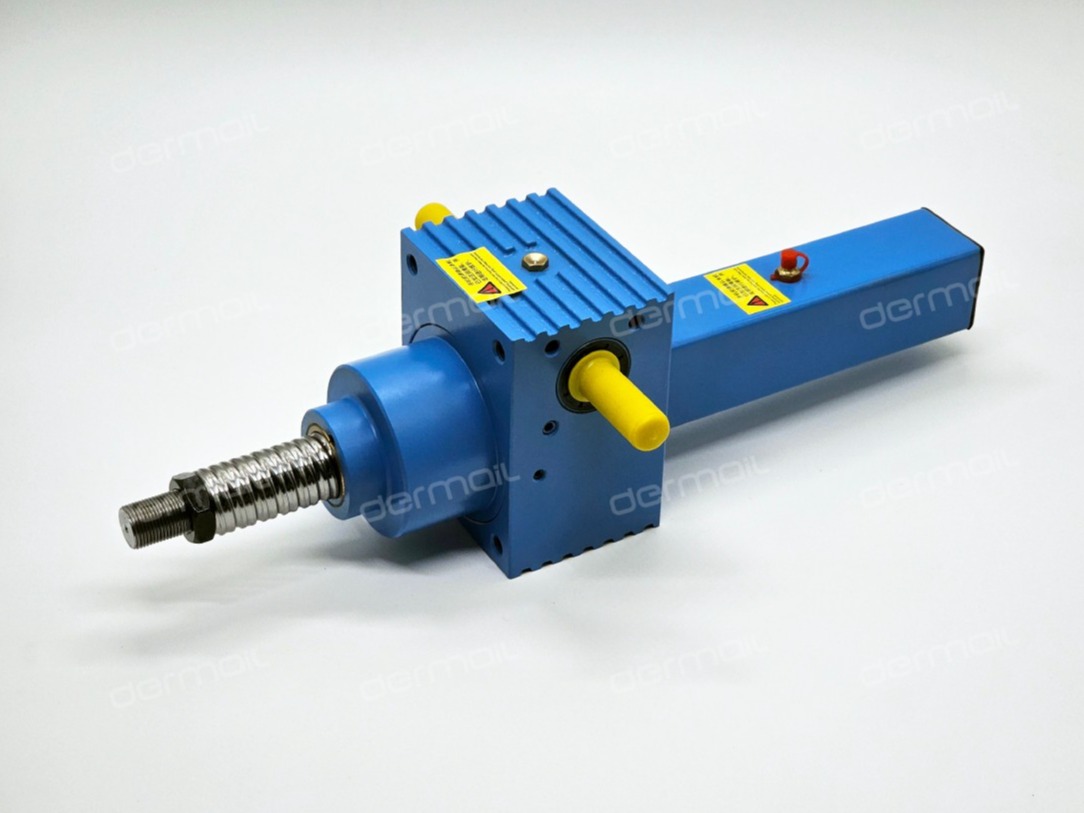
- Ball Screw Jacks
- Mechanical Efficiency: Higher efficiency (up to 90%) due to rolling friction, enabling smoother and faster operation.
- Load Capacity: Designed for moderate to high loads with excellent repeatability, but generally lower than trapezoidal screws in ultra-heavy-duty applications.
- Speed Capability: Ideal for high-speed applications (up to 3,000 RPM or more), with minimal heat generation.
3. Lifespan and Maintenance
- Trapezoidal Screw Jacks
- Wear Characteristics: Prone to faster wear due to sliding friction, especially under heavy loads or continuous operation.
- Maintenance: Requires more frequent lubrication and periodic inspection for thread wear.
- Service Life: Shorter lifespan compared to ball screw jacks but cost-effective for applications with low duty cycles.
- Ball Screw Jacks
- Wear Characteristics: Exhibits lower wear rates due to rolling contact, resulting in longer service life.
- Maintenance: Requires less frequent lubrication and maintenance, though precision applications may demand stricter care.
- Service Life: Longer lifespan, especially in applications with high duty cycles or frequent operation.
4. Cost Considerations
- Trapezoidal Screw Jacks
- Initial Cost: Generally more affordable due to simpler manufacturing processes and lower material costs.
- Total Cost of Ownership: Higher over time due to increased energy consumption and maintenance needs.
- Ball Screw Jacks
- Initial Cost: More expensive due to precision manufacturing and higher-quality materials.
- Total Cost of Ownership: Lower in the long run due to energy efficiency, reduced downtime, and extended service life.
5. Applications and Suitability
- Trapezoidal Screw Jacks
- Best For:
- Heavy-duty lifting or positioning tasks (e.g., material handling, stage lifts).
- Applications where cost is a primary concern, and speed is not critical.
- Vertical or inclined motion with self-locking capability (no brake required).
- Example: Lifting heavy machinery in a factory.
- Best For:
- Ball Screw Jacks
- Best For:
- High-precision positioning (e.g., CNC machines, robotics).
- Applications requiring fast, smooth, and repeatable motion.
- Horizontal or vertical motion where backdriving is acceptable (or when a brake is used).
- Example: Positioning a robotic arm in an automated assembly line.
- Best For:
6. Self-Locking and Backdriving
- Trapezoidal Screw Jacks
- Self-Locking: Naturally self-locking due to high friction, preventing backdriving when the motor is off.
- Safety: Eliminates the need for additional braking systems in vertical applications.
- Ball Screw Jacks
- Backdriving: Prone to backdriving due to low friction, requiring external brakes or locking mechanisms for vertical loads.
- Safety: Must incorporate safety measures to prevent unintended motion when power is lost.
7. Noise and Vibration
- Trapezoidal Screw Jacks
- Noise Level: Higher noise due to sliding friction, especially at higher speeds.
- Vibration: More prone to vibration, which may affect precision in sensitive applications.
- Ball Screw Jacks
- Noise Level: Quieter operation due to rolling contact, suitable for noise-sensitive environments.
- Vibration: Minimal vibration, ensuring smoother and more precise motion.
Conclusion
The choice between trapezoidal screw jacks and ball screw jacks depends on your specific application requirements:
- Trapezoidal screw jacks are ideal for heavy-load, low-speed, and cost-sensitive applications where self-locking is advantageous.
- Ball screw jacks excel in high-speed, high-precision, and energy-efficient applications requiring smooth, repeatable motion.
By evaluating factors such as load capacity, speed, efficiency, maintenance, and cost, you can select the screw jack system that best meets your needs.
Key Takeaway:
- Trapezoidal Screw Jacks: Robust, cost-effective, and self-locking—perfect for heavy lifting.
- Ball Screw Jacks: Precise, efficient, and fast—ideal for high-performance automation.
Would you like further guidance on selecting the right screw jack for your project? Feel free to reach out!
That concludes today’s content shared by Demai Transmission. We hope it has been helpful to you. If you have any further questions about screw jacks, please feel free to contact us at any time. Our technical engineers will be more than happy to assist you.








Tel:+86-317-7369999
E-mail: demai@demai.org
Mobile:+86-18653450543 (Wechat)
Address:No. 6, Haihe Road, economic development zone, Wuqiao County, Cangzhou City, Hebei Province

点击右上角
分享给朋友吧
Copyright ©2023 All Rights Reserved Hebei Demai Transmission Machinery Co.,Ltd.
Copyright ©2025 All Rights Reserved Hebei Demai Transmission Machinery Co.,Ltd.
